Comparisons
Portable Power Station vs a Deep Cycle Battery and Inverter
They store the same energy. What you are really choosing between is one listed appliance and six components you have to specify, wire and protect yourself.
Written byMike M.
Published
Disclosure: we earn a commission on purchases made through links on this page, at no cost to you. It does not affect what we recommend or what we say about it — how we are funded.
The short answer
| Portable power station | Deep cycle battery + inverter | |
|---|---|---|
| What you buy | One appliance, ready to use | Six or more parts you specify and wire |
| Inverter | Built in, matched to the cells | Chosen and sized separately |
| Battery management | Built in | A BMS you select, or none |
| Charging | AC charger and solar MPPT built in | Separate charger, separate controller |
| Outlets | AC, USB-C, USB-A, 12 V on the case | Whatever you wire and fuse |
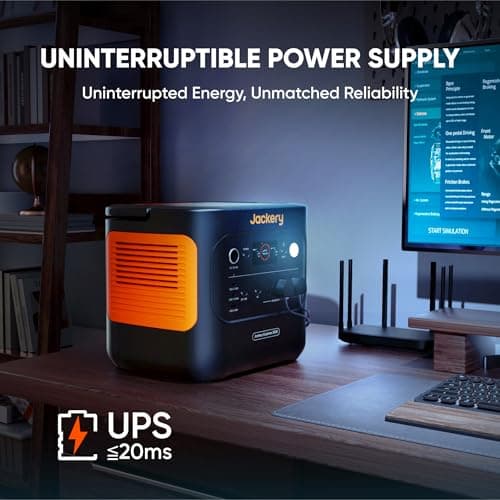
| Grid handover | UPS switchover published in milliseconds | An automatic transfer device, if you add one |
| Portable | Published weight on every unit | Battery weight plus everything else |
| Best at | Working this afternoon, carried anywhere | A fixed install sized exactly to you |
The difference is integration, not chemistry. Both store energy in cells and turn it into 120 V AC; one has already solved the six problems in between.
People arrive at this comparison from two directions. Some have priced a 2 kWh power station and wondered whether a battery and an inverter would be cheaper. Others own a deep cycle battery already — for a boat, an RV, a trolling motor — and wonder whether a power station adds anything. Both are reasonable, and the answer turns on the same thing: what is inside the case.
What a power station actually integrates
A power station is not a battery in a box with a socket on it. The published specifications in our registry describe at least six distinct components working together, and a DIY build has to replicate every one:
- 1The cells, nearly always LiFePO4 now. Anker publishes 314 Ah LFP cells rated for 10,000 cycles and a stated 15-year lifespan on the SOLIX S2000; EcoFlow publishes 3,000 cycles to 80% on the DELTA 2 Max.
- 2A battery management system, which balances cells and enforces temperature and current limits. It is the component manufacturers detail least on a listing, so it is rarely something you can compare between units.
- 3An inverter, sized to the pack — 2,400 W on the Jackery HomePower 2000 Plus v2, 6,000 W on Anker's SOLIX F3800 Plus.
- 4An AC charger, often a fast one. EcoFlow publishes 0-80% in 43 minutes on the DELTA 2 Max combining AC with up to 1,000 W of solar.
- 5A solar charge controller, usually MPPT. Anker publishes 3,200 W of solar input across two MPPT inputs on the F3800 Plus; EcoFlow publishes 1,000 W on the DELTA 2 Max.
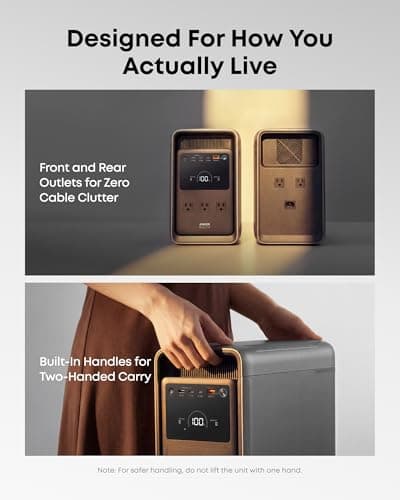
- 6The outlets, display and enclosure, plus in most cases a UPS function: EcoFlow publishes under 10 ms switchover on the DELTA 3 Classic and Max, Anker under 10 ms on the C1000 Gen 2 and S2000, Bluetti 10 ms on the FridgePower configured as a UPS.
Every one of those is a decision in a DIY build, and several of them are decisions with a wrong answer that is expensive or dangerous. That is the honest content of the price difference.
Where the build genuinely wins
This is not a one-sided comparison, and two cases favor building:
- A fixed installation you will never carry. Weight is a design constraint on a power station and the manufacturers publish it prominently — 35.7 lb for the SOLIX S2000, 39.5 lb for the Explorer 2000 v2, 135.6 lb for the SOLIX F3800 Plus. In a basement or an RV bay, weight is free, and a build can use cheaper, heavier cells.
- Capacity well past what a station offers. The expandable units go a long way — Anker publishes 26.9 kWh for an expanded F3800 Plus, Jackery 12 kWh for the HomePower 2000 Plus v2 — but past that, or when you want a specific voltage, a build is the only route.
What a build does not get you is a listed, warranted appliance. A power station ships as one product with one manufacturer standing behind it; a build is yours, including the fusing, the wiring and the enclosure. That is a fair trade for some people and a bad one for most.
The comparison people actually mean: can I just add an inverter?
The common version of this question is simpler than a full build: there is already a deep cycle battery in the garage, and the plan is to clip an inverter to it. That does work, and it is a legitimate way to run a few hundred watts. Three things usually decide whether it is enough.
What the clip-on-inverter plan runs into
- Usable capacity
- Lead-acid is conventionally not taken much past half
- Recharging it
- A separate charger, and a slow one, unless you add solar
- Starting surge
- A fridge compressor needs several times its running watts
- Handover
- Manual — you plug things in after the power goes
- Protection
- Fusing and low-voltage cutoff are yours to add
The surge figure is the one that catches people. [Starting watts versus running watts](/sizing/starting-watts-vs-running-watts) covers why a 700 W refrigerator needs far more than 700 W for the first second, and why an inverter sized to the running figure fails.
A power station answers all five in the specification sheet: the usable capacity is the published watt-hour figure, the charger and the solar controller are inside, the surge headroom is published separately from the continuous rating, and most units hand over automatically in milliseconds.
The short answer
The integrated option, ranked
| # | Product | Best for | Score | Price |
|---|---|---|---|---|
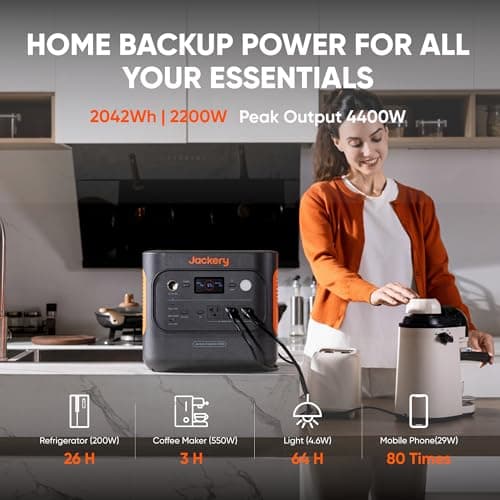
| 1 | 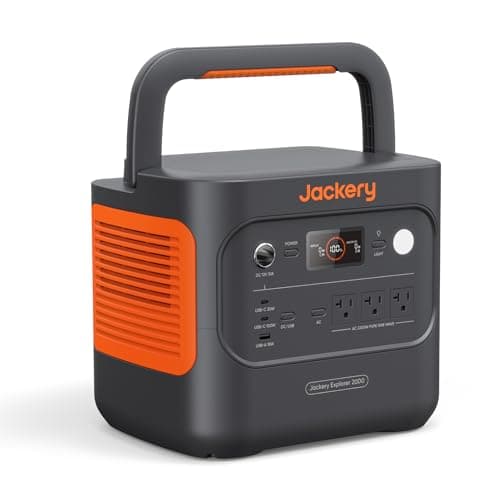 Jackery Explorer 2000 v2 The most sensible battery backup for most homes: enough capacity to carry a fridge and electronics through a typical outage, indoors, silently. | The default 2 kWh home backup battery | 9.4/10 | $999.00 |
| 2 | 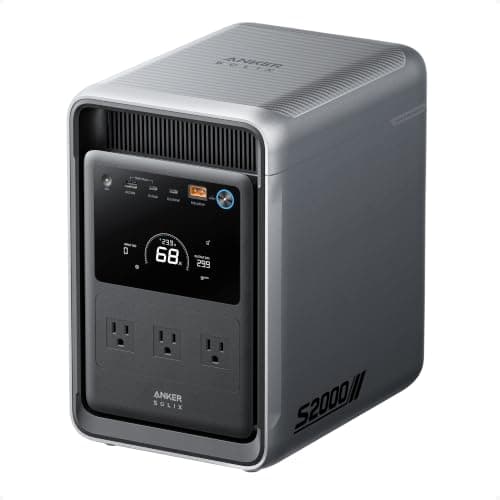 Anker SOLIX S2000 The endurance choice: the lowest idle draw and the longest cycle life here, with an output ceiling deliberately traded away to get them. | Longest fridge runtime per watt-hour | 9.3/10 | $699.99 |
| 3 | 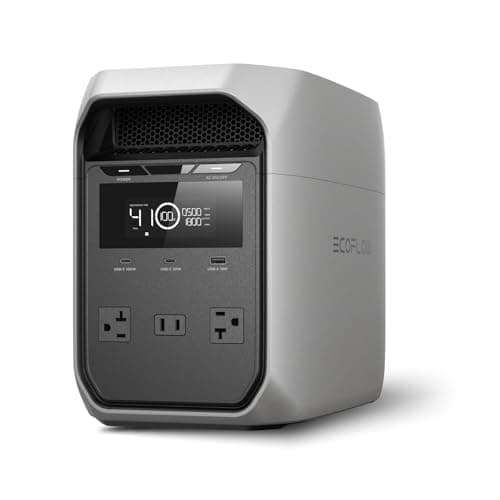 EcoFlow DELTA 3 Classic The best-value battery on the site: UPS-grade switchover, 1,800 W and a 45-minute recharge for roughly half what the 2 kWh units cost. | Best value 1 kWh with UPS | 9.3/10 | $462.00 |
| 4 | 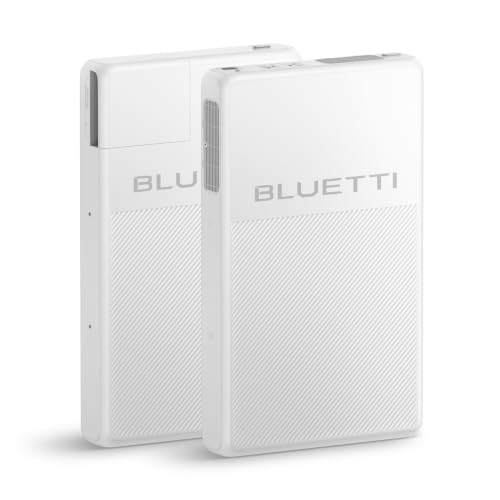 Bluetti FridgePower Backup System If the problem you are solving is specifically the refrigerator, this is the system designed for that problem — the 4 W standby and storm auto-charge are genuine engineering answers to it. | Purpose-built refrigerator backup | 9.5/10 | $1,899.00 |
| 5 | 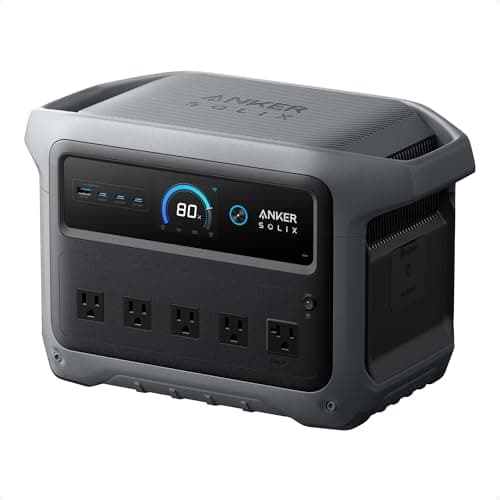 Anker SOLIX C1000 Gen 2 The right 1 kWh battery if your problem is short high-draw bursts rather than long low-draw endurance — and the fastest refill here by a wide margin. | Fastest 1 kWh recharge | 9.2/10 | $529.99 |
#ad Amazon prices as of November 19, 2026; they may have changed since. Scores are our editorial judgment from published specifications, not test results — how we pick. How we are funded.
The integrated version, by job
The default 2 kWh home backup battery
Jackery Explorer 2000 v2
Purpose-built refrigerator backup
Bluetti FridgePower Backup System
A 2 kWh default, the longest published cycle rating here, the best-value 1 kWh with UPS, and the one purpose-built around a refrigerator. Best home backup power stations ranks the full set.
Choosing between them
- Buy the power station if you want it working this week, you may carry it, you want the refrigerator to stay on without you intervening, or you do not want to be the person who specified the fusing.
- Build if it lives in one place forever, you need more capacity than the expandable units publish, you want a particular DC voltage, and you are comfortable owning the safety design.
- Add an inverter to the battery you own if the job is a few hundred watts, intermittently, and you are happy to plug things in by hand.
And one framing worth keeping: a battery of any kind is a capacity device, not a supply. If the outage runs past what you stored, the question changes from which battery to battery against generator, which is a different page and a different answer.
In short
Our recommendation
Top pick
9.4/10Jackery Explorer 2000 v2
The most sensible battery backup for most homes: enough capacity to carry a fridge and electronics through a typical outage, indoors, silently.
Runner-up
9.3/10Anker SOLIX S2000
The endurance choice: the lowest idle draw and the longest cycle life here, with an output ceiling deliberately traded away to get them.
#ad Price as of November 19, 2026; it may have changed since. How we are funded.
Questions people actually ask
Is a portable power station just a battery and an inverter?
It is a battery, an inverter, a battery management system, an AC charger, a solar charge controller, the outlets and usually a UPS function, integrated and listed as one appliance. The published specifications describe all of those separately — switchover times, solar input ceilings, surge ratings — which is the content of the price difference against a DIY build.
Is it cheaper to build your own power station?
It can be, particularly for a fixed install where weight does not matter and you can use heavier cells. What you give up is a single listed product with one warranty, and you take on the fusing, wiring, enclosure and safety design yourself. For most people buying a backup supply, that is a bad trade.
Can I use a deep cycle battery with an inverter instead of a power station?
Yes, for a few hundred watts, intermittently. The three things that usually decide whether it is enough are usable capacity, how you recharge it, and starting surge — a refrigerator compressor draws several times its running watts for a moment, and an inverter sized to the running figure will not start it.
What does a power station do that a battery cannot?
Hand over automatically. EcoFlow publishes under 10 ms switchover on the DELTA 3 Classic and Max, Anker under 10 ms on the C1000 Gen 2 and S2000, and Bluetti 10 ms on the FridgePower. A battery with an inverter clipped to it requires you to be there, awake, to plug things in.
How long do power station batteries last compared with a deep cycle battery?
The LiFePO4 figures the manufacturers publish are long: Anker states 10,000 cycles and a 15-year lifespan for the S2000's 314 Ah cells, Jackery 6,000+ LFP cycles with a stated 16-year design life on the HomePower 2000 Plus v2. We do not publish a comparison figure for lead-acid because we hold no manufacturer source we can cite for one.
Sources
- Eugene Water & Electric Board — Generator Sizing ConsiderationsPublished appliance running and additional-starting watt figures used in the load arithmetic on this page.
Read next
Best Overall Power Station
The Best Home Backup Power Stations
Battery power stations ranked for home backup on surge, capacity, recharge speed and cycle life.
Top pick · Jackery Explorer 2000 v2
$999.00See the Explorer 2000 v2 on Amazon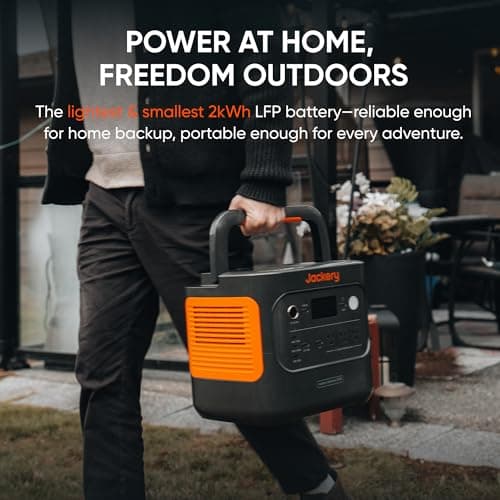
Battery vs Engine
Portable Power Station vs Generator
Battery against generator on surge capability, runtime, placement and cost, with the two facts that decide it.
Comparison
Home Battery Backup vs Generator
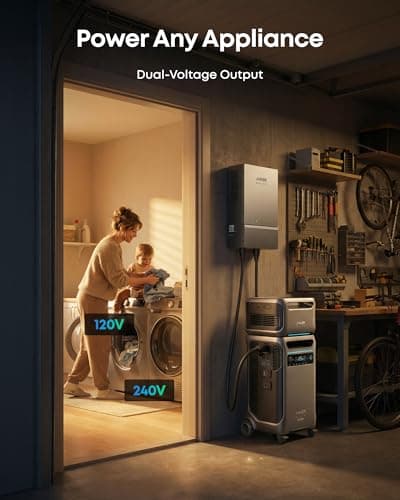
Installed home battery systems against generators, and the expandable portable units that sit between them.
Comparison
LiFePO4 vs Lithium-Ion
Why LiFePO4 is the correct chemistry for backup power, with the published cycle claims that decide it.
Guide
What Size Power Station Do I Need?
Sizing a power station from your actual load: the watts-times-hours arithmetic, what each published capacity really covers, and the output ceiling that overrules it.