Outage Prep
How Far Should a Generator Be From the House?
Twenty feet is the published number. The harder question is how you power anything from out there.
Written byMike M.
Published
Disclosure: we earn a commission on purchases made through links on this page, at no cost to you. It does not affect what we recommend or what we say about it — how we are funded.
The short answer
A portable generator should be at least 20 feet from the house, outdoors, with the exhaust directed away from doors, windows and vents — that is the US Consumer Product Safety Commission's published guidance, and it applies regardless of weather. Never in a garage, a carport, a basement or a shed, even with the door open. To make 20 feet workable you need a cord long enough to reach, which in practice means 50 feet or more once the route around the house is accounted for.
This is the single most frequently ignored instruction in home backup power, and the reason is understandable: 20 feet is further than most people's convenient spot, it is usually raining, and the generator is heavy. The number is not arbitrary padding, though, and the mechanism it protects against is worth understanding because it explains why the common workarounds do not work.
What the distance is actually for
A running generator produces carbon monoxide continuously. CO is colorless, odorless, slightly lighter than air and mixes freely with it, so an exhaust plume does not rise away and disperse the way intuition suggests — it drifts, it accumulates in still air, and it follows pressure differences into buildings. A house in an outage is at slightly negative pressure relative to outside whenever a bathroom fan, a dryer or a warm chimney is pulling air, and that draws outside air inward through every gap.
The published placement rules
- Minimum distance
- 20 feet from the house
- Location
- Outdoors only
- Exhaust direction
- Away from doors, windows, vents
- Never
- Garage, carport, basement, shed
- Inside the house
- A working CO alarm
CPSC published guidance, linked in full below. The CO alarm row is not an alternative to the distance — it is what tells you when the distance has failed.
Twenty feet of still air plus a plume aimed the other way is enough dilution that normal leakage into the house stays harmless. That is the whole logic. Which immediately tells you what the failure cases look like.
The workarounds that do not work
- An open garage door. A garage is an enclosed space with one side temporarily open. CO accumulates in it faster than the opening clears it, and the garage shares a wall and usually a door with the house. CPSC names this case specifically.
- A shed, a carport or under a deck. Same problem: a ceiling and walls, partial ventilation, and the exhaust has nowhere to go but sideways and back.
- Close but pointed away. Direction helps and does not substitute for distance. Wind shifts, eddies form around corners, and the plume from 6 feet away reaches a window in a gust.
- A window left open for the cord. The open window is now the shortest path for exhaust into the house, and the cord is running through the one gap you cannot close.
- "It is only for a few minutes." CO poisoning from a generator does not require hours. The CPSC's case reports include deaths from short runs in attached spaces.
Generator carbon monoxide safety goes through the hazard, the symptoms and the detection side in detail. The short version is that CO shutdown sensors — which most machines in this registry now publish — and a battery CO alarm inside the house are both worth having, and neither is a reason to move the generator closer.
How to actually achieve 20 feet
The reason people compromise on distance is almost never the distance itself. It is that the cord does not reach, so here is the arithmetic that fixes it. Twenty feet is the straight-line clearance from the structure, but the cord has to travel the real route: out from wherever the generator sits, around the corner, to the inlet or the window. A 25-foot cord typically leaves you 8 to 12 feet short of a legitimate position.
| Cord | Length | Gauge | Published rating |
|---|---|---|---|
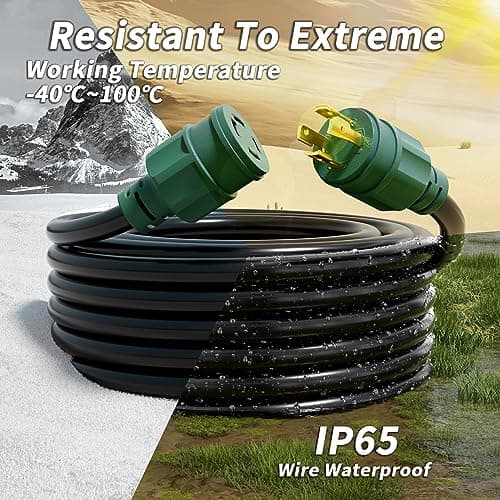
| PlugSAF L14-30 50 ft | 50 ft | 10 AWG, 4 conductor | 125/250 V, 3,750/7,500 W, IP65 |
| RVGUARD L14-30 100 ft | 100 ft | 10 AWG SJTW | ETL listed, -40 F to 221 F jacket |
Longer cords cost voltage, which is why the gauge matters more as length grows. Generator cord gauge guide has the amps-by-length table, and the best generator extension cords ranks the field. The short rule: at 30 amps, do not go below 10 AWG at any length you would actually use.
What makes 20 feet practical
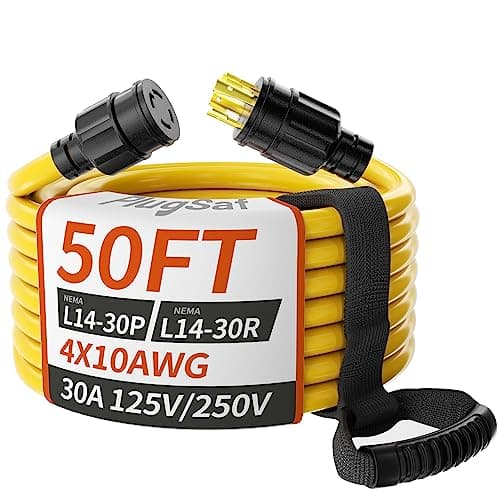
Reaching a distant inlet
PlugSaf 50 ft 30A L14-30 Cord, 10 AWG
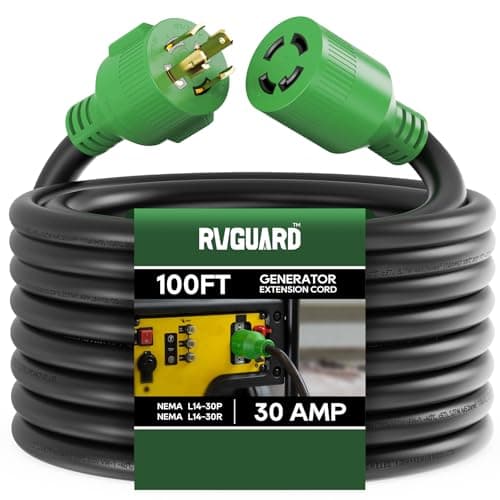
Very long runs
RVGUARD 100 ft 30A L14-30 Cord, ETL Listed
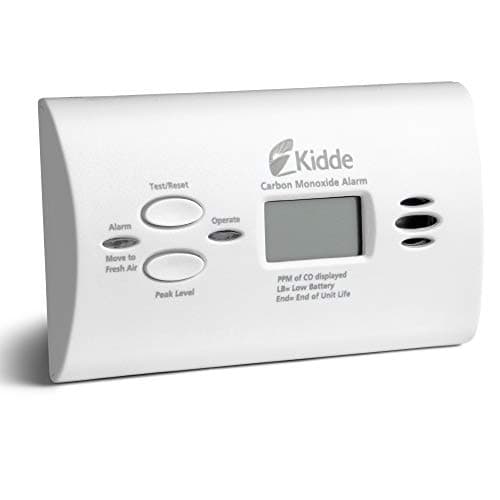
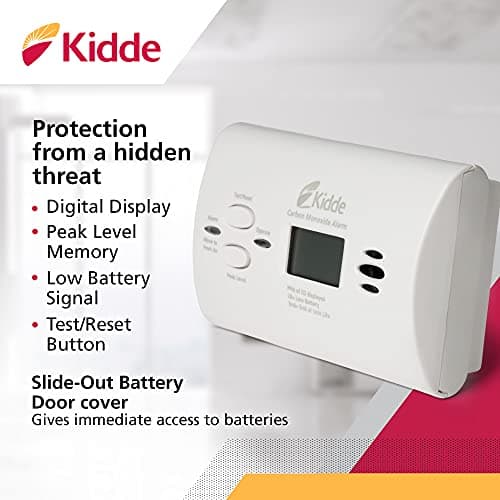
The one accessory nobody should skip
Kidde KN-COPP-B-LPM Battery CO Alarm
A 50-foot 10 AWG cord for most houses, a 100-foot all-weather cord for a long driveway, and the battery CO alarm that belongs inside regardless of how far out the generator sits.
The connection changes the calculation
A cord through a window forces a short, awkward route and keeps a window open. A power inlet box mounted on the outside wall — ideally on the side of the house you want the generator on — removes both problems: the cord plugs into a weather-rated inlet, every window and door stays shut, and the generator can sit wherever is genuinely 20 feet away rather than wherever a window happens to be.
That is the quiet argument for a transfer switch or an interlock kit that has nothing to do with convenience: a panel connection is the version of this where correct placement is the easy option rather than the inconvenient one. Most people do not keep doing the safe thing when the safe thing is annoying.
A few placement details worth getting right
- 1Check your neighbor's wall too. Twenty feet from your house can be 8 feet from theirs, and their windows are no safer than yours.
- 2Point the exhaust at open ground, not at a fence, a wall or a corner that will bounce the plume back.
- 3Keep it level and off wet ground. Pavers or a pallet. A tilted generator reads oil wrong and can starve the engine.
- 4Think about wind. If there is a prevailing direction in a storm, put the generator downwind of the house, not upwind of it.
- 5Mark the spot now. Choosing a legitimate position in daylight, with a tape measure, takes five minutes. Choosing one at 2 a.m. in a storm is how compromises get made.
Questions people actually ask
How far should a generator be from the house?
At least 20 feet, outdoors, with the exhaust directed away from doors, windows and vents — the CPSC's published guidance. Never in a garage, carport, basement or shed, even with the door open.
Can I run a generator in my garage with the door open?
No. The CPSC names this case specifically. A garage is an enclosed space with one side temporarily open, carbon monoxide accumulates in it faster than the opening clears it, and it shares a wall and usually a door with the house.
How far should a generator be from a window?
Further than the 20-foot house minimum if the window is on the side you are placing the generator, and with the exhaust pointed away from it. An open window is the shortest available path for exhaust into the house, which is one reason a wall-mounted power inlet box beats running a cord through a window.
Does a CO shutdown sensor mean I can put the generator closer?
No. A CO sensor protects the area around the generator by stopping the engine when concentrations rise there; it says nothing about what has already drifted into your house. Treat it as a second line of defense behind correct placement, not a substitute for it.
How long does a generator extension cord need to be?
Long enough for the real route rather than the straight line — typically 50 feet for most houses, because a 25-foot cord usually leaves you 8 to 12 feet short of a legitimate position once you go around a corner. Keep 10 AWG at 30 amps regardless of length.
Can a generator be too close to my neighbor's house?
Yes, and it is easy to overlook. Twenty feet from your own wall can be a few feet from theirs, with their bedroom window in the plume. Check both structures when you choose the spot, and point the exhaust at open ground.
Sources
- US Consumer Product Safety Commission — Portable Generator Information CenterThe placement, never-indoors and CO-alarm guidance this site repeats on every generator page.
- Ready.gov — Power OutagesFederal preparedness guidance on outage planning referenced in the checklist sections.
Read next
Guide
Generator Carbon Monoxide Safety
The CPSC placement rules, why a garage with the door open is still unsafe, and the battery CO alarm that should be your first purchase.
Guide
How to Run Your House on a Generator
Connection options ranked, the correct start-up sequence, load management, and the back-feeding practice to never attempt.
Best Generator Cord
The Best Generator Extension Cords
Generator cords by gauge, length and connector type, with the certification and connector-match checks that matter.
Top pick · PlugSaf 25 ft 30A L14-30 Cord, 10 AWG
$64.99See the 25 ft 30A L14-30 Cord, 10 AWG on Amazon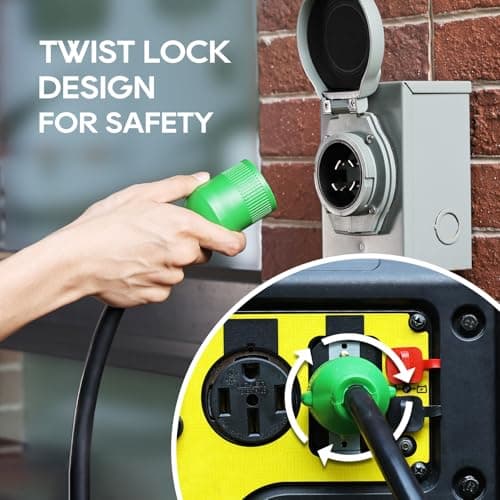
Reference
Generator Cord Gauge Guide
Conductor gauge requirements by amperage, the copper-versus-copper-clad question, and how length affects voltage drop.
Guide
Can You Run a Generator in the Rain?
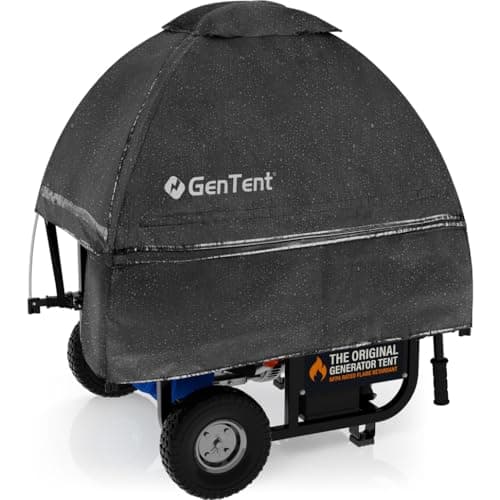
How to run a generator safely in wet weather, what running covers actually do, and the enclosures that are never acceptable.