Generators
Best Generator for a Mobile Home
One question decides this purchase, and it is not the square footage. It is whether your heat runs on electricity.
Disclosure: we earn a commission on purchases made through links on this page, at no cost to you. It does not affect what we recommend or what we say about it — how we are funded.
The short answer
For a mobile home with electric heat, the best generator is the WEN DF1100X: 8,300 running watts on gasoline and 7,500 on propane, 11,000 watts of surge, and an L14-50R so a 50 amp connection can actually pass that output. If your heat is gas or propane, you need far less — the Westinghouse WGen5300DFc's 5,300 running watts covers a furnace blower, a refrigerator, water and lighting comfortably, for roughly half the money.
Mobile home generator advice usually starts with square footage, which tells you almost nothing. A 1,200 square foot manufactured home with a propane furnace and a gas water heater has a smaller backup load than a 900 square foot one with an electric furnace, because floor area does not draw current and heating elements do. So the ranking below splits on the question that actually decides it.
The question that decides your whole purchase
Go look at your furnace and your water heater. If either is electric, your backup load is in a different league from a house with gas appliances, and no amount of generator shopping changes that arithmetic.
Why electric heat changes the answer
- Gas or propane furnace
- 700 W running (blower only)
- Blower start-up surge
- +1,400 W
- Electric furnace or resistance heat
- Kilowatts, not hundreds of watts
- Heat pump
- Compressor surge on top of that
- Electric water heater
- Large continuous resistive load
The 700 and 1,400 watt figures are EWEB's published values for a 1/3 HP furnace fan blower. Electric furnaces, resistance heat and heat pumps do not appear in either published chart we cite, so no figure is given for them — the data plate on your own equipment is the only honest source, and the number will be large.
With gas heat, the generator powers the blower, the igniter and the controls — a few hundred watts, and the fuel for your heating is already flowing during the outage. With electric heat, the generator is the heating element's power supply, and that is a load most portable machines cannot carry alongside anything else. What size generator to run a furnace works both cases out in full.
The practical consequence for an all-electric manufactured home is usually one of three decisions: buy a big machine and accept the fuel consumption, keep the furnace off the generator and heat one room another way, or treat backup as "everything except heat" and plan around it. All three are legitimate. Pretending a 5,000 watt generator runs an electric furnace is not.
The selection criteria, in the order they decided the ranking
- 1Running watts for your heat type. This is the whole decision. Everything below is a tiebreaker.
- 2Surge headroom for the largest motor. A well pump, a heat pump compressor or an air conditioner sets this, and surge scales faster than running load as motors get bigger.
- 3A published 240 V outlet that matches the connection you will install. An L14-30R for a 30 amp connection, a 14-50R for 50 amps. Output you cannot pass through the outlet is not output.
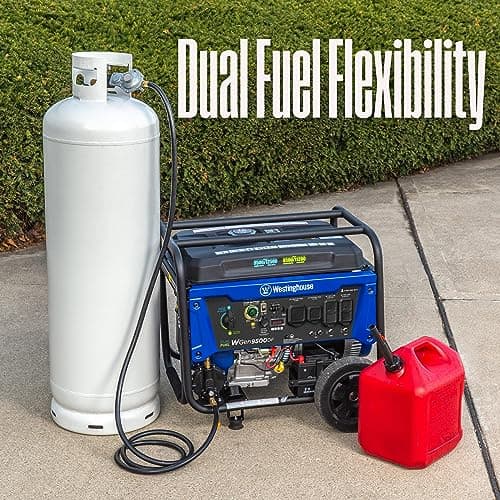
- 4Dual fuel. Many manufactured homes already have a propane tank on site for heating or cooking, which makes the second fuel a supply you already own rather than a shopping trip.
- 5CO shutdown. A manufactured home has a low roofline and a small footprint, which makes generator placement less forgiving, not more.
- 6Weight and portability, because the machine has to get from storage to its spot by one person in bad weather.
The short answer
Quick picks
| # | Product | Best for | Score | Price |
|---|---|---|---|---|
| 1 | 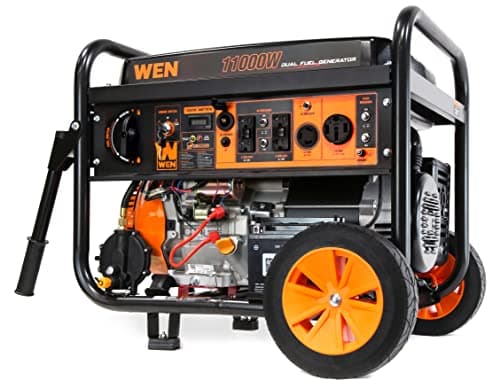 WEN DF1100X 11,000W Dual Fuel The cheapest way to 8,000-plus running watts, and it finally has CO shutoff — but both big outlets are twist-locks, so match the cord before you buy. | Most running watts per dollar | 8.9/10 | $849.00 |
| 2 | 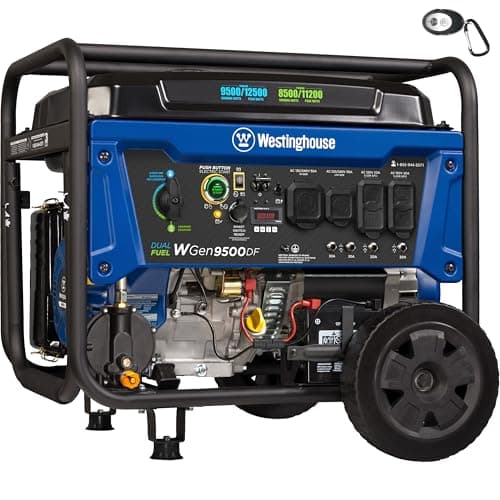 Westinghouse WGen9500DF 12,500W Dual Fuel The most broadly sensible home backup generator on the market: enough running watts for a whole essential-circuit panel, both transfer-switch outlets, and dual fuel — with the caveat that it has no CO shutoff. | The default whole-house pick | 9.4/10 | $999.00 |
| 3 | 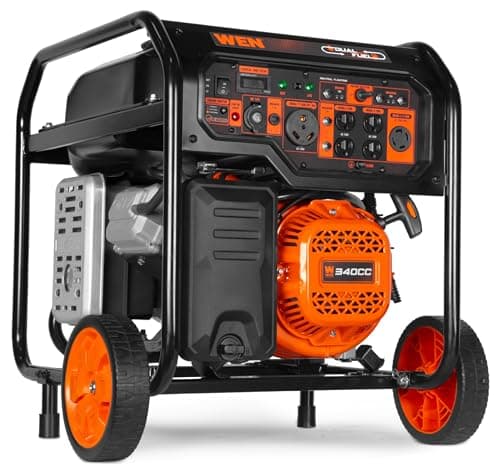 WEN DF8000X 8,000W Dual Fuel The best-value correctly-sized home backup generator here: enough for every essential circuit, dual fuel, CO shutoff, a real transfer-switch outlet, and no money spent on capacity you will not use. | Essential circuits, dual fuel, lowest cost | 9.2/10 | $658.41 |
| 4 | 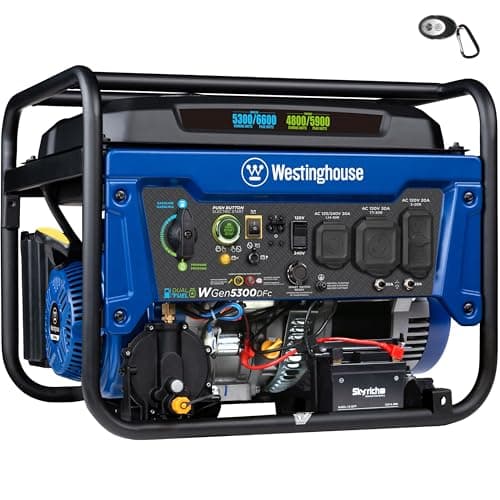 Westinghouse WGen5300DFc 6,600W Dual Fuel The right generator for a house without a well pump or central air: light enough to actually move, with CO shutoff and remote start included. | Light essential circuits, easy to move | 9.0/10 | $649.00 |
| 5 | 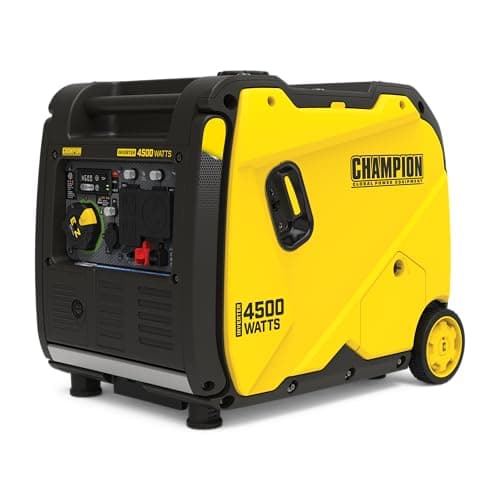 Champion 4,500W RV Ready Inverter The best balance of quiet, clean power and real output for cord-based backup: enough for the essentials, under 3% THD, half the price of the Honda equivalent. | Quiet backup at a sane price | 9.2/10 | $749.00 |
#ad Amazon prices as of November 19, 2026; they may have changed since. Scores are our editorial judgment from published specifications, not test results — how we pick. How we are funded.
Published output, fuel and outlets
| Machine | Running (gas) | Running (propane) | Surge (gas) | 240 V outlets |
|---|---|---|---|---|
| WEN DF1100X | 8,300 W | 7,500 W | 11,000 W | L14-50R (plus 120 V L5-30R) |
| Westinghouse WGen9500DF | 9,500 W | 8,500 W | 12,500 W peak | L14-30R + 14-50R |
| WEN DF8000X | 6,500 W | 5,850 W | 8,000 W | L14-30R |
| Westinghouse WGen5300DFc | 5,300 W | 4,800 W | 6,600 W peak | L14-30R |
| Champion 4,500 W inverter | 3,500 W | Gasoline only | 4,500 W | None — 120 V only |
The outlet column is where mobile home buyers most often get caught. A machine's output only reaches your panel through the connection you install, and a 30 amp connection passes about 7,200 watts at 240 volts no matter what the engine makes. If your answer to the heat question is "electric," you are buying a 50 amp connection as well as a generator — budget for both. The best 30 amp generators covers the other case, where a 30 amp connection is the right call and a smaller machine fills it exactly.
If your heat is electric: the two big picks
WEN DF1100X is the top pick because it delivers the most usable watts per dollar in this registry. WEN publishes 11,000 surge and 8,300 running watts on gasoline, 9,500 surge and 7,500 running on propane, from a 457cc OHV engine with electric start, a 6.6-gallon tank rated at up to 8.5 hours at half load, four 120 V GFCI outlets, an L5-30R, an L14-50R and a 12 V DC outlet, WEN Watchdog CO shutdown, at a published 213.8 lb.
Its honest costs: 214 lb is a two-person lift onto anything, it is a conventional generator rather than an inverter so it is loud and runs at fixed engine speed regardless of load, and its 30 amp outlet is the 120 volt L5-30R — the L14-50R is the one your transfer switch will use, and being a twist-lock it needs a cord to match. If a well pump is in the picture too, the 11,000 watt surge is the specification that makes this machine work where a 7,500 watt one trips.
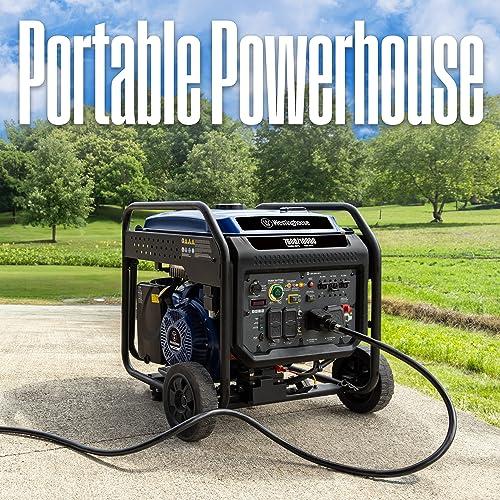
Westinghouse WGen9500DF is the alternative if you want more running headroom and a choice of connection. It publishes 9,500 running and 12,500 peak watts on gasoline, 8,500 running and 11,200 peak on propane, a 457cc engine with a cast-iron sleeve, remote key-fob start with electric start and recoil backup, automatic low-oil shutdown, a digital hour meter, and both an L14-30R and a 14-50R — so it works on a 30 amp connection now and a 50 amp one later. It is the most-recommended machine in this category for good reason. Its cost is 210 lb and a higher price than the WEN for similar numbers.
If your heat is gas or propane: spend much less
This is the happier answer, and it is where most of the money gets saved. With a gas or propane furnace, a realistic essential load for a manufactured home looks like this:
| Load | Running watts | Note |
|---|---|---|
| Furnace blower, 1/3 HP | 700 W | EWEB published figure |
| Refrigerator | 700 W | 2,200 W surge is the binding figure |
| Well pump, 1/3 HP | 800 W | Only if you are on a well |
| Lighting, modem, charging | 300 W | Small and non-negotiable |
| Running total | ~2,500 W | Before derating |
| Largest single surge | +2,200 W | The refrigerator |
That lands at roughly 3,100 running watts with about 4,700 watts of starting capability needed — which the Westinghouse WGen5300DFc covers with real margin at 5,300 running and 6,600 peak watts on gasoline, 4,800 and 5,900 on propane. It publishes automatic low-oil and CO shutdown, push-button electric start with a remote key fob, a propane hose in the box, an L14-30R, and 135.6 lb, which is the lightest of the conventional machines here and a genuine advantage when you are moving it alone.
WEN DF8000X is the one to buy instead if you want headroom for a well pump or a window air conditioner: 6,500 running watts on gasoline, 5,850 on propane, 8,000 surge, Watchdog CO shutdown, a wheel kit included, and both a TT-30R and an L14-30R. It is the best-balanced machine on this page and it fills a 30 amp connection almost completely.
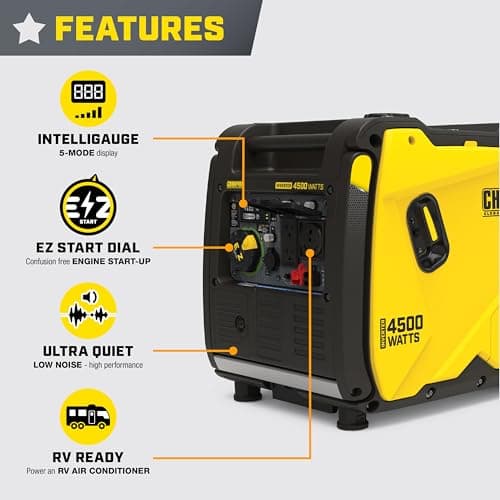
Champion's 4,500 W inverter is here for the household whose honest answer is "the fridge, the furnace blower, lights and phones." It publishes 3,500 running and 4,500 starting watts at under 3% THD, 61 dBA, up to 14 hours of runtime, CO Shield shutdown and an Intelligauge power meter, at 92.2 lb. It is the quietest option here by a wide margin, which matters when your neighbors are closer than in a subdivision. Its hard limit is that it has no 240 volt outlet at all — it cannot feed a standard transfer switch, so this is a cords-and-appliances pick, not a panel pick.
Getting the power inside
Running cords through a window works and is honest, but it keeps a window open and limits where the generator can sit. A panel connection removes both problems, and for a manufactured home the choice between a transfer switch and an interlock kit comes down to your panel: an interlock kit is cheaper and energizes the whole panel, but only if the kit's published breaker-spacing requirement matches your panel brand and layout.
The connection, both routes
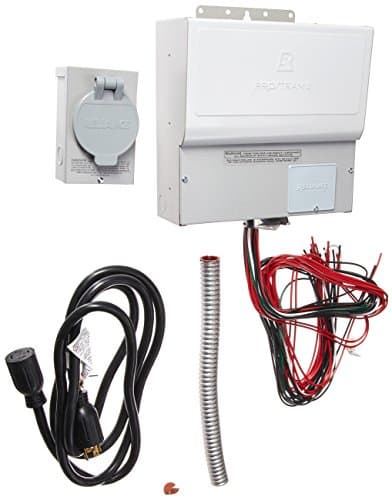
The ten-circuit default
Reliance Controls 310CRK 10-Circuit 30A Kit
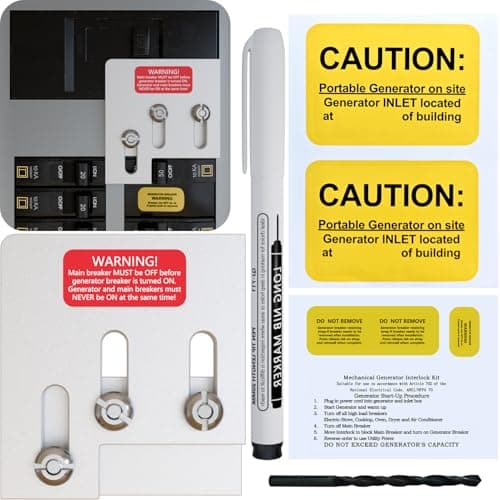
Square D QO and Homeline, 150-200A
SPZOCE Interlock Kit — Square D QO/Homeline 150/200A
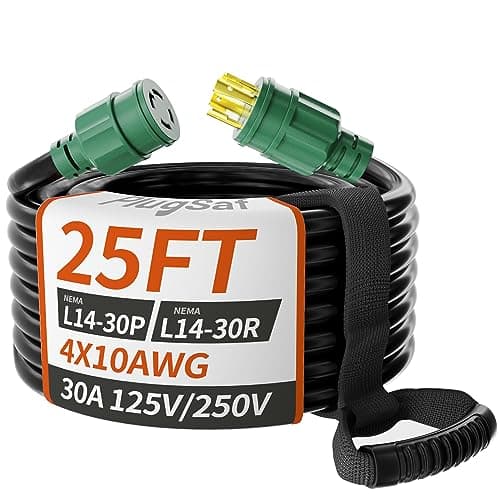
The default generator cord
PlugSaf 25 ft 30A L14-30 Cord, 10 AWG
A 10-circuit 30 A manual transfer switch, an interlock kit for Square D QO and Homeline 150-200 A panels, and a 10 AWG L14-30 cord. Check your panel's make and the kit's spacing requirement before ordering an interlock kit — that mismatch is the most common failed purchase in this category.
Interlock kit vs transfer switch compares the two properly, interlock kit panel compatibility is the reference for which kit fits which panel, and how transfer switch installation works covers what the electrician actually does. In most US jurisdictions either route is licensed work needing a permit and an inspection.
Who each one is for
- WEN DF1100X — electric heat, or a well pump plus everything else. Most usable watts per dollar here. 214 lb and loud are the costs.
- Westinghouse WGen9500DF — the same job with more headroom, both 240 V outlets, and remote key-fob start. Costs more for similar numbers.
- WEN DF8000X — gas heat plus a well pump or a window AC. Dual fuel, fills a 30 amp connection, RV outlet as a bonus.
- Westinghouse WGen5300DFc — gas heat, essential circuits, dual fuel, lightest conventional machine here. Little headroom to grow into.
- Champion 4,500 W inverter — quiet, efficient, cords-only. No 240 V outlet, so it will not feed a transfer switch.
- Running watts
- 8,300 W gas / 7,500 W LP
- Starting watts
- 11,000 W gas
- Runtime
- 8.5 h at half load
#1 · Most running watts per dollar
WEN DF1100X 11,000W Dual Fuel
The cheapest way to 8,000-plus running watts, and it finally has CO shutoff — but both big outlets are twist-locks, so match the cord before you buy.
#ad Price as of November 19, 2026; it may have changed since. How we are funded.
Why we picked it
- 8,300 running watts for well under a thousand dollars is the best watts-per-dollar in this roundup
- Fuel selection by dial — simple and nothing to misconfigure
- Watchdog CO shutdown is included, which the DF1100T it replaces did not have
Good to know
- The 30A twist-lock is L5-30R (120V only), not L14-30R — check your transfer switch inlet before buying
Published specification & our scoring
- Gasoline: 11,000 surge / 8,300 running watts (manufacturer)
- Propane: 9,500 surge / 7,500 running watts (manufacturer)
- 457cc 4-stroke OHV engine, electric start
- 6.6-gallon tank, up to 8.5 hours at half load (manufacturer)
- WEN Watchdog CO shutdown sensor
- Four 120V GFCI 5-20R, one L5-30R 120V 30A, one L14-50R 120/240V 50A twist-lock, one 12V DC
- Published weight 213.8 lb
- Ships with a wheel and handle kit, a bottle of oil, a 47-inch LPG hose and a two-year warranty (manufacturer)
- Output headroom
- 8
- Fuel flexibility
- 9
- Transfer-switch fit
- 7
- Runtime
- 6
- Safety features
- 8
- Value
- 10
Specification figures are the manufacturer’s published values. Scores are our editorial judgment from those figures and are never published as structured review data — how we pick.
- Running watts
- 9,500 W gas / 8,500 W LP
- Starting watts
- 12,500 W gas
- Outlets
- L14-30R + 14-50R
#2 · The default whole-house pick
Westinghouse WGen9500DF 12,500W Dual Fuel
The most broadly sensible home backup generator on the market: enough running watts for a whole essential-circuit panel, both transfer-switch outlets, and dual fuel — with the caveat that it has no CO shutoff.
#ad Price as of November 19, 2026; it may have changed since. How we are funded.
Why we picked it
- 9,500 running watts covers a well pump, furnace blower, fridge and a lot of lighting simultaneously — the load most homes actually need
- Both the L14-30R and the 14-50R are transfer-switch ready, so it fits a 30A interlock setup now and a 50A panel later
- Dual fuel means a propane tank is a legitimate plan when the gas stations have no power either
- Remote start matters more than it sounds: you start it from inside without going out in the weather
Good to know
- 210 lb is a two-person move on anything but flat, dry ground
Published specification & our scoring
- 9,500 running / 12,500 peak watts on gasoline (manufacturer)
- 8,500 running / 11,200 peak watts on propane (manufacturer)
- 457cc Westinghouse 4-stroke OHV engine with cast-iron sleeve
- Remote key-fob start, electric start and recoil backup
- Two 120V 5-20R GFCI, one L14-30R 30A, one 14-50R 50A — all transfer-switch ready
- Automatic low-oil shutdown and digital hour meter
- Published weight 210 lb
- 3-year limited warranty (manufacturer)
- Output headroom
- 9
- Fuel flexibility
- 9
- Transfer-switch fit
- 10
- Runtime
- 8
- Safety features
- 6
- Value
- 9
Specification figures are the manufacturer’s published values. Scores are our editorial judgment from those figures and are never published as structured review data — how we pick.
- Running watts
- 6,500 W gas / 5,850 W LP
- Starting watts
- 8,000 W gas
- CO shutdown
- Watchdog
#3 · Essential circuits, dual fuel, lowest cost
WEN DF8000X 8,000W Dual Fuel
The best-value correctly-sized home backup generator here: enough for every essential circuit, dual fuel, CO shutoff, a real transfer-switch outlet, and no money spent on capacity you will not use.
#ad Price as of November 19, 2026; it may have changed since. How we are funded.
Why we picked it
- 6,500 running watts with CO shutdown, dual fuel and a proper L14-30R, for the price of a gasoline-only machine
- 10.5 hours at half load is better runtime than WEN's larger DF1100X
- The TT-30R makes it an RV generator as well, which widens its usefulness between outages
Good to know
- Good to know: 6,500 running watts covers the essentials; central air needs a larger machine
Published specification & our scoring
- Gasoline: 8,000 surge / 6,500 rated watts (manufacturer)
- Propane: 7,200 surge / 5,850 rated watts (manufacturer)
- 340cc engine, electric start
- WEN Watchdog CO shutdown sensor
- 6.7-gallon tank, up to 10.5 hours at half load (manufacturer)
- Wheel kit included; four 120V 5-20R, one TT-30R RV outlet, one L14-30R transfer-switch-ready twist-lock
- Output headroom
- 7
- Fuel flexibility
- 9
- Transfer-switch fit
- 9
- Runtime
- 9
- Safety features
- 8
- Value
- 10
Specification figures are the manufacturer’s published values. Scores are our editorial judgment from those figures and are never published as structured review data — how we pick.
- Running watts
- 5,300 W gas / 4,800 W LP
- Starting watts
- 6,600 W gas
- Weight
- 136 lb
#4 · Light essential circuits, easy to move
Westinghouse WGen5300DFc 6,600W Dual Fuel
The right generator for a house without a well pump or central air: light enough to actually move, with CO shutoff and remote start included.
#ad Price as of November 19, 2026; it may have changed since. How we are funded.
Why we picked it
- 136 lb is genuinely one-person movable on a flat driveway, which changes how practical a generator is
- CO shutdown, remote start and a propane hose all included at the bottom of the dual-fuel range
- 5,300 running watts covers a fridge, furnace blower, sump pump and lighting with headroom
Good to know
- Good to know: sized for an essential-circuit load — run the sizing math before counting on a well pump, a furnace and a fridge together
Published specification & our scoring
- Gasoline: 6,600 peak / 5,300 running watts (manufacturer)
- Propane: 5,900 peak / 4,800 running watts (manufacturer)
- 274cc Westinghouse 4-stroke OHV engine, cast-iron sleeve
- Automatic low-oil AND carbon monoxide shutdown
- Push-button electric start with remote key fob
- 4.7-gallon tank; one 5-20R duplex, one TT-30R RV, one L14-30R transfer-switch ready
- Propane hose included; published weight 135.6 lb
- Output headroom
- 6
- Fuel flexibility
- 9
- Transfer-switch fit
- 8
- Portability
- 9
- Safety features
- 9
- Value
- 9
Specification figures are the manufacturer’s published values. Scores are our editorial judgment from those figures and are never published as structured review data — how we pick.
- Running watts
- 3,500 W
- Noise
- 61 dBA (mfr)
- Runtime
- Up to 14 h (mfr)
#5 · Quiet backup at a sane price
Champion 4,500W RV Ready Inverter
The best balance of quiet, clean power and real output for cord-based backup: enough for the essentials, under 3% THD, half the price of the Honda equivalent.
#ad Price as of November 19, 2026; it may have changed since. How we are funded.
Why we picked it
- 3,500 running watts of clean power is enough for a fridge, furnace blower, lights and electronics — a real essential-circuit load, quietly
- 14-hour runtime is excellent for an inverter this size
- Parallel capability means you can double output later rather than replacing the unit
Good to know
- 92 lb is heavy for something you cannot connect to a panel
Published specification & our scoring
- 4,500 starting / 3,500 running watts (manufacturer)
- 61 dBA, up to 14 hours runtime (manufacturer)
- Under 3% THD — safe for sensitive electronics (manufacturer)
- CO Shield carbon monoxide auto shutoff
- 120V 29.2A RV outlet plus a 120V 20A household duplex
- Parallel ready with another 2,800W-or-higher Champion inverter
- Intelligauge with power meter; published weight 92.2 lb
- Noise
- 8
- Power quality
- 9
- Output
- 7
- Runtime
- 9
- Safety features
- 9
- Value
- 9
Specification figures are the manufacturer’s published values. Scores are our editorial judgment from those figures and are never published as structured review data — how we pick.
A neighboring case with the opposite problem: the best generator for a cabin ranks on propane and long storage rather than on electric heat loads, which is the right lens for a property you visit rarely.
In short
Our recommendation
Best for a Mobile Home
8.9/10WEN DF1100X 11,000W Dual Fuel
The cheapest way to 8,000-plus running watts, and it finally has CO shutoff — but both big outlets are twist-locks, so match the cord before you buy.
Runner-up
9.4/10Westinghouse WGen9500DF 12,500W Dual Fuel
The most broadly sensible home backup generator on the market: enough running watts for a whole essential-circuit panel, both transfer-switch outlets, and dual fuel — with the caveat that it has no CO shutoff.
#ad Price as of November 19, 2026; it may have changed since. How we are funded.
Brands: want your product tested? For Brands.
Questions people actually ask
What size generator do I need for a mobile home?
It depends entirely on whether your heat is electric. With a gas or propane furnace, a realistic essential load works out to roughly 3,100 running watts with about 4,700 watts of starting capability, which a 5,300 running-watt machine covers comfortably. With an electric furnace or heat pump, the heating load alone can exceed what a portable generator supplies — size it from your equipment's data plate.
What is the best generator for a mobile home?
For electric heat, the WEN DF1100X: 8,300 running watts on gasoline, 7,500 on propane, 11,000 watts of surge and an L14-50R outlet. For gas or propane heat, the Westinghouse WGen5300DFc at 5,300 running watts does the job for roughly half the money.
Will a 5000 watt generator run a mobile home?
With gas or propane heat, yes — comfortably, for a furnace blower, a refrigerator, a well pump, lighting and outlets. With electric heat, no. Electric resistance heating draws kilowatts as heat rather than hundreds of watts as air movement, and it is not in either published appliance chart we cite.
What size generator for a double wide mobile home?
The same question applies: heat type first, square footage last. A double wide with gas heat may need no more than a single wide with gas heat, because the extra floor area adds lighting and outlets rather than motors. Count the actual appliances you intend to run and add the largest single surge once.
Can I plug a generator into my mobile home's outlet?
No. Back-feeding a 30 or 50 amp outlet with a double-male cord energizes your wiring with no isolation from the utility feed, bypasses fault protection and leaves exposed live pins. Use an inlet box feeding a transfer switch or an interlock kit, which in most US jurisdictions is licensed work requiring a permit and an inspection.
Is a dual fuel generator worth it for a mobile home?
Often more than elsewhere, because many manufactured homes already keep propane on site for heating or cooking — so the second fuel is a supply you own rather than a trip to buy. Propane also does not go stale, which is the real failure mode of a machine that sits unused most of the year.
Sources
- Eugene Water & Electric Board — Generator Sizing ConsiderationsPublished appliance running and additional-starting watt figures used in the sizing arithmetic on this page.
- US Consumer Product Safety Commission — Portable Generator Information CenterThe placement and carbon monoxide guidance every generator page on this site links to.
Read next
Best 30A Match
The Best 30 Amp Generators for Home Backup
Generators matched to a 30 amp connection, ranked on published output against the 7,200 watt ceiling and on having a real L14-30R outlet.
Top pick · Westinghouse ecoGen10000 10,000W Open-Frame Inverter
$1,149.00See the ecoGen10000 10,000W Open-Frame Inverter on Amazon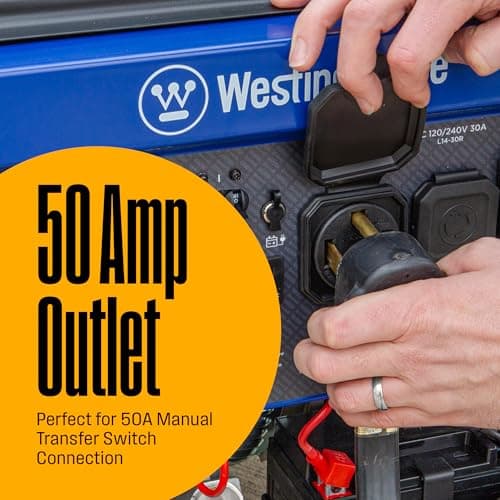
Guide
What Size Generator for a House?
Load tables for four realistic house types — gas heat, well pump, central air and electric heat — with the generator class each needs.
Guide
What Size Generator to Run a Furnace?
Furnace blower sizing from published figures, the gas-versus-electric divide, and why power quality matters for modern control boards.
Best Overall Home Backup
The Best Home Backup Generators
Nine conventional-frame generators ranked for whole-house backup, with per-fuel running watts and transfer-switch fit.
Top pick · Westinghouse WGen9500DF 12,500W Dual Fuel
$999.00See the WGen9500DF 12,500W Dual Fuel on Amazon
Connection Comparison
Interlock Kit vs Transfer Switch
Interlock kit against transfer switch on cost, circuit access, load management, panel fit and inspection risk.