Generators
The Best Generator for a Cabin
The cabin problem is not watts. It is a machine that must start on the first pull after four months alone in the cold.
Written byMike M.
Published
Disclosure: we earn a commission on purchases made through links on this page, at no cost to you. It does not affect what we recommend or what we say about it — how we are funded.
The short answer
The best generator for a cabin is the Champion 4,500 W dual fuel inverter: 3,500 running watts, 61 dBA, up to 14 hours of runtime, CO Shield shutdown, and the ability to run on propane out of the box — which is the specification that matters most, because propane does not go stale between visits. For a cabin with a well pump or 240 V loads, the Westinghouse WGen5300DFc publishes 5,300 running watts on gasoline and 4,800 on propane with a transfer-switch-ready L14-30R.
A cabin generator is a different purchase from a house generator, and the reason is time rather than power. A home backup machine sits in a garage and gets exercised. A cabin machine sits alone through a winter, unvisited, and is then asked to start immediately — often in the cold, often by one person, often with no hardware store within an hour.
That reframes the whole spec sheet. Fuel that survives storage outranks peak watts. Weight you can move alone outranks output you will not use. A published CO shutdown matters more than usual, because a cabin's temptation to run the machine under a porch roof is stronger than a suburban house's.
The cabin criteria, in order
- 1Propane capability. The single most important specification. Gasoline left in a carburetor for four months is the most common reason a stored generator will not start. Propane in a sealed cylinder is as good in year three as on day one.
- 2Weight one person can move. Cabin ground is rarely flat, dry or paved. Everything here is under 136 lb except one deliberate exception.
- 3Published noise. A cabin is somewhere you went to be quiet, and often somewhere with neighbors closer than you expected. Three picks publish a dBA figure with a stated condition; the rest do not.
- 4Runtime per tank. Refueling in the dark on uneven ground is the part of generator ownership most likely to hurt you. Longer runtime means fewer trips with a can.
- 5Enough watts for the real cabin load — a well pump if there is one, a fridge, a water heater element if it is electric, lights and devices. Not a whole suburban house.
The short answer
Quick picks
| # | Product | Best for | Score | Price |
|---|---|---|---|---|
| 1 | 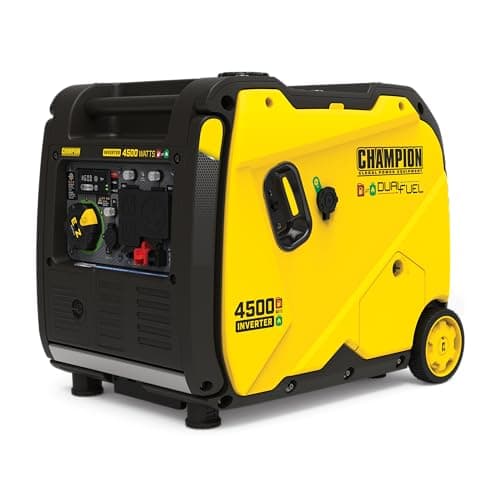 Champion 4,500W Dual Fuel Inverter The gas-only Champion 4500 with a propane option added — worth the premium if your outage plan runs on tanks rather than trips to a gas station. | Quiet plus a propane contingency | 9.2/10 | $999.00 |
| 2 | 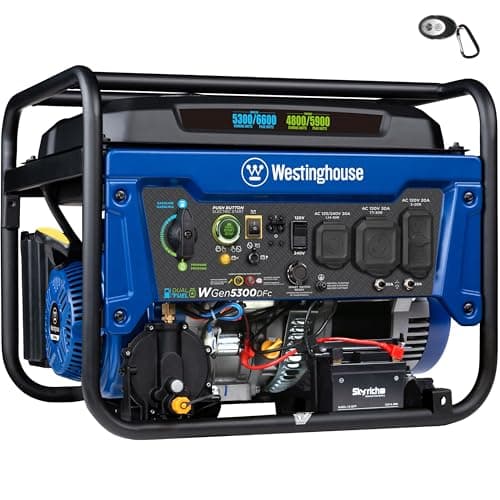 Westinghouse WGen5300DFc 6,600W Dual Fuel The right generator for a house without a well pump or central air: light enough to actually move, with CO shutoff and remote start included. | Light essential circuits, easy to move | 9.0/10 | $649.00 |
| 3 | 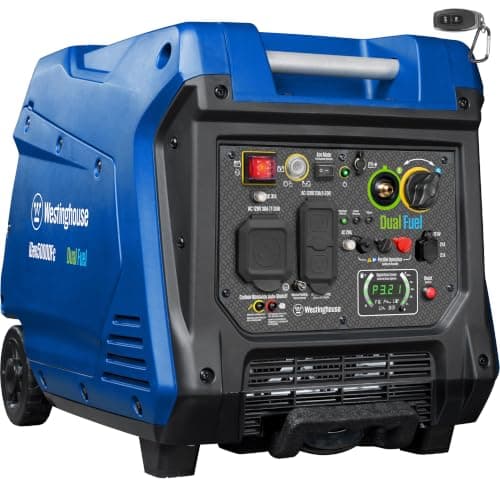 Westinghouse iGen5000DFc 5,000W Dual Fuel Inverter The quietest way to get around 4,000 running watts on either fuel, provided you are running cords rather than a transfer switch. | Quietest dual fuel at 4,000 running watts | 9.3/10 | $999.00 |
| 4 | 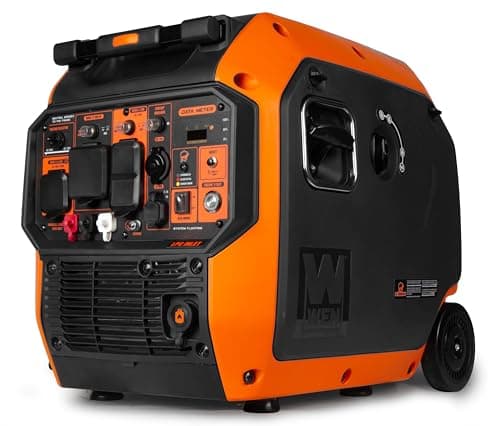 WEN DF680iX 6,800W Dual Fuel Inverter The lightest transfer-switch-capable dual fuel inverter here — with one serious caveat: its bonded neutral must be checked against your transfer switch. | Dual fuel inverter with 240V | 8.8/10 | $798.00 |
| 5 | 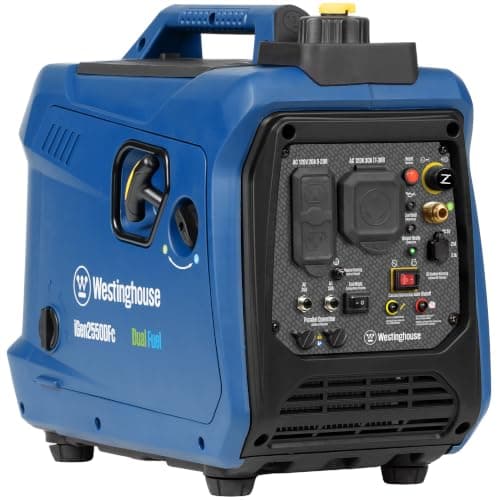 Westinghouse iGen2550DFc 2,550W Dual Fuel Inverter The right small dual fuel inverter if you have a genuinely safe outdoor place to run it — and for most apartment dwellers, a battery power station is the better answer. | Apartments and balconies | 8.9/10 | $529.00 |
#ad Amazon prices as of November 19, 2026; they may have changed since. Scores are our editorial judgment from published specifications, not test results — how we pick. How we are funded.
The published specifications side by side
| Machine | Running watts | Propane | Noise | Weight | 240 V |
|---|---|---|---|---|---|
| Champion 4,500 W Dual Fuel Inverter | 3,500 W (gas) | Yes, figure not published | 61 dBA | 99.2 lb | No |
| Westinghouse WGen5300DFc | 5,300 W / 4,800 LP | Yes, 4,800 W | Not published | 135.6 lb | L14-30R |
| Westinghouse iGen5000DFc | Not published | Yes, figure not published | As low as 52 dBA | 105.8 lb | No |
| WEN DF680iX | 5,100 W / 4,500 LP | Yes, 4,500 W | Not published | 99.2 lb | L14-30R |
| Westinghouse iGen2550DFc | 1,900 W | Yes, figure not published | As low as 52 dBA | 42 lb | No |
The table makes the trade explicit. The two machines with a real 240 V outlet — the WGen5300DFc and the DF680iX — are the only ones that can feed a cabin's panel through a transfer switch or interlock, and neither publishes a noise rating. The two quietest machines publish 52 dBA and cannot do 240 V at all.
Why the top pick is the dual fuel inverter
The Champion 4,500 W dual fuel inverter publishes 4,500 starting and 3,500 running watts, 61 dBA, up to 14 hours of runtime, under 3% THD on the gas-only version of the same platform, CO Shield auto shutoff, electric start with an EZ Start dial, Intelligauge metering, and 99.2 lb with a parallel-ready port. It runs on propane out of the box, with no conversion kit and no decisions to make.
For a cabin that is the right set of compromises. Leave the gasoline tank empty and a cylinder connected, and the machine starts on a fuel that cannot spoil. Three thousand five hundred running watts covers a fridge, a pump on a cord, lights, a water heater element on its own and the devices people actually bring. The costs are real: no 240 V output, so nothing hard-wired, and Champion does not publish the propane running figure for this model.
If quiet is the deciding factor, the Westinghouse iGen5000DFc publishes as low as 52 dBA with a double-insulated cover and variable-speed engine, dual fuel, remote electric start and a CO sensor — the quietest dual fuel machine in this registry. How quiet is a quiet generator explains what those decibel figures mean in practice and why the conditions attached to them matter.
The cabin with a well pump is a different machine
A well pump changes the answer because of the start-up surge, not the running load. A deep well pump can demand several times its running watts for the second or two it takes to spin up, and no 3,500 watt inverter will carry that alongside a running fridge.
If the cabin has a well, the honest shortlist is the WGen5300DFc or the WEN DF680iX — both publish a transfer-switch-ready L14-30R and over 4,500 running watts on propane — and you should read generator size for a well pump before buying either. A soft starter on the pump is often cheaper than the bigger generator it saves you from buying.
One caution specific to the WEN: it publishes a bonded-neutral 240 V configuration, and many transfer switches and inlet setups require a floating neutral. Confirm that with your electrician before buying it for panel use. Do I need a transfer switch covers the connection decision for a cabin that has never had one.
- Running watts
- 3,500 W
- Noise
- 61 dBA (mfr)
- Fuel
- Gas / propane
#1 · Quiet plus a propane contingency
Champion 4,500W Dual Fuel Inverter
The gas-only Champion 4500 with a propane option added — worth the premium if your outage plan runs on tanks rather than trips to a gas station.
#ad Price as of November 19, 2026; it may have changed since. How we are funded.
Why we picked it
- Propane capability on a quiet inverter is the best of both worlds for a multi-day outage
- Propane stores indefinitely, which is the single biggest practical advantage over gasoline
- The EZ Start dial removes the choke-and-pray step
Good to know
- Only 7 lb heavier than the gas-only version, but meaningfully more expensive
Published specification & our scoring
- 4,500 starting / 3,500 running watts (manufacturer)
- Dual fuel — gasoline or propane out of the box
- 61 dBA; up to 14 hours on gasoline at 3,500 running watts, up to 21 hours on propane at 3,150 running watts (manufacturer)
- CO Shield auto shutoff, electric start with EZ Start dial
- Intelligauge with power meter
- Parallel ready; published weight 99.2 lb
- Noise
- 8
- Power quality
- 9
- Fuel flexibility
- 9
- Output
- 7
- Safety features
- 9
- Value
- 8
Specification figures are the manufacturer’s published values. Scores are our editorial judgment from those figures and are never published as structured review data — how we pick.
- Running watts
- 5,300 W gas / 4,800 W LP
- Starting watts
- 6,600 W gas
- Weight
- 136 lb
#2 · Light essential circuits, easy to move
Westinghouse WGen5300DFc 6,600W Dual Fuel
The right generator for a house without a well pump or central air: light enough to actually move, with CO shutoff and remote start included.
#ad Price as of November 19, 2026; it may have changed since. How we are funded.
Why we picked it
- 136 lb is genuinely one-person movable on a flat driveway, which changes how practical a generator is
- CO shutdown, remote start and a propane hose all included at the bottom of the dual-fuel range
- 5,300 running watts covers a fridge, furnace blower, sump pump and lighting with headroom
Good to know
- Good to know: sized for an essential-circuit load — run the sizing math before counting on a well pump, a furnace and a fridge together
Published specification & our scoring
- Gasoline: 6,600 peak / 5,300 running watts (manufacturer)
- Propane: 5,900 peak / 4,800 running watts (manufacturer)
- 274cc Westinghouse 4-stroke OHV engine, cast-iron sleeve
- Automatic low-oil AND carbon monoxide shutdown
- Push-button electric start with remote key fob
- 4.7-gallon tank; one 5-20R duplex, one TT-30R RV, one L14-30R transfer-switch ready
- Propane hose included; published weight 135.6 lb
- Output headroom
- 6
- Fuel flexibility
- 9
- Transfer-switch fit
- 8
- Portability
- 9
- Safety features
- 9
- Value
- 9
Specification figures are the manufacturer’s published values. Scores are our editorial judgment from those figures and are never published as structured review data — how we pick.
- Output
- 5,000 W peak gas
- Noise
- As low as 52 dBA (mfr)
- Fuel
- Gas / propane
#3 · Quietest dual fuel at 4,000 running watts
Westinghouse iGen5000DFc 5,000W Dual Fuel Inverter
The quietest way to get around 4,000 running watts on either fuel, provided you are running cords rather than a transfer switch.
#ad Price as of November 19, 2026; it may have changed since. How we are funded.
Why we picked it
- 52 dBA at 5,000 peak watts is the best noise-per-watt figure of any dual fuel machine here
- Dual fuel plus remote start plus CO sensor at a mid-range price
- The double-insulated cover is also weather protection the open-frame machines do not have
Good to know
- 106 lb and enclosed — awkward to carry despite the telescoping handle
Published specification & our scoring
- 5,000 peak watts on gasoline (manufacturer)
- As low as 52 dBA with a double-insulated cover, muffler and variable-speed engine (manufacturer)
- Manufacturer states inverter technology cuts fuel use up to 50% versus a conventional generator
- 224cc Westinghouse 4-stroke OHV engine
- RV-ready TT-30R 30A, 5-20R 120V 20A duplex, two USB
- Remote electric start, CO sensor; parallel capable
- Published weight 105.8 lb
- Noise
- 10
- Power quality
- 9
- Fuel flexibility
- 9
- Output
- 7
- Safety features
- 9
- Value
- 8
Specification figures are the manufacturer’s published values. Scores are our editorial judgment from those figures and are never published as structured review data — how we pick.
- Running watts
- 5,100 W gas / 4,500 W LP
- Peak watts
- 6,800 W gas
- 240V
- L14-30R
#4 · Dual fuel inverter with 240V
WEN DF680iX 6,800W Dual Fuel Inverter
The lightest transfer-switch-capable dual fuel inverter here — with one serious caveat: its bonded neutral must be checked against your transfer switch.
#ad Price as of November 19, 2026; it may have changed since. How we are funded.
Why we picked it
- An L14-30R on a 99 lb inverter machine is unusual — this is the lightest unit here that can feed a 30A transfer switch
- Dual fuel plus CO shutdown plus inverter power under 100 lb
- The EV charging capability is a real secondary use between outages
Good to know
- Bonded neutral — this matters: many transfer switches and inlet setups require a floating (switched) neutral. Confirm compatibility with your electrician before buying for panel use
Published specification & our scoring
- Gasoline: 6,800 surge / 5,100 rated watts (manufacturer)
- Propane: 6,000 surge / 4,500 rated watts (manufacturer)
- 224cc dual-fuel engine
- Bonded-neutral 240V configuration provides low-power Level 2 EV charging (manufacturer)
- WEN Watchdog CO shutdown sensor
- One L14-30R 120V/240V, two 120V three-prong, onboard wheels and telescoping handle
- Published weight 99.2 lb
- Output headroom
- 6
- Power quality
- 8
- Fuel flexibility
- 9
- Transfer-switch fit
- 6
- Portability
- 8
- Value
- 9
Specification figures are the manufacturer’s published values. Scores are our editorial judgment from those figures and are never published as structured review data — how we pick.
- Running watts
- 1,900 W
- Noise
- As low as 52 dBA (mfr)
- Weight
- 42 lb
#5 · Apartments and balconies
Westinghouse iGen2550DFc 2,550W Dual Fuel Inverter
The right small dual fuel inverter if you have a genuinely safe outdoor place to run it — and for most apartment dwellers, a battery power station is the better answer.
#ad Price as of November 19, 2026; it may have changed since. How we are funded.
Why we picked it
- 42 lb, 52 dBA, dual fuel and a CO sensor — the most complete small inverter package here
- 1,900 running watts runs a fridge and a few lights, which is the realistic apartment-scale plan
- Propane means no gasoline stored in a small living space
Good to know
- Good to know: 1,900 running watts is a fridge-and-lights machine rather than a whole-house one
Published specification & our scoring
- 2,550 peak / 1,900 rated watts at under 3% THD (manufacturer)
- As low as 52 dBA; up to 11 hours on a 1.16-gallon tank at 25% load (manufacturer)
- Dual fuel: gasoline or propane
- CO sensor with automatic shutdown
- One RV-ready TT-30R, two 120V 20A outlets
- Parallel capable; published weight 42 lb (manufacturer states 43.2 lb shipping)
- Noise
- 10
- Power quality
- 9
- Portability
- 10
- Fuel flexibility
- 9
- Output
- 4
- Value
- 8
Specification figures are the manufacturer’s published values. Scores are our editorial judgment from those figures and are never published as structured review data — how we pick.
What else a cabin needs
The machine is the smaller half of a cabin power plan. What ruins the other half is almost always fuel and weather: a tank of gasoline that has turned to varnish, or a generator that cannot be run because it is raining and there is nowhere dry and ventilated to put it.
The cabin kit
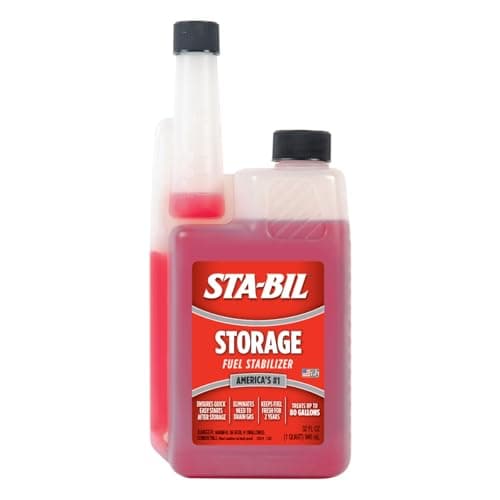
Keeping stored gasoline usable
STA-BIL Storage Fuel Stabilizer, 32 oz
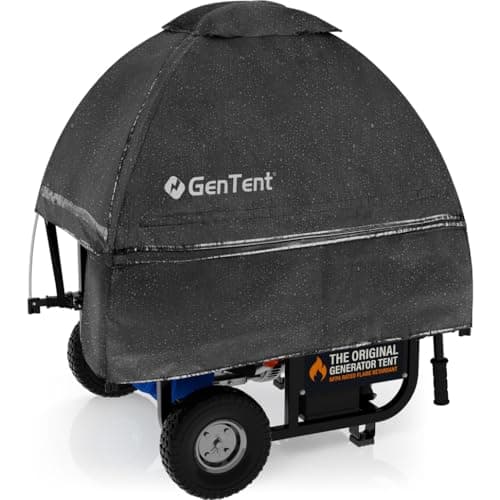
Running a generator in real weather
GenTent Universal Open Frame Generator Tent
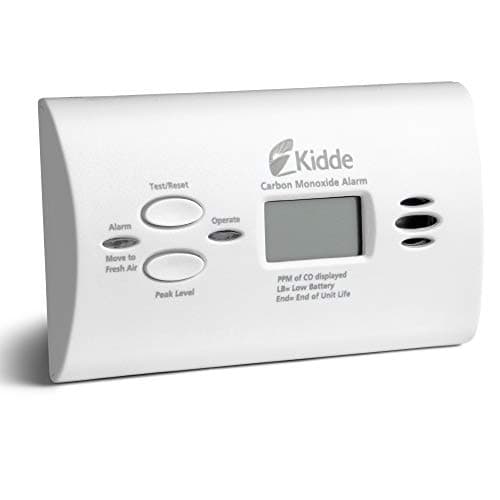
The one accessory nobody should skip
Kidde KN-COPP-B-LPM Battery CO Alarm
A fuel stabilizer published to keep gasoline usable up to 24 months for the tank you cannot avoid, a running cover for open-frame machines rated for rain, snow, ice and sleet, and a battery CO alarm — which in a small cabin with poor ventilation is not optional.
How to store a generator is the page that keeps a cabin machine startable through a winter, and generator fuel storage and stabilizer covers rotating what you keep on site. For an off-grid cabin where there is no grid to back up at all, a battery and solar may serve better than an engine: the best solar generators for home backup ranks that route.
In short
Our recommendation
Best for a Cabin
9.2/10Champion 4,500W Dual Fuel Inverter
The gas-only Champion 4500 with a propane option added — worth the premium if your outage plan runs on tanks rather than trips to a gas station.
Runner-up
9.0/10Westinghouse WGen5300DFc 6,600W Dual Fuel
The right generator for a house without a well pump or central air: light enough to actually move, with CO shutoff and remote start included.
#ad Price as of November 19, 2026; it may have changed since. How we are funded.
Brands: want your product tested? For Brands.
Questions people actually ask
What size generator do I need for a cabin?
Without a well pump, 3,000 to 3,500 running watts covers a fridge, lights, devices and one heavy appliance at a time. With a well pump, plan on 4,500 to 5,500 running watts and a transfer-switch-ready 240 V outlet. Size from the cabin's actual load list — cabins vary far more than houses do.
What is the best generator for a cabin?
The Champion 4,500 W dual fuel inverter: 3,500 running watts, 61 dBA, up to 14 hours of runtime, CO Shield shutdown and propane capability out of the box — which matters because propane does not go stale between visits. For a cabin with a well, the Westinghouse WGen5300DFc at 5,300 running watts with an L14-30R is the better fit.
Should a cabin generator run on propane?
Yes, if you have the choice. The most common reason a stored generator will not start is gasoline that has oxidized and gummed the carburetor over months of standing. Propane in a sealed cylinder does not degrade, so a cabin machine left on propane starts when you arrive.
How do I keep a generator working at a cabin I rarely visit?
Run it on propane where possible, leave the gasoline tank empty or treated with a stabilizer published for up to 24 months, exercise it for twenty to thirty minutes under load on every visit, and keep the starting battery on a tender if the machine has electric start. The failure is nearly always fuel or battery, not the engine.
Can I use a generator for an off-grid cabin full time?
You can, but it is the expensive way to do it. Continuous duty means fuel deliveries, oil changes at the published intervals and a machine running where you went for quiet. Most off-grid cabins are better served by solar and batteries with a generator as the backup to the backup.
How quiet does a cabin generator need to be?
Quieter than you expect, because there is nothing else making noise. The inverter machines here publish as low as 52 dBA and 61 dBA under stated conditions; an open-frame conventional generator is far louder and most do not publish a figure at all. Noise ratings also rise with load, so a figure quoted at low load is not what you will hear.
Sources
- Eugene Water & Electric Board — Generator Sizing ConsiderationsPublished appliance running and additional-starting watt figures used in the sizing arithmetic on this page.
- US Consumer Product Safety Commission — Portable Generator Information CenterThe placement and carbon monoxide guidance every generator page on this site links to.
Read next
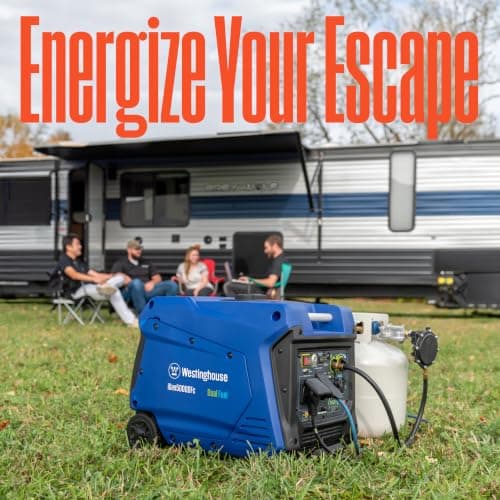
Best Quiet Inverter
Best Quiet Inverter Generators for Home Backup
Inverter generators ranked on published noise and THD figures, with the brands that publish no measurable claim named.
Top pick · Westinghouse iGen5000DFc 5,000W Dual Fuel Inverter
$999.00See the iGen5000DFc 5,000W Dual Fuel Inverter on Amazon23% off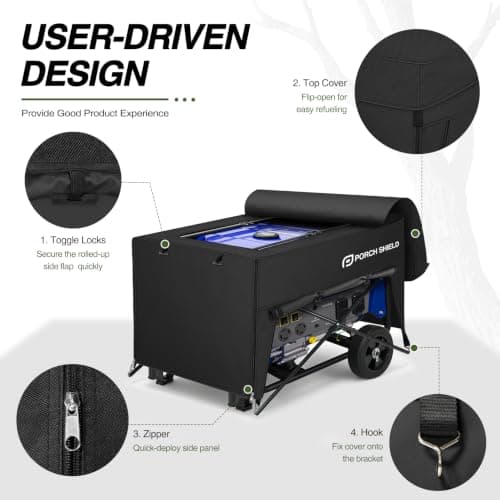
Guide
How to Store a Generator When Not in Use
Storing a generator so it starts: the fuel decision, the battery, the cover, and the long-term versus between-storms distinction.
Guide
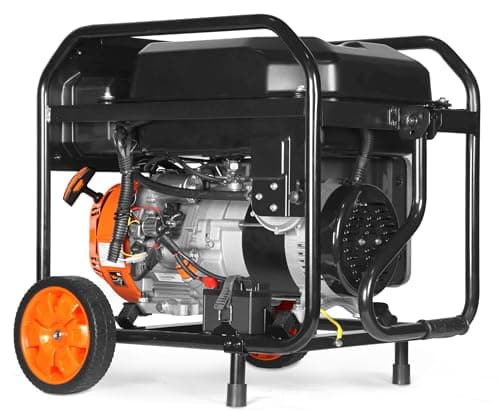
What Size Generator for a Well Pump?
Well pump sizing from the published 1/3 HP figures, what changes on larger pumps, and the soft-starter route.
Best on Propane
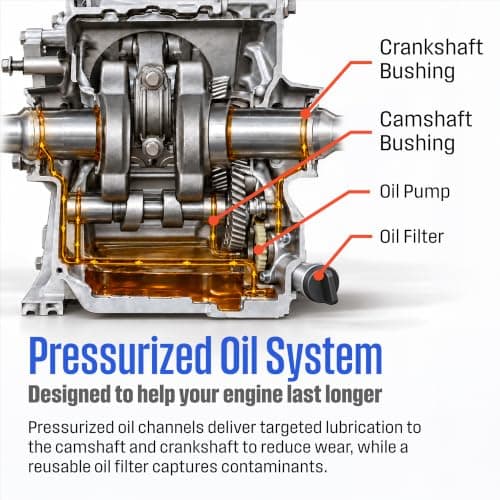
The Best Propane Generators for Home Backup
Six dual and tri fuel generators ranked on their published propane running watts, with the tank runtime arithmetic that decides how many cylinders you need.
Top pick · Westinghouse WGen10500DFc 13,500W Dual Fuel
$1,099.00See the WGen10500DFc 13,500W Dual Fuel on Amazon
Best Solar Kit
Best Solar Generators for Home Backup
Battery-plus-panel kits ranked on solar input ceiling and capacity, with honest expectations for real-world panel output.
Top pick · EcoFlow DELTA 3 Max + 2x100W Solar
$1,229.00See the DELTA 3 Max + 2x100W Solar on Amazon