Generators
Best Generator for a Furnace
A gas furnace needs a few hundred watts and power clean enough for its control board. That second requirement is what narrows the field.
Written byMike M.
Published
Disclosure: we earn a commission on purchases made through links on this page, at no cost to you. It does not affect what we recommend or what we say about it — how we are funded.
The short answer
The best generator for a gas furnace is the Westinghouse iGen5000DFc: inverter power clean enough for a modern furnace control board, a published 52 dBA at its quietest, dual fuel so an overnight run does not need a refueling trip, and 5,000 peak watts on gasoline — far more than a blower needs, which is the point. A furnace blower itself draws only 700 running watts on EWEB's published 1/3 HP figure.
Two things make this an unusual buying decision. The first is that the load is tiny: in a house with gas or propane heat, the fuel is already flowing during an outage and all that is missing is the electricity to move the air. What size generator to run a furnace does that arithmetic — roughly 900 running and 2,100 starting watts for the blower alone. The second is that the furnace is one of the few household loads that genuinely cares about power quality, not just power.
The short answer
Quick picks
| # | Product | Best for | Score | Price |
|---|---|---|---|---|
| 1 | 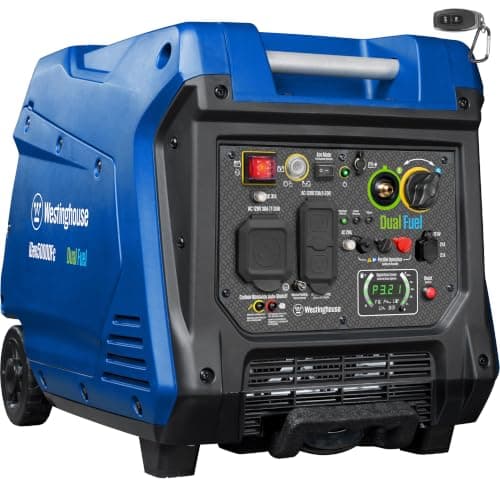 Westinghouse iGen5000DFc 5,000W Dual Fuel Inverter The quietest way to get around 4,000 running watts on either fuel, provided you are running cords rather than a transfer switch. | Quietest dual fuel at 4,000 running watts | 9.3/10 | $999.00 |
| 2 | 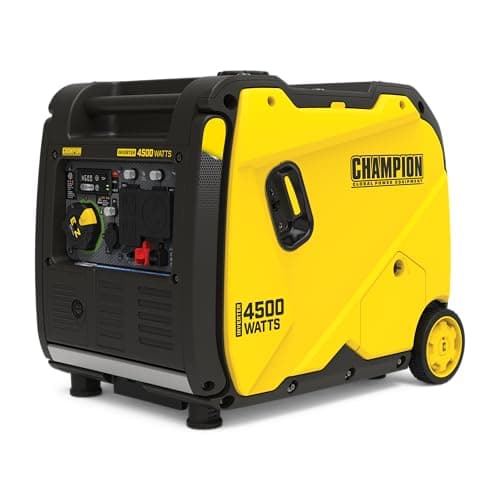 Champion 4,500W RV Ready Inverter The best balance of quiet, clean power and real output for cord-based backup: enough for the essentials, under 3% THD, half the price of the Honda equivalent. | Quiet backup at a sane price | 9.2/10 | $749.00 |
| 3 | 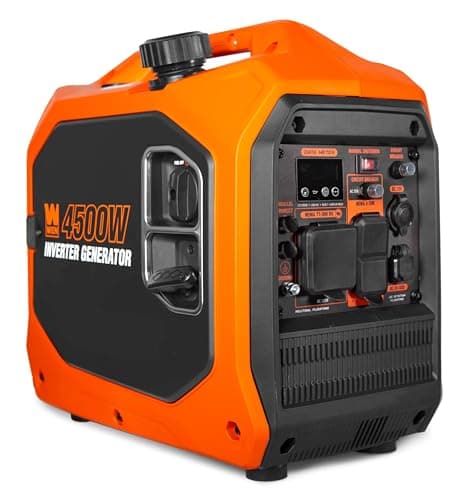 WEN 56432i 4,500W Inverter The cheapest route to 3,600 watts of clean inverter power at a weight one person can genuinely carry — the best output-to-weight ratio on this site. | Cheapest clean 3,600 running watts | 8.8/10 | $554.99 |
| 4 | 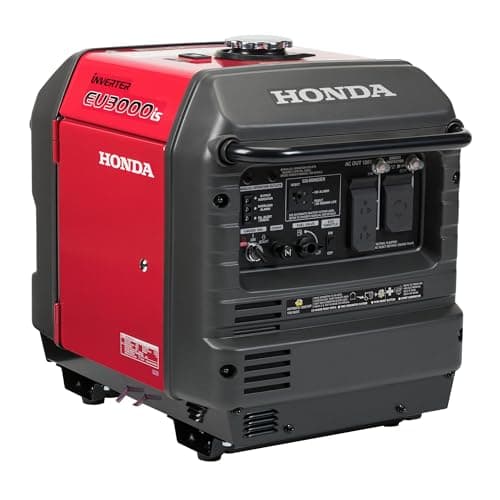 Honda EU3000iS 3,000W Inverter The quiet-at-all-costs answer for running a furnace, fridge and lighting overnight — priced accordingly. | Quiet backup for a furnace and fridge | 8.9/10 | $2,399.00 |
| 5 | 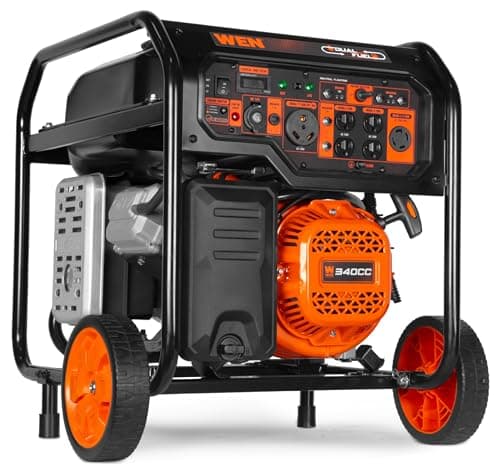 WEN DF8000X 8,000W Dual Fuel The best-value correctly-sized home backup generator here: enough for every essential circuit, dual fuel, CO shutoff, a real transfer-switch outlet, and no money spent on capacity you will not use. | Essential circuits, dual fuel, lowest cost | 9.2/10 | $658.41 |
| 6 | 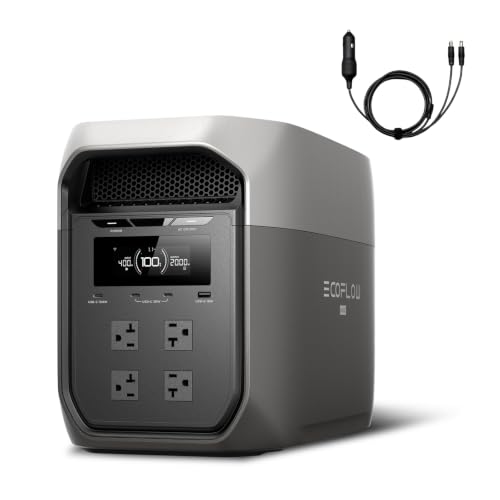 EcoFlow DELTA 3 Max The best battery here for keeping specific things running without interruption — the sub-10 ms transfer is a real functional difference, not a spec-sheet flourish. | UPS-grade switchover for a fridge | 9.4/10 | $999.00 |
#ad Amazon prices as of November 19, 2026; they may have changed since. Scores are our editorial judgment from published specifications, not test results — how we pick. How we are funded.
Published output, noise and power quality
| Machine | Output | Type | Published noise | Fuel |
|---|---|---|---|---|
| Westinghouse iGen5000DFc | 5,000 W peak gas | Inverter | As low as 52 dBA | Gas / propane |
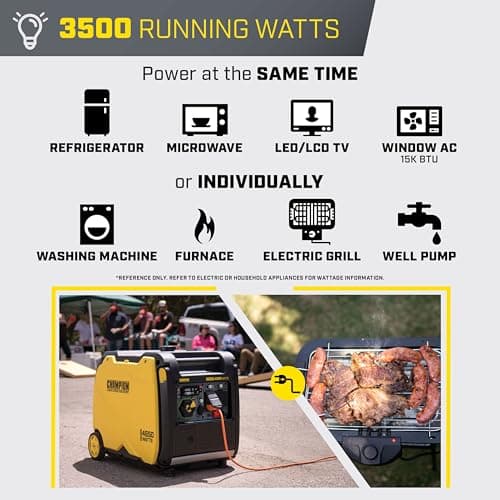
| Champion 4,500 W inverter | 3,500 W running | Inverter | 61 dBA | Gasoline |
| WEN 56432i | 3,600 W running | Inverter | Not published | Gasoline |
| Honda EU3000iS | 3,000 W | Inverter | 50-57 dB(A) | Gasoline |
| WEN DF8000X | 6,500 W running gas | Conventional | Not published | Gas / propane |
| EcoFlow DELTA 3 Max | 2,400 W | Battery | Silent | Battery |
Every machine here except the WEN DF8000X is an inverter or a battery, and that is deliberate. Not because a furnace blower motor is fussy — it is not — but because of what sits in front of it.
The control board, which is the actual reason to buy an inverter
A modern furnace is not a motor with a switch. It is a microprocessor control board that decides whether to let the burner light, and some of those boards are sensitive to the waveform they are fed. A conventional generator produces a rougher sine wave with higher total harmonic distortion; an inverter generator rectifies and re-synthesizes the output, and the manufacturers publish the result. Champion publishes under 3% THD for its 4,500 W inverter, and Westinghouse publishes the same figure for the iGen2550DFc.
Why this matters more than the watt figure
- Blower motor
- Does not care about THD
- Igniter
- Does not care
- Control board
- Can refuse to run
- Published inverter THD
- Under 3% (mfr)
Which specific boards reject which generators is not something any manufacturer publishes, so this page does not assert it. What we can say with confidence is that this is the failure people report, that inverter output is measurably cleaner on published figures, and that the premium is small at this size.
The honest version of this advice: a conventional generator very often runs a furnace perfectly well, and plenty of people do it. But a furnace that will not light in January is the one failure in home backup power that is genuinely dangerous, and at these output levels an inverter costs very little more. That asymmetry is why the whole top of this list is inverter power.
Noise matters here more than on any other load
The furnace is the load you run all night, for days. Unlike a refrigerator, which cycles, heating in a cold snap runs more or less continuously, which means the generator runs continuously — outside your bedroom window, and your neighbors'. Honda publishes 50 to 57 dB(A) for the EU3000iS and 6.9 to 19.6 hours on its 3.4-gallon tank depending on load. Westinghouse publishes as low as 52 dBA for the iGen5000DFc. Those are the two quietest options here and both will run a furnace overnight without waking the street.
How quiet is a quiet generator explains why those decibel figures are not directly comparable between brands, and why the difference between 52 and 61 dBA is larger than it looks.
If your heat is electric, read this before buying anything
For gas-heat households the practical conclusion is reassuring: the furnace is the cheapest critical load in the house to back up, and the right generator for it is a quiet inverter with clean output and enough headroom to also carry a refrigerator and lights. The WEN DF8000X is on this list for the household that wants one machine for everything — 6,500 running watts on gasoline covers the furnace, the fridge, a well pump and more, at the cost of conventional output and more noise.
And if your outages are short, a battery is the quietest answer that exists. Can a power station run a furnace covers that route in detail — the DELTA 3 Max's published sub-10 millisecond transfer means the furnace never even registers the outage.
- Output
- 5,000 W peak gas
- Noise
- As low as 52 dBA (mfr)
- Fuel
- Gas / propane
#1 · Quietest dual fuel at 4,000 running watts
Westinghouse iGen5000DFc 5,000W Dual Fuel Inverter
The quietest way to get around 4,000 running watts on either fuel, provided you are running cords rather than a transfer switch.
#ad Price as of November 19, 2026; it may have changed since. How we are funded.
Why we picked it
- 52 dBA at 5,000 peak watts is the best noise-per-watt figure of any dual fuel machine here
- Dual fuel plus remote start plus CO sensor at a mid-range price
- The double-insulated cover is also weather protection the open-frame machines do not have
Good to know
- 106 lb and enclosed — awkward to carry despite the telescoping handle
Published specification & our scoring
- 5,000 peak watts on gasoline (manufacturer)
- As low as 52 dBA with a double-insulated cover, muffler and variable-speed engine (manufacturer)
- Manufacturer states inverter technology cuts fuel use up to 50% versus a conventional generator
- 224cc Westinghouse 4-stroke OHV engine
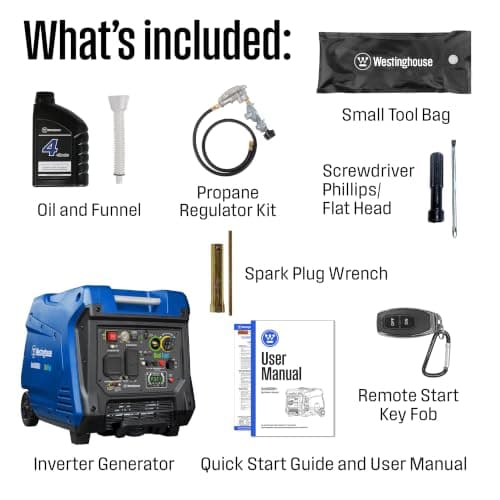
- RV-ready TT-30R 30A, 5-20R 120V 20A duplex, two USB
- Remote electric start, CO sensor; parallel capable
- Published weight 105.8 lb
- Noise
- 10
- Power quality
- 9
- Fuel flexibility
- 9
- Output
- 7
- Safety features
- 9
- Value
- 8
Specification figures are the manufacturer’s published values. Scores are our editorial judgment from those figures and are never published as structured review data — how we pick.
- Running watts
- 3,500 W
- Noise
- 61 dBA (mfr)
- Runtime
- Up to 14 h (mfr)
#2 · Quiet backup at a sane price
Champion 4,500W RV Ready Inverter
The best balance of quiet, clean power and real output for cord-based backup: enough for the essentials, under 3% THD, half the price of the Honda equivalent.
#ad Price as of November 19, 2026; it may have changed since. How we are funded.
Why we picked it
- 3,500 running watts of clean power is enough for a fridge, furnace blower, lights and electronics — a real essential-circuit load, quietly
- 14-hour runtime is excellent for an inverter this size
- Parallel capability means you can double output later rather than replacing the unit
Good to know
- 92 lb is heavy for something you cannot connect to a panel
Published specification & our scoring
- 4,500 starting / 3,500 running watts (manufacturer)
- 61 dBA, up to 14 hours runtime (manufacturer)
- Under 3% THD — safe for sensitive electronics (manufacturer)
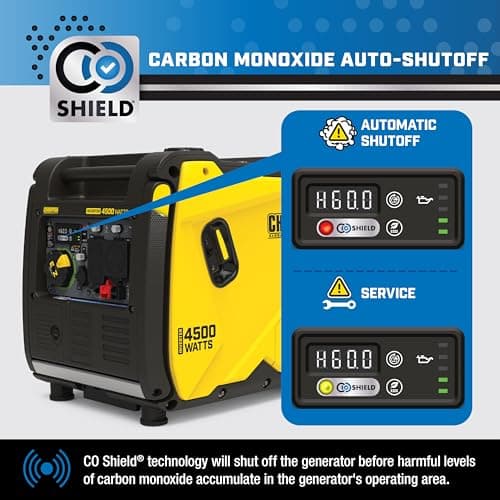
- CO Shield carbon monoxide auto shutoff
- 120V 29.2A RV outlet plus a 120V 20A household duplex
- Parallel ready with another 2,800W-or-higher Champion inverter
- Intelligauge with power meter; published weight 92.2 lb
- Noise
- 8
- Power quality
- 9
- Output
- 7
- Runtime
- 9
- Safety features
- 9
- Value
- 9
Specification figures are the manufacturer’s published values. Scores are our editorial judgment from those figures and are never published as structured review data — how we pick.
- Running watts
- 3,600 W
- Peak watts
- 4,500 W
- Weight
- 53 lb
#3 · Cheapest clean 3,600 running watts
WEN 56432i 4,500W Inverter
The cheapest route to 3,600 watts of clean inverter power at a weight one person can genuinely carry — the best output-to-weight ratio on this site.
#ad Price as of November 19, 2026; it may have changed since. How we are funded.
Why we picked it
- 3,600 rated watts at 53 lb is the best output-to-weight ratio in this roundup
- The fuel shutoff feature genuinely extends life on a machine that sits unused for months
- Costs a fraction of the Honda and Champion equivalents
Good to know
- Good to know: this model has no CO shutdown sensor, so pair it with a CO alarm indoors and keep it well clear of the house
Published specification & our scoring
- 181cc engine, 4,500 surge / 3,600 rated watts (manufacturer)
- Clean power to prevent damage to sensitive electronics (manufacturer)
- Two 120V three-prong receptacles, one TT-30R RV receptacle, one 12V DC, two USB
- Intelligent data meter
- Fuel shutoff to clear the carburetor before storage
- Published weight 53 lb; three-year warranty
- Output headroom
- 7
- Power quality
- 8
- Portability
- 10
- Safety features
- 4
- Runtime
- 7
- Value
- 10
Specification figures are the manufacturer’s published values. Scores are our editorial judgment from those figures and are never published as structured review data — how we pick.
- Output
- 3,000 W
- Noise
- 50-57 dB(A) (mfr)
- Runtime
- 6.9-19.6 h (mfr)
#4 · Quiet backup for a furnace and fridge
Honda EU3000iS 3,000W Inverter
The quiet-at-all-costs answer for running a furnace, fridge and lighting overnight — priced accordingly.
#ad Price as of November 19, 2026; it may have changed since. How we are funded.
Why we picked it
- Manufacturer explicitly rates it for furnace duty, which is the load that stops most small generators
- 19.6 hours at light load means a genuine overnight without refueling
- Still 50-57 dB(A) at 3,000 watts — an outlier
Good to know
- 144 lb with no 240V output: heavy for a cord-only machine
Published specification & our scoring
- 3,000 watts; manufacturer lists furnaces, fridges and most 13,500 BTU RV AC units
- Operates at 50 to 57 dB(A) (manufacturer)
- 6.9 to 19.6 hours on a 3.4-gallon tank depending on load (manufacturer)
- Electric start
- CO-MINDER CO detection with automatic shutdown
- Published weight 144 lb
- Noise
- 10
- Power quality
- 10
- Reliability
- 10
- Runtime
- 9
- Output
- 5
- Value
- 4
Specification figures are the manufacturer’s published values. Scores are our editorial judgment from those figures and are never published as structured review data — how we pick.
- Running watts
- 6,500 W gas / 5,850 W LP
- Starting watts
- 8,000 W gas
- CO shutdown
- Watchdog
#5 · Essential circuits, dual fuel, lowest cost
WEN DF8000X 8,000W Dual Fuel
The best-value correctly-sized home backup generator here: enough for every essential circuit, dual fuel, CO shutoff, a real transfer-switch outlet, and no money spent on capacity you will not use.
#ad Price as of November 19, 2026; it may have changed since. How we are funded.
Why we picked it
- 6,500 running watts with CO shutdown, dual fuel and a proper L14-30R, for the price of a gasoline-only machine
- 10.5 hours at half load is better runtime than WEN's larger DF1100X
- The TT-30R makes it an RV generator as well, which widens its usefulness between outages
Good to know
- Good to know: 6,500 running watts covers the essentials; central air needs a larger machine
Published specification & our scoring
- Gasoline: 8,000 surge / 6,500 rated watts (manufacturer)
- Propane: 7,200 surge / 5,850 rated watts (manufacturer)
- 340cc engine, electric start
- WEN Watchdog CO shutdown sensor
- 6.7-gallon tank, up to 10.5 hours at half load (manufacturer)
- Wheel kit included; four 120V 5-20R, one TT-30R RV outlet, one L14-30R transfer-switch-ready twist-lock
- Output headroom
- 7
- Fuel flexibility
- 9
- Transfer-switch fit
- 9
- Runtime
- 9
- Safety features
- 8
- Value
- 10
Specification figures are the manufacturer’s published values. Scores are our editorial judgment from those figures and are never published as structured review data — how we pick.
- Capacity
- 2,048 Wh
- AC output
- 2,400 W / 3,400 W boost
- Switchover
- Under 10 ms (mfr)
#6 · UPS-grade switchover for a fridge
EcoFlow DELTA 3 Max
The best battery here for keeping specific things running without interruption — the sub-10 ms transfer is a real functional difference, not a spec-sheet flourish.
#ad Price as of November 19, 2026; it may have changed since. How we are funded.
Why we picked it
- A sub-10 ms switchover means plugged-in equipment never notices the outage — this is what makes it genuinely usable for a fridge, a modem or a home office
- 3,400 W in X-Boost handles appliances the 2,400 W rating would reject
- Usually cheaper than the DELTA 2 Max it replaces
Good to know
- EcoFlow states this version takes no expansion batteries, so 2,048 Wh is the ceiling — the older DELTA 2 Max reaches 6 kWh
Published specification & our scoring
- 2,048 Wh LFP battery, 2,400 W output (manufacturer)
- Up to 3,400 W continuous in X-Boost mode (manufacturer)
- Under 10 ms transfer time for home backup (manufacturer)
- 0-80% in 1.13 hours with X-Stream charging (manufacturer)
- Manufacturer states a decade of daily use and a 5-year service commitment
- Published weight 45 lb; 19.44 x 12 x 9.4 in. Current listing adds a cigarette-to-DC5521 adapter cable
- Usable capacity
- 9
- Output ceiling
- 8
- UPS behavior
- 10
- Recharge speed
- 8
- Cycle life
- 9
- Value
- 9
Specification figures are the manufacturer’s published values. Scores are our editorial judgment from those figures and are never published as structured review data — how we pick.
In short
Our recommendation
Best for a Furnace
9.3/10Westinghouse iGen5000DFc 5,000W Dual Fuel Inverter
The quietest way to get around 4,000 running watts on either fuel, provided you are running cords rather than a transfer switch.
Runner-up
9.2/10Champion 4,500W RV Ready Inverter
The best balance of quiet, clean power and real output for cord-based backup: enough for the essentials, under 3% THD, half the price of the Honda equivalent.
#ad Price as of November 19, 2026; it may have changed since. How we are funded.
Brands: want your product tested? For Brands.
Questions people actually ask
What is the best generator for a furnace?
The Westinghouse iGen5000DFc: inverter power quality for the control board, a published 52 dBA at its quietest for overnight running, dual fuel so a propane tank can carry it through the night, and 5,000 peak watts on gasoline — enough to add a refrigerator and lights alongside the furnace.
What size generator do I need to run a gas furnace?
About 900 running and 2,100 starting watts for the blower alone, derived from EWEB's published 700 running and 1,400 additional starting watts for a 1/3 HP furnace fan blower. Check the data plate inside your furnace cabinet for the real figure — larger and variable-speed blowers differ.
Do I need an inverter generator for a furnace?
Not strictly — the blower motor itself is indifferent to waveform quality. The reason to prefer one is the furnace control board, which can refuse to run on rough power. Inverter manufacturers publish under 3% total harmonic distortion, and at furnace-sized output the price premium over a conventional machine is small.
Will a 2000 watt generator run a furnace?
A gas furnace with a 1/3 HP blower, usually yes — EWEB's figures put the start-up requirement at about 2,100 watts, so a 2,000 watt machine is marginal and a 2,500 peak watt one is comfortable. An electric furnace or heat pump, no, by a wide margin.
Can a generator damage a furnace?
The commonly reported failure is not damage but refusal — a control board that will not let the burner light on rough power. No manufacturer publishes which specific boards reject which generators, so we report that as the reason inverter output is worth buying rather than as a measurement. A correctly wired transfer switch or interlock kit removes the other risk, which is back-feeding.
How long can a generator run a furnace overnight?
Comfortably through the night on most machines here, because the blower load is small. Honda publishes 6.9 to 19.6 hours for the EU3000iS depending on load, and a dual fuel machine on a propane tank avoids a refueling trip in the dark entirely. Propane also does not degrade in storage, which matters for a machine that sits unused.
Sources
- Eugene Water & Electric Board — Generator Sizing ConsiderationsPublished appliance running and additional-starting watt figures used in the sizing arithmetic on this page.
- US Consumer Product Safety Commission — Portable Generator Information CenterThe placement and carbon monoxide guidance every generator page on this site links to.
Read next
Guide
What Size Generator to Run a Furnace?
Furnace blower sizing from published figures, the gas-versus-electric divide, and why power quality matters for modern control boards.

Best Quiet Inverter
Best Quiet Inverter Generators for Home Backup
Inverter generators ranked on published noise and THD figures, with the brands that publish no measurable claim named.
Top pick · Westinghouse iGen5000DFc 5,000W Dual Fuel Inverter
$999.00See the iGen5000DFc 5,000W Dual Fuel Inverter on Amazon23% off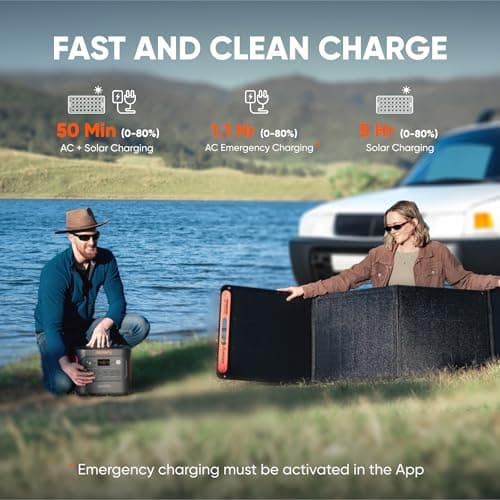
Guide
Can a Power Station Run a Furnace?
Battery backup for a furnace: easy for gas, impossible for electric, with the wiring question in between.
Guide
Winter Storm Power Outage Checklist
Before-the-storm and during-the-storm checklists for a winter outage, with the pipe-freeze risk front and center.
Guide
How Quiet Is a Quiet Generator?
Published decibel ratings side by side with their measurement conditions, and what a dB difference actually means.