Generators
Best Dual Fuel Generators for an RV
Your rig already carries propane. A dual fuel generator is the only kind that can use it.
Written byMike M.
Published
Disclosure: we earn a commission on purchases made through links on this page, at no cost to you. It does not affect what we recommend or what we say about it — how we are funded.
The short answer
The best dual fuel generator for an RV is the Westinghouse iGen5000DFc: 5,000 peak watts on gasoline, a published 52 dBA at its quietest, an RV-ready TT-30R outlet that a 30 amp rig's cord plugs straight into, remote electric start and a CO sensor. It runs on gasoline or propane, which is the whole argument — your RV already carries propane tanks, so the second fuel is a tank you already own.
There is one reason a dual fuel generator makes more sense on an RV than almost anywhere else, and it is not fuel prices. It is that the propane infrastructure is already on board. A travel trailer carries one or two tanks for the stove, the water heater and the furnace; a motorhome has a fixed tank. On a dual fuel machine that becomes generator fuel too, which collapses two fuel-management problems into one.
The short answer
Quick picks
| # | Product | Best for | Score | Price |
|---|---|---|---|---|
| 1 | 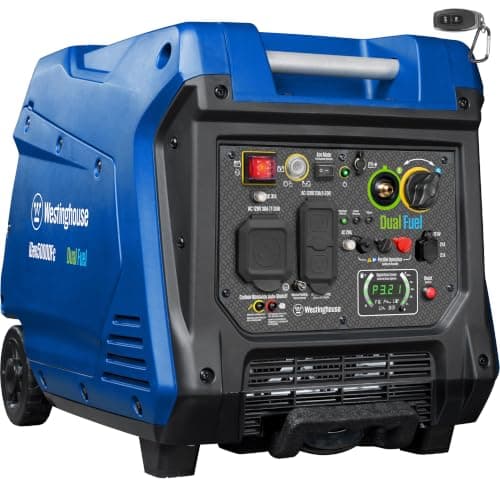 Westinghouse iGen5000DFc 5,000W Dual Fuel Inverter The quietest way to get around 4,000 running watts on either fuel, provided you are running cords rather than a transfer switch. | Quietest dual fuel at 4,000 running watts | 9.3/10 | $999.00 |
| 2 | 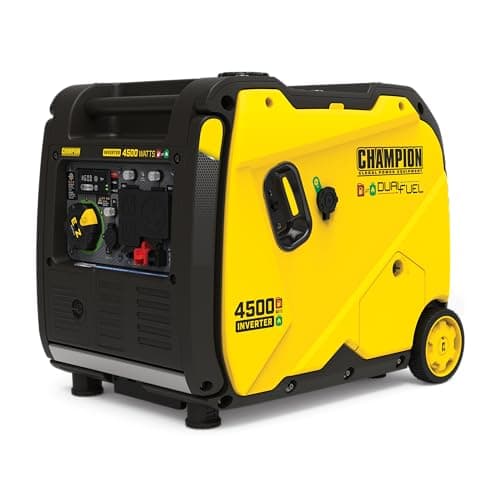 Champion 4,500W Dual Fuel Inverter The gas-only Champion 4500 with a propane option added — worth the premium if your outage plan runs on tanks rather than trips to a gas station. | Quiet plus a propane contingency | 9.2/10 | $999.00 |
| 3 | 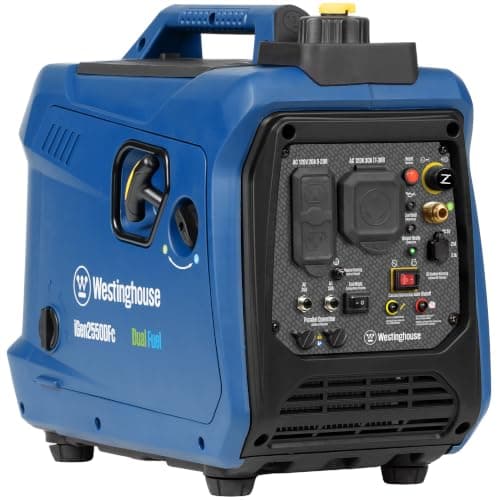 Westinghouse iGen2550DFc 2,550W Dual Fuel Inverter The right small dual fuel inverter if you have a genuinely safe outdoor place to run it — and for most apartment dwellers, a battery power station is the better answer. | Apartments and balconies | 8.9/10 | $529.00 |
| 4 | 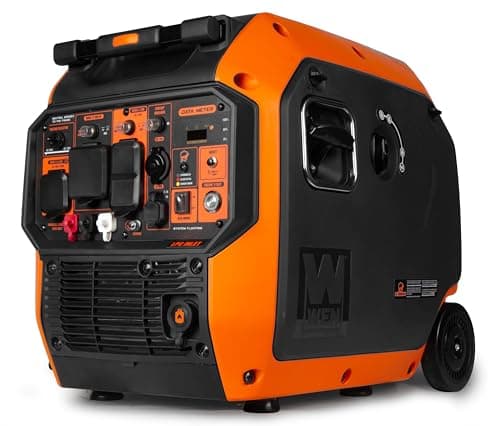 WEN DF680iX 6,800W Dual Fuel Inverter The lightest transfer-switch-capable dual fuel inverter here — with one serious caveat: its bonded neutral must be checked against your transfer switch. | Dual fuel inverter with 240V | 8.8/10 | $798.00 |
| 5 | 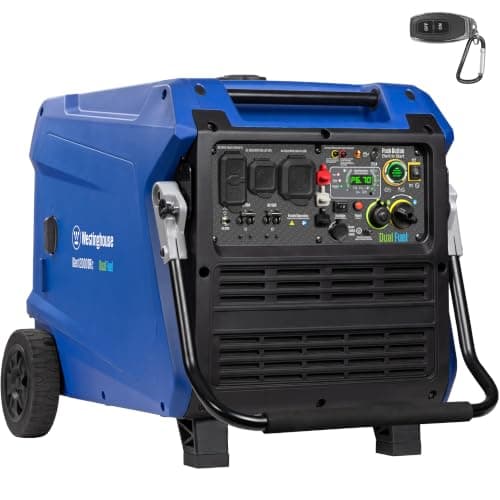 Westinghouse iGen12000DFc 12,000W Dual Fuel Inverter The best technical answer for whole-house backup if the budget allows: transfer-switch-ready output, inverter-clean power, and far less noise than the conventional alternative. | Whole-house backup with clean power | 9.5/10 | $1,899.00 |
| 6 | 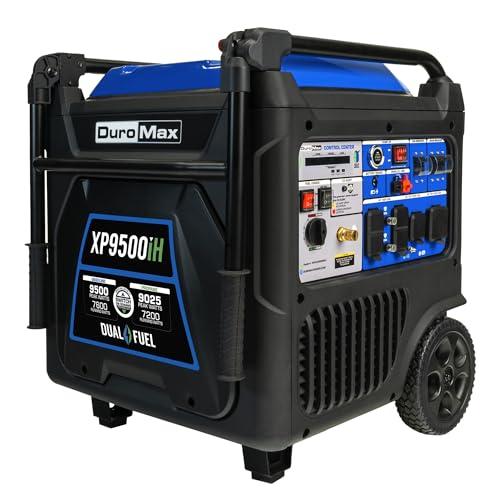 DuroMax XP9500iH 9,500W Dual Fuel Inverter A dual fuel inverter with a genuinely thoughtful battery tender, let down by DuroMax not publishing the THD and noise figures that justify buying an inverter. | Dual fuel inverter at 7,600 running watts | 8.8/10 | $1,999.00 |
#ad Amazon prices as of November 19, 2026; they may have changed since. Scores are our editorial judgment from published specifications, not test results — how we pick. How we are funded.
Published output against the service you actually have
| Machine | Gasoline | Propane | RV fit | Published noise |
|---|---|---|---|---|
| Westinghouse iGen5000DFc | 5,000 W peak | Dual fuel, LP figure not published | 30 A, TT-30R onboard | As low as 52 dBA |
| Champion 4,500 W dual fuel inverter | 3,500 W running / 4,500 starting | Dual fuel out of the box | 30 A, matches the 3,600 W ceiling | 61 dBA |
| Westinghouse iGen2550DFc | 1,900 W running / 2,550 peak | Dual fuel | 30 A, TT-30R, light loads only | As low as 52 dBA |
| WEN DF680iX | 5,100 W running / 6,800 surge | 4,500 W running / 6,000 surge | L14-30R, 240V — not a TT-30 | Not published |
| Westinghouse iGen12000DFc | 12,000 W peak | Dual fuel | 50 A, 14-50R onboard | As low as 64 dBA |
| DuroMax XP9500iH | 7,600 W running / 9,500 peak | Dual fuel | Large rigs | Not published |
Pick the row by your service, not by the biggest number. A 30 amp RV hookup is a single 120-volt leg at 30 amps — 3,600 watts, full stop — so a machine with 3,500 running watts and a TT-30R outlet matches it almost exactly and a 7,600 watt machine plugged into the same outlet delivers the same 3,600 watts. What size generator for a 30 amp camper and what size generator for a 50 amp RV work both services out in full.
The outlet is not a detail
What plugs into what
- 30 A RV cord
- Needs a TT-30R on the generator
- 50 A RV cord
- Needs a 14-50R on the generator
- L14-30R only
- Adapter required, 240V twist-lock
- Household 5-20R only
- Not an RV connection
Connector arithmetic, not a manufacturer claim. The WEN DF680iX is the cautionary row on this list: 5,100 running watts and a bonded-neutral L14-30R, which is excellent for a house transfer switch and the wrong shape for an RV cord without an adapter.
Three machines here publish a TT-30R or 14-50R on the listing itself — the iGen5000DFc, the iGen2550DFc and the iGen12000DFc. That is the cleanest route: the rig's existing cord goes straight in, with no adapter stack to lose.
Propane on the road: the trade you are actually making
Propane is worth being honest about. It carries less energy per gallon than gasoline, so a generator running on propane generally produces somewhat less output and consumes a tank faster than the gasoline equivalent in run-hours. What you get in exchange is substantial for an RV specifically:
- No stale fuel. Propane does not oxidize, absorb moisture or varnish a carburetor — which is the single most common reason a stored generator will not start.
- No gasoline in the bay. A sealed tank is a different storage proposition from a vented can of gasoline in a compartment.
- One fuel to refill. The same tank exchange that feeds the furnace feeds the generator.
- Cleaner exhaust and generally quieter combustion, which matters in a campground.
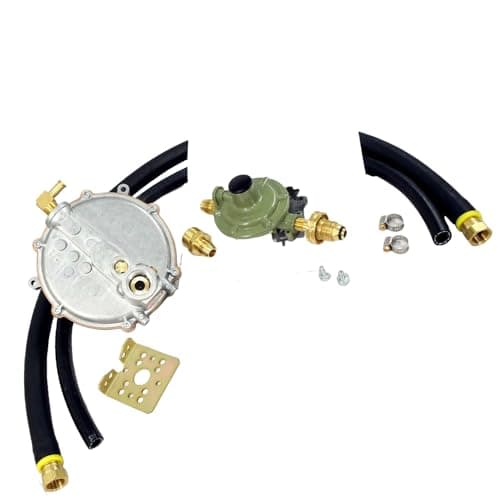
Running from an RV's onboard propane rather than a portable tank usually needs a regulator and hose of the right length and pressure; a two-stage regulator with a published outlet pressure is the part that makes this predictable rather than improvised. Converting a generator to propane or natural gas covers the hardware side, and is a dual fuel generator worth it is the honest cost argument.
What you need to actually run on propane
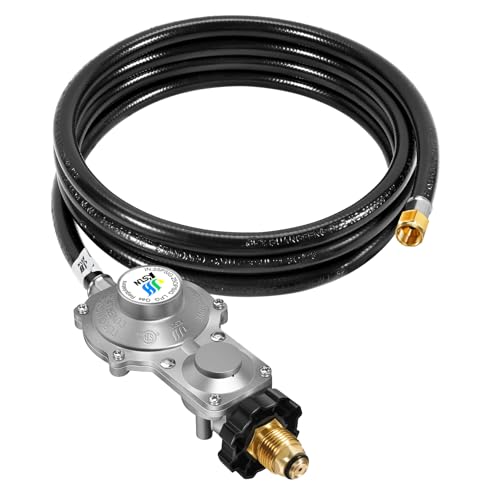
Running a dual fuel generator on a tank
GasSaf 10 ft Two-Stage Propane Regulator + Hose
Quietest dual fuel at 4,000 running watts
Westinghouse iGen5000DFc 5,000W Dual Fuel Inverter
Quiet plus a propane contingency
Champion 4,500W Dual Fuel Inverter
A two-stage regulator and hose with a published 11 inch water column outlet pressure, plus the two machines here that match a 30 amp service most closely.
Noise, because campgrounds have rules
Many campgrounds impose generator hours and some impose decibel limits, and a conventional open-frame machine will get you a visit. Every top pick here is an inverter for that reason. Westinghouse publishes as low as 52 dBA for the iGen5000DFc and iGen2550DFc; Champion publishes 61 dBA for the 4,500 W dual fuel inverter along with up to 14 hours of runtime. Those decibel claims come from different test setups per brand and are not strictly comparable — how quiet is a quiet generator explains why.
- Output
- 5,000 W peak gas
- Noise
- As low as 52 dBA (mfr)
- Fuel
- Gas / propane
#1 · Quietest dual fuel at 4,000 running watts
Westinghouse iGen5000DFc 5,000W Dual Fuel Inverter
The quietest way to get around 4,000 running watts on either fuel, provided you are running cords rather than a transfer switch.
#ad Price as of November 19, 2026; it may have changed since. How we are funded.
Why we picked it
- 52 dBA at 5,000 peak watts is the best noise-per-watt figure of any dual fuel machine here
- Dual fuel plus remote start plus CO sensor at a mid-range price
- The double-insulated cover is also weather protection the open-frame machines do not have
Good to know
- 106 lb and enclosed — awkward to carry despite the telescoping handle
Published specification & our scoring
- 5,000 peak watts on gasoline (manufacturer)
- As low as 52 dBA with a double-insulated cover, muffler and variable-speed engine (manufacturer)
- Manufacturer states inverter technology cuts fuel use up to 50% versus a conventional generator
- 224cc Westinghouse 4-stroke OHV engine
- RV-ready TT-30R 30A, 5-20R 120V 20A duplex, two USB
- Remote electric start, CO sensor; parallel capable
- Published weight 105.8 lb
- Noise
- 10
- Power quality
- 9
- Fuel flexibility
- 9
- Output
- 7
- Safety features
- 9
- Value
- 8
Specification figures are the manufacturer’s published values. Scores are our editorial judgment from those figures and are never published as structured review data — how we pick.
- Running watts
- 3,500 W
- Noise
- 61 dBA (mfr)
- Fuel
- Gas / propane
#2 · Quiet plus a propane contingency
Champion 4,500W Dual Fuel Inverter
The gas-only Champion 4500 with a propane option added — worth the premium if your outage plan runs on tanks rather than trips to a gas station.
#ad Price as of November 19, 2026; it may have changed since. How we are funded.
Why we picked it
- Propane capability on a quiet inverter is the best of both worlds for a multi-day outage
- Propane stores indefinitely, which is the single biggest practical advantage over gasoline
- The EZ Start dial removes the choke-and-pray step
Good to know
- Only 7 lb heavier than the gas-only version, but meaningfully more expensive
Published specification & our scoring
- 4,500 starting / 3,500 running watts (manufacturer)
- Dual fuel — gasoline or propane out of the box
- 61 dBA; up to 14 hours on gasoline at 3,500 running watts, up to 21 hours on propane at 3,150 running watts (manufacturer)
- CO Shield auto shutoff, electric start with EZ Start dial
- Intelligauge with power meter
- Parallel ready; published weight 99.2 lb
- Noise
- 8
- Power quality
- 9
- Fuel flexibility
- 9
- Output
- 7
- Safety features
- 9
- Value
- 8
Specification figures are the manufacturer’s published values. Scores are our editorial judgment from those figures and are never published as structured review data — how we pick.
- Running watts
- 1,900 W
- Noise
- As low as 52 dBA (mfr)
- Weight
- 42 lb
#3 · Apartments and balconies
Westinghouse iGen2550DFc 2,550W Dual Fuel Inverter
The right small dual fuel inverter if you have a genuinely safe outdoor place to run it — and for most apartment dwellers, a battery power station is the better answer.
#ad Price as of November 19, 2026; it may have changed since. How we are funded.
Why we picked it
- 42 lb, 52 dBA, dual fuel and a CO sensor — the most complete small inverter package here
- 1,900 running watts runs a fridge and a few lights, which is the realistic apartment-scale plan
- Propane means no gasoline stored in a small living space
Good to know
- Good to know: 1,900 running watts is a fridge-and-lights machine rather than a whole-house one
Published specification & our scoring
- 2,550 peak / 1,900 rated watts at under 3% THD (manufacturer)
- As low as 52 dBA; up to 11 hours on a 1.16-gallon tank at 25% load (manufacturer)
- Dual fuel: gasoline or propane
- CO sensor with automatic shutdown
- One RV-ready TT-30R, two 120V 20A outlets
- Parallel capable; published weight 42 lb (manufacturer states 43.2 lb shipping)
- Noise
- 10
- Power quality
- 9
- Portability
- 10
- Fuel flexibility
- 9
- Output
- 4
- Value
- 8
Specification figures are the manufacturer’s published values. Scores are our editorial judgment from those figures and are never published as structured review data — how we pick.
- Running watts
- 5,100 W gas / 4,500 W LP
- Peak watts
- 6,800 W gas
- 240V
- L14-30R
#4 · Dual fuel inverter with 240V
WEN DF680iX 6,800W Dual Fuel Inverter
The lightest transfer-switch-capable dual fuel inverter here — with one serious caveat: its bonded neutral must be checked against your transfer switch.
#ad Price as of November 19, 2026; it may have changed since. How we are funded.
Why we picked it
- An L14-30R on a 99 lb inverter machine is unusual — this is the lightest unit here that can feed a 30A transfer switch
- Dual fuel plus CO shutdown plus inverter power under 100 lb
- The EV charging capability is a real secondary use between outages
Good to know
- Bonded neutral — this matters: many transfer switches and inlet setups require a floating (switched) neutral. Confirm compatibility with your electrician before buying for panel use
Published specification & our scoring
- Gasoline: 6,800 surge / 5,100 rated watts (manufacturer)
- Propane: 6,000 surge / 4,500 rated watts (manufacturer)
- 224cc dual-fuel engine
- Bonded-neutral 240V configuration provides low-power Level 2 EV charging (manufacturer)
- WEN Watchdog CO shutdown sensor
- One L14-30R 120V/240V, two 120V three-prong, onboard wheels and telescoping handle
- Published weight 99.2 lb
- Output headroom
- 6
- Power quality
- 8
- Fuel flexibility
- 9
- Transfer-switch fit
- 6
- Portability
- 8
- Value
- 9
Specification figures are the manufacturer’s published values. Scores are our editorial judgment from those figures and are never published as structured review data — how we pick.
- Output
- 12,000 W peak
- THD
- Under 3% (mfr)
- Outlets
- 14-50R + L14-30R
#5 · Whole-house backup with clean power
Westinghouse iGen12000DFc 12,000W Dual Fuel Inverter
The best technical answer for whole-house backup if the budget allows: transfer-switch-ready output, inverter-clean power, and far less noise than the conventional alternative.
#ad Price as of November 19, 2026; it may have changed since. How we are funded.
Why we picked it
- Whole-house output AND under 3% THD — this is the combination most homes with modern furnace boards and electronics actually want
- 64 dBA at 12,000 peak watts is dramatically quieter than any open-frame machine of similar output
- Both 240V outlets are transfer-switch ready, so it works with a 30A interlock or a 50A switch
Good to know
- 187 lb and enclosed — harder to service at home than an open frame
Published specification & our scoring
- 12,000 peak watts at 3% THD or less (manufacturer)
- As low as 64 dBA with Eco Mode, insulation and mufflers (manufacturer)
- Dual fuel: gasoline or propane
- Manufacturer states inverter technology halves fuel consumption versus a conventional generator
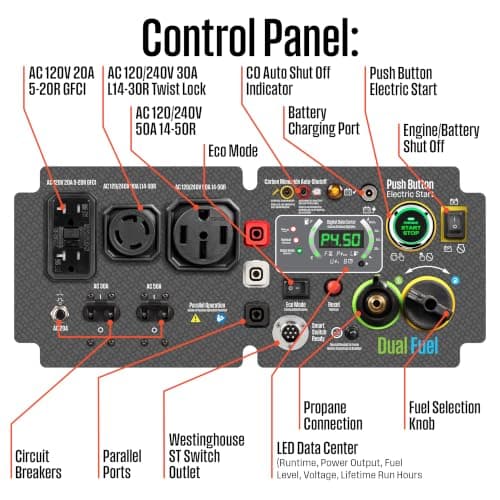
- One 120/240V 14-50R 50A and one L14-30R 30A — both transfer-switch and interlock ready
- LED data center with fuel level, output, remaining runtime, voltage and lifetime hours
- Remote electric start; published weight 187.4 lb
- Output headroom
- 10
- Power quality
- 10
- Noise
- 9
- Transfer-switch fit
- 10
- Fuel flexibility
- 9
- Value
- 6
Specification figures are the manufacturer’s published values. Scores are our editorial judgment from those figures and are never published as structured review data — how we pick.
- Running watts
- 7,600 W
- Peak watts
- 9,500 W
- Fuel
- Gas / propane
#6 · Dual fuel inverter at 7,600 running watts
DuroMax XP9500iH 9,500W Dual Fuel Inverter
A dual fuel inverter with a genuinely thoughtful battery tender, let down by DuroMax not publishing the THD and noise figures that justify buying an inverter.
#ad Price as of November 19, 2026; it may have changed since. How we are funded.
Why we picked it
- Dual fuel plus inverter power at 7,600 running watts covers an essential-circuit panel cleanly
- The built-in battery tender solves the classic problem of a dead starting battery on the day you need it
- CO Alert and remote start included
Good to know
- 216 lb is heavy for an inverter machine
Published specification & our scoring
- 9,500 peak / 7,600 running watts (manufacturer)
- Dual fuel: gasoline or propane
- Inverter technology for clean, stable power for sensitive electronics (manufacturer)
- CO Alert automatic shutdown
- Remote start; battery tender keeps the starting battery charged
- Published weight 216 lb
- Output headroom
- 8
- Power quality
- 8
- Fuel flexibility
- 9
- Safety features
- 8
- Portability
- 5
- Value
- 6
Specification figures are the manufacturer’s published values. Scores are our editorial judgment from those figures and are never published as structured review data — how we pick.
In short
Our recommendation
Best Dual Fuel for RV
9.3/10Westinghouse iGen5000DFc 5,000W Dual Fuel Inverter
The quietest way to get around 4,000 running watts on either fuel, provided you are running cords rather than a transfer switch.
Runner-up
9.2/10Champion 4,500W Dual Fuel Inverter
The gas-only Champion 4500 with a propane option added — worth the premium if your outage plan runs on tanks rather than trips to a gas station.
#ad Price as of November 19, 2026; it may have changed since. How we are funded.
Brands: want your product tested? For Brands.
Questions people actually ask
What is the best dual fuel generator for an RV?
The Westinghouse iGen5000DFc: 5,000 peak watts on gasoline, a published 52 dBA at its quietest, an RV-ready TT-30R outlet, remote electric start and a CO sensor, and it runs on the propane your rig already carries. For a 30 amp service specifically, Champion's 4,500 W dual fuel inverter matches the 3,600 watt ceiling even more closely.
Can a generator run on my RV's propane tank?
Yes, on a dual fuel machine, with the right regulator and hose. A two-stage regulator with a published outlet pressure is what makes the connection predictable. The appeal is real: one fuel supply for the furnace, the water heater and the generator, and no gasoline stored in a compartment.
Does a dual fuel generator lose power on propane?
Generally yes, because propane carries less energy per gallon. Where a manufacturer publishes both figures the gap is visible — WEN publishes 5,100 running watts on gasoline and 4,500 on propane for the DF680iX. Where a listing publishes only the gasoline rating, the propane figure is unknown and we do not estimate it.
What size dual fuel generator do I need for a 30 amp RV?
About 3,500 to 4,000 running watts. A 30 amp RV service is one 120-volt leg at 30 amps, which is 3,600 watts maximum, so a larger machine cannot deliver more through that outlet. Confirm the generator has a TT-30R so the rig's cord plugs in directly.
Will a dual fuel generator run an RV air conditioner?
A 13,500 BTU unit, yes, on any of the 3,500 watt or larger machines here — Honda's EU3000iS listing names most 13,500 BTU RV AC units as within its 3,000 watt capability, which tells you the running load sits below that and the start-up surge is the binding constraint. Two air conditioners on a 50 amp rig needs the iGen12000DFc class.
Is propane or gasoline better for an RV generator?
Propane, for a generator that sits unused between trips — it does not degrade, varnish a carburetor or need stabilizer, and it is already on board. Gasoline, for maximum output and the longest run-hours per gallon. The reason to buy dual fuel is that you do not have to decide once and live with it.
Sources
- Eugene Water & Electric Board — Generator Sizing ConsiderationsPublished appliance running and additional-starting watt figures used in the sizing arithmetic on this page.
- US Consumer Product Safety Commission — Portable Generator Information CenterThe placement and carbon monoxide guidance every generator page on this site links to.
Read next
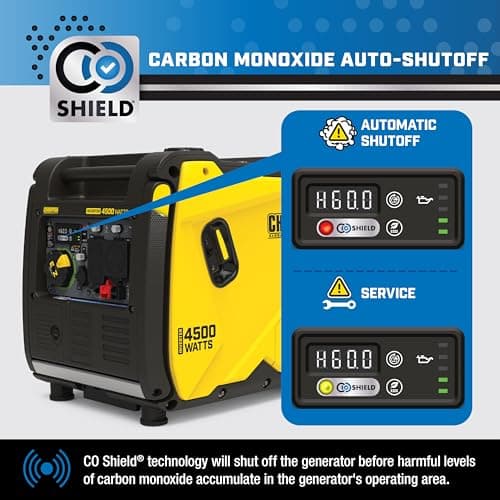
Best for RV
Best Inverter Generators for an RV
Inverter generators for RV use, matched to the 3,600 watt ceiling of a 30 amp service, with the TT-30R outlet called out.
Top pick · Champion 4,500W RV Ready Inverter
$749.00See the 4,500W RV Ready Inverter on Amazon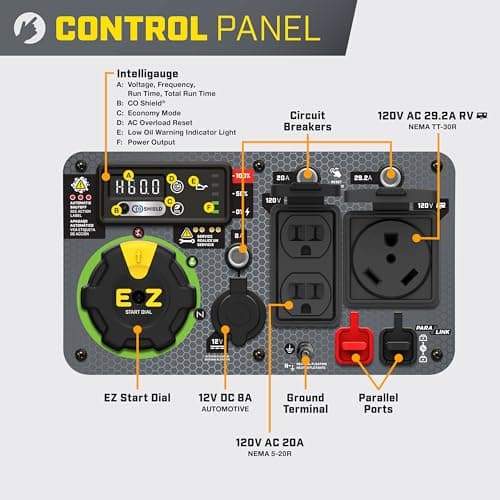
Guide
What Size Generator for a 30 Amp Camper?
What a 30 amp RV service actually provides, and which generators match it without wasting capacity.
Guide
What Size Generator for a 50 Amp RV?
What a 50 amp RV service provides, what a big rig actually draws, and the honest answer about not needing the full 12,000 watts.
Guide
Is a Dual Fuel Generator Worth It?
The real argument for dual fuel — fuel storage, not running cost — plus the honest case against it.
Guide
Converting a Generator to Propane or Natural Gas
How generator conversion kits work, their unpublished output cost, and which half of the job is licensed gas work.