Outage Prep
Your Generator's CO Sensor Shut It Down
The sensor is not being over-sensitive. It measured carbon monoxide building where the machine is standing, which is a placement problem with a mechanical answer.
Written byMike M.
Published
Disclosure: we earn a commission on purchases made through links on this page, at no cost to you. It does not affect what we recommend or what we say about it — how we are funded.
The short answer
A CO shutdown means the sensor measured carbon monoxide accumulating in the generator's own operating area — almost always because the machine is in or against an enclosure that is holding its exhaust. Move it into genuinely open air at least 20 feet from the house with the exhaust pointed away, let it cool, and restart it following your manual's published reset procedure. Do not bypass the sensor. The CPSC publishes that an average of nearly 100 consumers a year die of carbon monoxide poisoning from portable generators, and this feature exists because of that number.
If you have landed here, the machine most likely stopped on its own and will not restart, or it started and cut out again within a minute or two. That behavior is the feature working. It is worth understanding exactly what it measured, because the fix is almost never the sensor.
What the sensor is, and what it is not
Most current generators carry some form of CO shutdown, under a different trade name from each manufacturer. Generac publishes COsense, Champion CO Shield, WEN its Watchdog CO shutdown sensor, DuroMax CO Alert, Honda CO-MINDER, Firman CO Alert Technology; Westinghouse publishes a CO sensor with automatic shutdown across much of its range. They do the same job under different names.
What they measure is the concentration in the generator's own operating area — the air immediately around the machine. Champion's own description is representative: it shuts the generator off before harmful levels accumulate in the generator's operating area. That is a precise claim and it is worth reading literally, because of what it excludes.
Why it tripped: five placements that do it
A sensor that trips is reporting a real measurement. In practice it is nearly always one of these, in rough order of how often it happens:
- 1In a garage, shed or carport — including with the door open. The CPSC's wording is that a generator must never be operated inside a home, garage, basement, crawlspace, shed or other enclosed space, and an open door does not produce enough air exchange to clear the exhaust.
- 2Tight against a wall or in a corner, where exhaust rebounds off the surface and recirculates back into the machine's own air.
- 3Under a deck, a low overhang or a closed-sided canopy, which traps the plume above the machine.
- 4In still air. No wind is not a safe condition — it is the condition in which concentration builds fastest, and it is common on a cold clear night.
- 5Boxed in for noise. An enclosure built to quiet a generator is an enclosure that holds its exhaust. How to quiet a generator covers what actually works instead.
There is one honest exception. A sensor that trips repeatedly with the machine in genuinely open air, well clear of structures, in moving air, is a sensor worth having the manufacturer look at under warranty. That is a service call, not a reason to disable it.
Resetting it, in the right order
The reset procedure is model-specific and your manual publishes it. What is common to all of them is the sequence, and the sequence matters more than the button:
- 1Move the machine first. Restarting it where it tripped simply reproduces the condition. Into the open, 20 feet from the house, exhaust directed away from doors, windows and vents.
- 2Let the area clear. The sensor is measuring air that has to disperse before a restart will hold.
- 3Follow the manual's published reset, which on most machines is a matter of switching off, waiting a stated interval and restarting, and on some involves a specific indicator sequence.
- 4Restart and watch it. If it holds, the placement was the problem and is now fixed. If it trips again in the open, stop and contact the manufacturer.
Twenty feet needs a cord that reaches twenty feet, and this is where people discover they do not have one. A 25-foot cord is the realistic minimum and a 40 or 50-foot cord gives you a genuine choice about where the machine stands.
On bypassing it
The most-searched phrase attached to this subject is how to bypass the sensor, so it deserves a direct answer rather than a silence. We publish no bypass procedure, and the reason is not squeamishness about liability.
A CO shutdown trips because carbon monoxide is accumulating around the machine. Disabling it does not remove the carbon monoxide; it removes the only thing that noticed. Every case where the sensor is inconvenient is a case where the machine is somewhere it should not be — and that is the exact configuration behind the CPSC's published figure of nearly 100 deaths a year. Bypassing also ends the warranty and, on a machine certified to a voluntary standard, ends the basis of that certification.
If the sensor is stopping you using the generator where you want to use it, the generator cannot safely be used there. That is the whole of the answer.
Where the feature came from
Both of the voluntary standards covering portable generators added carbon monoxide requirements in 2018: UL 2201 and ANSI/PGMA G300-2018. CPSC staff's published assessment is that UL 2201's approach — pairing shutoff technology with reduced CO emissions — is more effective than G300's, and that compliance with either standard across the market is minimal.
That last point is the practical one for a buyer. A CO shutdown is not standard equipment by law; it is a feature a manufacturer chooses to fit, and plenty of machines on sale do not have it. We record its presence or absence on every generator in our registry for that reason, and several products note explicitly that the model has no CO shutdown sensor.
The short answer
Machines that publish a CO shutdown
| # | Product | Best for | Score | Price |
|---|---|---|---|---|
| 1 | 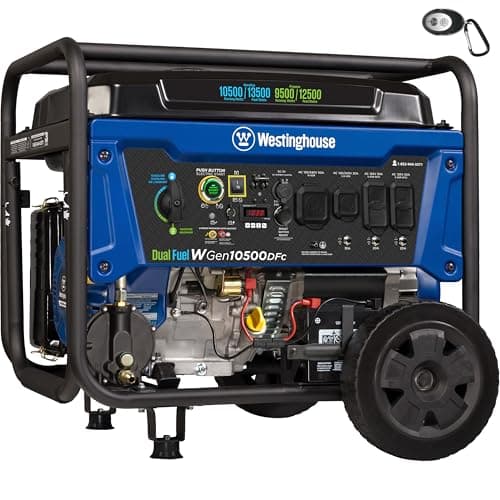 Westinghouse WGen10500DFc 13,500W Dual Fuel The WGen9500DF with the two things it is missing fixed: more running watts and a CO shutdown, at a higher price. | Same layout, with CO shutdown | 9.5/10 | $1,099.00 |
| 2 | 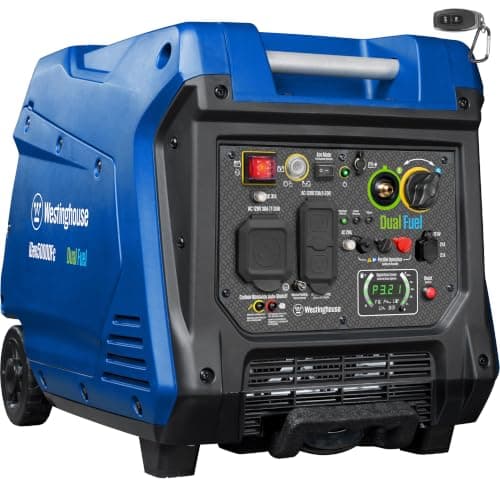 Westinghouse iGen5000DFc 5,000W Dual Fuel Inverter The quietest way to get around 4,000 running watts on either fuel, provided you are running cords rather than a transfer switch. | Quietest dual fuel at 4,000 running watts | 9.3/10 | $999.00 |
| 3 | 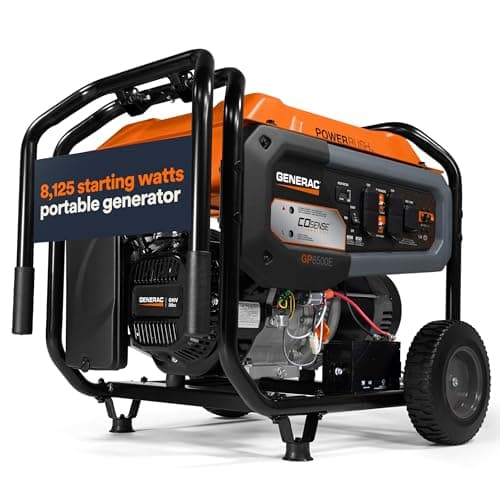 Generac 8,125W Starting Portable The right size for most people who think they need 10,000 watts: enough running capacity for every essential circuit, with surge headroom for motor startup. | Essential circuits on a budget | 8.8/10 | $899.00 |
| 4 | 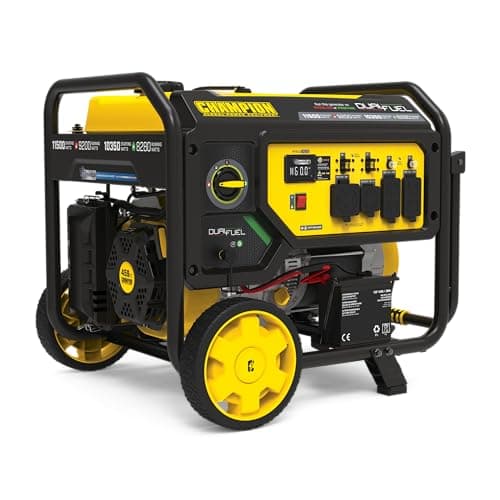 Champion 11,500W Dual Fuel Electric Start The most honestly specified generator in its class, with CO shutoff and the best after-sale support in the category. | Published propane numbers you can plan on | 9.3/10 | $1,099.99 |
| 5 | 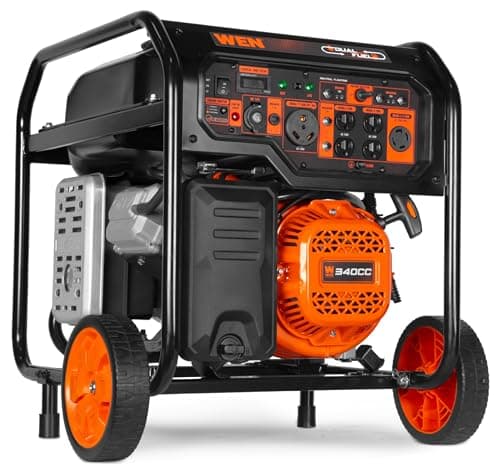 WEN DF8000X 8,000W Dual Fuel The best-value correctly-sized home backup generator here: enough for every essential circuit, dual fuel, CO shutoff, a real transfer-switch outlet, and no money spent on capacity you will not use. | Essential circuits, dual fuel, lowest cost | 9.2/10 | $658.41 |
#ad Amazon prices as of November 19, 2026; they may have changed since. Scores are our editorial judgment from published specifications, not test results — how we pick. How we are funded.
What this page actually recommends buying
Same layout, with CO shutdown
Westinghouse WGen10500DFc 13,500W Dual Fuel
Quietest dual fuel at 4,000 running watts
Westinghouse iGen5000DFc 5,000W Dual Fuel Inverter
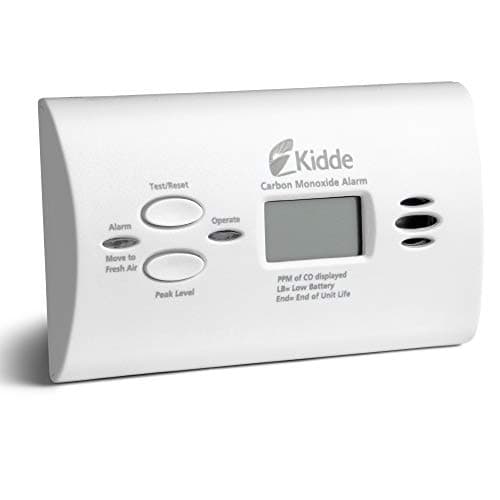
The one accessory nobody should skip
Kidde KN-COPP-B-LPM Battery CO Alarm
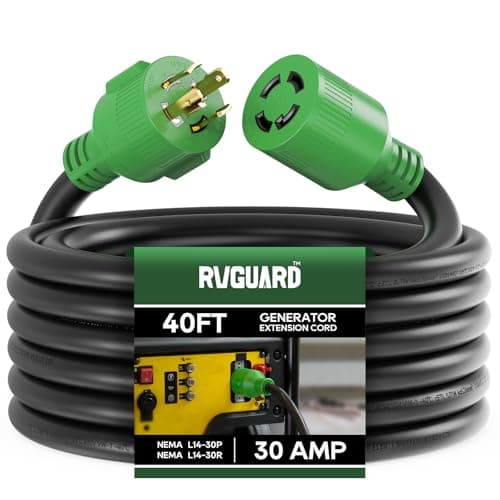
ETL listing and pure copper
RVGUARD 40 ft 30A L14-30 Cord, ETL Listed
A machine that publishes a CO shutdown, a battery CO alarm for inside the house because the machine's sensor cannot protect that space, and a cord long enough to put the generator where it will not trip in the first place.
Questions people actually ask
Why does my generator keep shutting off because of the CO sensor?
Because carbon monoxide is building up where the machine is standing. In nearly every case it is in or against an enclosure — a garage or shed even with the door open, tight to a wall, under a deck, inside a noise box — or it is running in still air with nothing to disperse the exhaust. Move it into genuinely open air at least 20 feet from the house with the exhaust pointed away.
How do I reset the CO sensor on my generator?
Move the machine into open air first, let the area clear, then follow the reset your manual publishes for your model — usually switching off, waiting a stated interval and restarting. Restarting it where it tripped just reproduces the condition. If it trips again in genuinely open air, that is a warranty call to the manufacturer.
Can you bypass a generator's CO sensor?
We publish no procedure for it, and you should not. The sensor trips because carbon monoxide is accumulating around the machine; disabling it removes the detection, not the gas. Every situation where the sensor is inconvenient is one where the generator is somewhere it should not be, and that configuration is behind the CPSC's published figure of nearly 100 deaths a year.
Does a CO sensor on the generator mean I do not need a CO alarm in the house?
No, and this is the most important misunderstanding about the feature. The generator's sensor measures its own operating area, which is where the machine is, outdoors. It cannot see carbon monoxide inside your house. The CPSC's guidance is battery-powered alarms, or alarms with battery backup, on every level, interconnected if possible.
Do all generators have a carbon monoxide shutoff?
No. UL 2201 and ANSI/PGMA G300-2018 both added CO requirements in 2018, but these are voluntary standards and CPSC's published report found compliance across the market to be minimal. Plenty of machines on sale have no CO shutdown at all, which is why we record its presence or absence on every generator in the registry.
What are the trade names for generator CO shutdown?
The same feature is sold under different names: Generac publishes COsense, Champion CO Shield, WEN its Watchdog CO shutdown sensor, DuroMax CO Alert, Honda CO-MINDER and Firman CO Alert Technology, while Westinghouse publishes a CO sensor with automatic shutdown across much of its range.
Sources
- US CPSC — winter storm carbon monoxide and fire safety release (January 2024)The published figure that an average of nearly 100 consumers die in the US each year from CO poisoning from portable generators, the never-in-an-enclosed-space and 20-foot placement wording, and the battery CO alarm guidance.
- US CPSC — report on portable generator voluntary standards (2022)That UL 2201 and ANSI/PGMA G300-2018 both added carbon monoxide requirements in 2018, that CPSC staff found UL 2201's combined shutoff-plus-reduced-emissions approach more effective, and that compliance with either standard is minimal.
- US Consumer Product Safety Commission — Portable Generator Information CenterThe placement, never-indoors and CO-alarm guidance this site repeats on every generator page.
Read next
Guide
Generator Carbon Monoxide Safety
The CPSC placement rules, why a garage with the door open is still unsafe, and the battery CO alarm that should be your first purchase.

Reference
How Far Should a Generator Be From the House?
The published 20-foot minimum, what the distance is actually protecting against, and the cord and connection choices that make it achievable.

Guide
Can You Run a Generator Overnight?
Whether a generator can run through the night, settled on published runtimes, the CPSC placement rules and the one job you must never do in the dark.

Guide
How to Quiet a Generator
Making a running generator quieter: why distance dominates, what placement and load do, and why a box around it is a carbon monoxide hazard.