Power Stations
The Best Solar Panels for a Power Station
The panel is not an accessory. It is the difference between a battery that lasts one day and one that lasts the whole outage.
Written byMike M.
Published
Disclosure: we earn a commission on purchases made through links on this page, at no cost to you. It does not affect what we recommend or what we say about it — how we are funded.
The short answer
The best all-round panel is the Renogy 200 W (RPP200EF-SE): 200 rated watts from 16BB N-type cells at a published 25% efficiency, 13.89 lb, UL 61730 tested, and the cheapest 200 W panel here. For one-panel recharging of a 2 kWh battery, the Renogy 400 W is the better buy — 400 rated watts, IP67, a published 3-year warranty — and it saves you a second cable and a second setup. If you will carry the panel often, the Anker SOLIX PS200 is 11 lb with its stand and carries a 5-year warranty. Every panel's output is a laboratory rating; plan on roughly 60-75% of it in good conditions and far less in poor ones.
On day one of an outage, a battery power station is the best thing in the house. It runs the refrigerator silently, indoors, with nothing to refuel and nobody standing in the rain. On day two it is a heavy plastic box, because it is empty and the grid that would have recharged it is the thing that failed.
That is the whole case for buying panels, and it is a different purchase from the battery. A panel is not a performance upgrade — it is the only way a battery survives an outage longer than its own capacity. Everything below is ranked on that job: putting usable watt-hours back into a power station, in a yard or on a driveway, by someone who is not an installer.
First: the arithmetic, because it decides how many panels you buy
A rated watt is not a delivered watt. Panel ratings are measured under standard test conditions — a defined light intensity, a defined cell temperature, the sun square-on to the glass. A panel lying flat on a lawn in October, at an angle nobody adjusted, behind a thin cloud, with a hot surface and a 10 ft cable, does not produce its rating. Renogy says this plainly on its own 400 W listing: rated output is measured under standard test conditions, and real watts vary with sun angle, temperature, shade, cable length and the power station's own input limit. The temperature part is not intuitive and it is worth stating on its own authority — the US Department of Energy publishes that solar cells generally work best at low temperatures, because a hotter cell gains a little current and loses considerably more voltage. A panel baking on a July driveway is working against itself.
So the honest way to size panels is to work in watt-hours per day and derate hard. The arithmetic below is ours, not a measurement, and it is shown so you can substitute your own numbers.
Sizing panels against a battery, in four steps
- 1. Your daily load
- Watt-hours you draw per day
- 2. Your usable capacity
- Battery watt-hours
- 3. Panel watts delivered
- Rated watts x 0.6-0.75, good conditions
- 4. Hours of useful sun
- Your own figure, not a national one
Step 3 is the step most buyers skip. Step 4 is the step no honest page can fill in for you: usable sun depends on your latitude, your season, your roof line, your trees and where you can physically put the panel. We do not publish a national peak-sun figure here because it would be a guess dressed as data — check your own location against a public solar resource map, then do steps 1 to 4 with that number.
Run that once and the whole category gets simpler. A refrigerator is commonly the single load people most want to carry through an outage, and the published appliance figures this site cites throughout put a modern fridge in the low hundreds of running watts with a cycling duty — which is why how long a power station will run a fridge works it out in watt-hours rather than hours. Once you have that daily number, you know whether you need 200 rated watts or 600.
What we ranked on
- 1Rated watts per dollar. Not watts. Two 200 W panels and one 400 W panel are the same array at very different prices, and the cheaper route changes depending on the week.
- 2Published cell efficiency. Efficiency is not output — a 200 W panel is a 200 W panel — but it decides how much ground and how much folded shelf space those 200 watts occupy. For a panel you have to carry, store and aim, that matters.
- 3Published weather protection. An IP rating and a surface coating, stated by name. A panel lives outdoors in exactly the weather that caused your outage, and three of the nine panels here publish no IP rating at all.
- 4Connector fit out of the box. MC4, XT60, DC7909 or a proprietary plug. An adapter you have to order separately is a panel that does not work on the day of the storm.
- 5Weight and folded size. The panel that never gets carried outside produces zero watts. This is the criterion buyers discount hardest and regret fastest.
- 6Published warranty. Only three panels here state a warranty term at all. Where a listing is silent, the table below says so rather than assuming an industry norm.
The short answer
Quick picks
| # | Product | Best for | Score | Price |
|---|---|---|---|---|
| 1 | 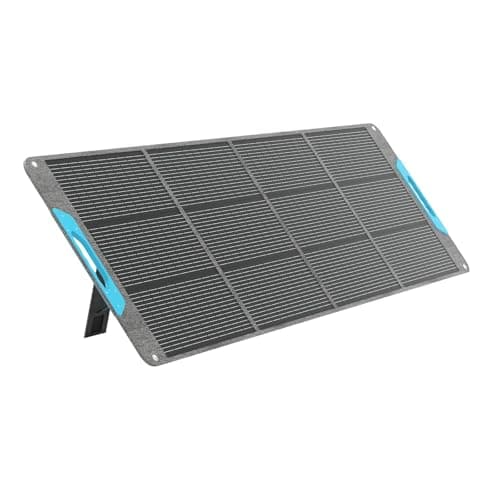 Renogy 200W Portable Solar Panel (RPP200EF-SE) The best rated watts per dollar here, and the only panel in the group naming a safety standard — held back by a missing IP rating and an adapter you have to buy. | Most rated watts per dollar | 9.4/10 | $252.97 |
| 2 | 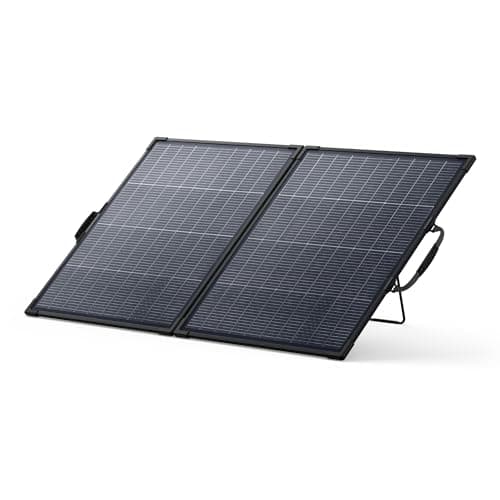 Anker SOLIX PS200 Bifacial Solar Panel The panel to buy if you will carry it often and keep it for a decade: lightest in class, best-documented durability, priced accordingly. | Lightest 200 W panel, longest warranty | 9.3/10 | $399.99 |
| 3 | 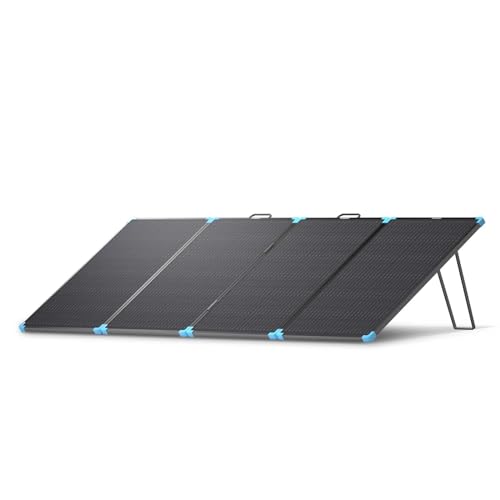 Renogy 220W Portable Solar Panel (RSP220LSC) The most rated watts here that one person can carry, set up and aim without help, with the warranty and IP rating most of this category declines to publish — let down by an adapter Renogy makes you buy separately. | Most rated watts in a one-hand carry | 9.1/10 | $320.99 |
| 4 | 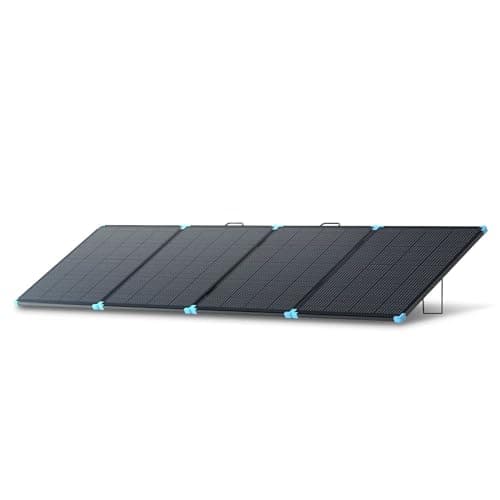 Renogy 400W Portable Solar Panel (RSP400LSC) The single best way to get 400 rated watts into a battery without juggling two panels and two cables, and the best-documented panel here on warranty and weather. | One-panel recharge for a 2 kWh battery | 9.2/10 | $495.99 |
| 5 | 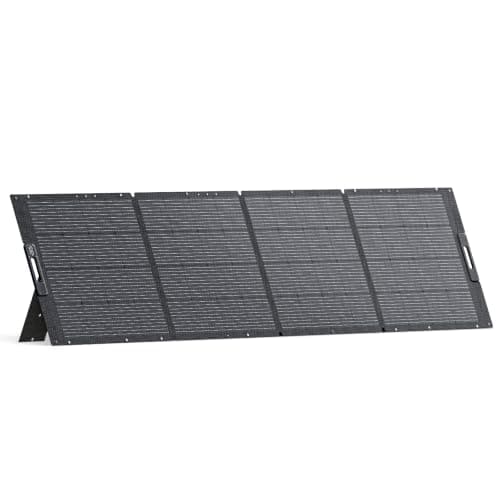 Bluetti PV350 350W Portable Solar Panel A lot of rated watts for the money if you already own a Bluetti — the trade is efficiency per square foot and a genuinely large folded panel. | High output for a Bluetti battery | 8.9/10 | $819.00 |
| 6 | 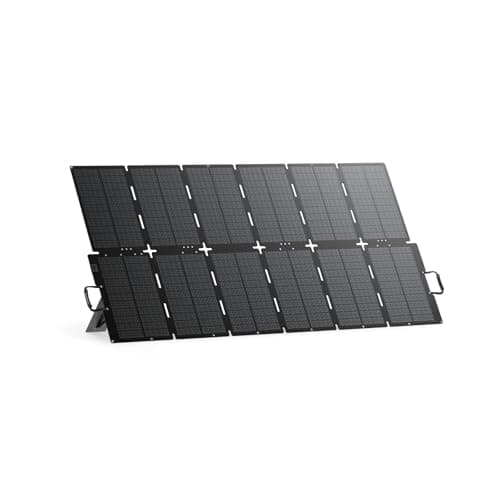 Bluetti 500W Portable Solar Panel (SORA 500) The most rated watts available as a single purchase, and the lightest way to get them — with an IP67 rating a step below the best here and a connector that assumes you own a Bluetti. | Highest rated output on one order | 8.7/10 | $899.00 |
| 7 | 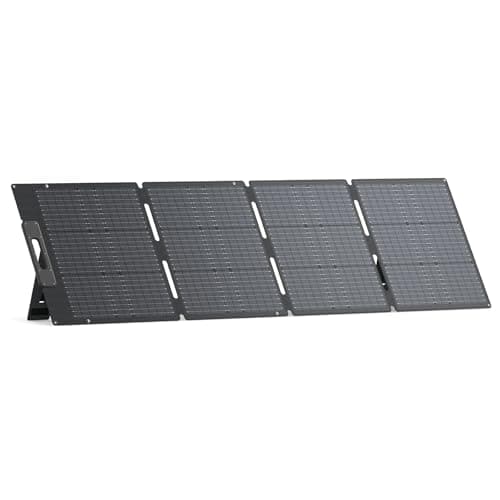 Bluetti 200W Portable Solar Panel A sensible brand-matched panel for an existing Bluetti, and the weakest 200 W choice here on every published figure except the compatibility list. | Brand-matched 200 W for a Bluetti | 8.7/10 | $399.00 |
| 8 | 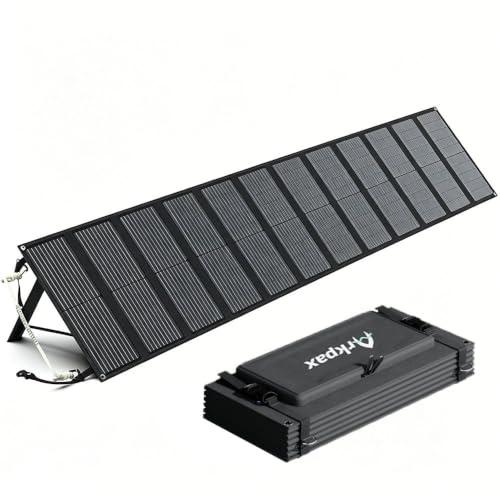 Arkpax SP200 200W Portable Solar Panel The cheapest honest route to 200 rated watts: ETFE lamination, a published IP65 rating and more mounting options than anything else here — with one connector in the box and a listing that contradicts itself on weight. | Cheapest real 200 W panel | 8.6/10 | $179.99 |
| 9 | 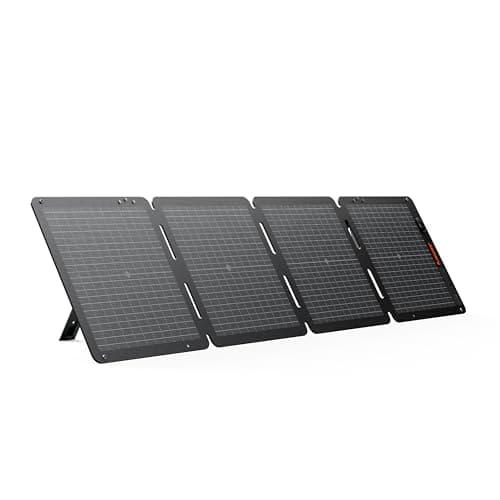 Jackery SolarSaga 100W Air Solar Panel The panel for someone who wants topping-up capability they will genuinely carry, with the clearest durability testing claim and a contradictory IP rating. | Lightest panel here, by a long way | 9.0/10 | $299.00 |
#ad Amazon prices as of November 19, 2026; they may have changed since. Scores are our editorial judgment from published specifications, not test results — how we pick. How we are funded.
The published specifications side by side
| Panel | Rated watts | Efficiency | Weight | IP rating | Warranty |
|---|---|---|---|---|---|
| Renogy 200W (RPP200EF-SE) | 200 W | 25% N-type | 13.89 lb | Not published | Not published |
| Anker SOLIX PS200 | 200 W | Over 25% N-type | 11 lb with stand | IP68 | 5 years |
| Renogy 220W (RSP220LSC) | 220 W | 23% A+ mono | 15.87 lb | IP67 | 5 years |
| Renogy 400W (RSP400LSC) | 400 W | Not published | 30.2 lb | IP67 | 3 years |
| Bluetti PV350 | 350 W | 23.4% mono | 30.6 lb | IP67 | Not published |
| Bluetti 500W (SORA 500) | 500 W | 25% | 28.4 lb | IP67 | Not published |
| Bluetti 200W | 200 W | 23.4% mono | 17.2 lb | Not published | Not published |
| Arkpax SP200 | 200 W | 23% mono | 11.2 lb (listing also states 15 lb) | IP65 | Not published |
| Jackery SolarSaga 100W Air | 100 W | 23% bifacial PERC | 7 lb | See note | Not published |
Two patterns fall out of that table. First, cell generation no longer tracks price — 25% N-type appears on a mid-priced 200 W panel here and on the most expensive panel in the group, so efficiency is not what the premium buys. Second, what the premium does buy is documentation: Anker and Renogy publish the warranty and the IP rating, and most of the rest do not.
Why the Renogy 200 W is the pick
Renogy publishes 200 rated watts from 16BB N-type cells at 25% efficiency, 13.89 lb, a folded size of 23.72 x 22.99 x 1.97 in, four kickstands with 40, 50 and 60 degree positions, a USB-C PD 45 W output with two USB-A ports, and testing to UL 61730 alongside CE, RoHS, FCC, CA65, PSE and ISO 9001 claims. It is the least expensive 200 W panel here that names a third-party safety standard.
The UL 61730 line is the reason it wins rather than ties. It is the photovoltaic module safety standard, and it is the only third-party standard any panel in this group names. On a product that sits outside in a storm, wired to a 2 kWh lithium battery, a named safety listing is worth more than another percentage point of efficiency.
The USB ports are the other quiet advantage. Every other panel above 100 W here is useless without a power station attached. This one charges three devices on its own, which is a genuinely different thing to own on hour three of an outage before anyone has found the cables.
Two real costs. Renogy publishes no IP rating for this panel, while the Anker publishes IP68 and Renogy's own 220 W publishes IP67 — so treat it as rain-tolerant rather than weatherproof and bring it in. And the output is MC4 only: Renogy states the 4-in-1 adapter cable is a separate purchase, so order it at the same time or the panel will not plug into your battery.
One big panel or two small ones?
This is the decision that actually costs money, and it does not have a universal answer. Two Renogy 200 W panels and one Renogy 400 W panel both give you 400 rated watts, from the same manufacturer, with the same MC4 output and the same adapter problem. Which is cheaper changes week to week, so check both prices before you commit.
What does not change is the trade in handling. One 400 W panel is 30.2 lb and folds to 33.7 x 27.95 in — a single two-hand carry, one cable, one setup, one thing to aim. Two 200 W panels are 13.89 lb each, which one person moves easily, and they can be placed in two different patches of sun, which matters enormously on a lot with trees. Renogy's own argument for the 400 W unit is its parallel wiring, which it states reduces the impact of a shadow from a single tree or cloud — a real benefit, and also an admission that shade is the problem you will be fighting.
The rule of thumb that survives contact with a real yard: if you have one open, unshaded area, buy the single bigger panel. If your sun moves around trees, a fence and a roof line through the day, buy two smaller ones and move them.
Connectors are where this goes wrong
More panel purchases fail on the plug than on the watts. The panels here ship with at least three different outputs: MC4 on all three Renogy models and the Bluetti pair, XT60 on the Arkpax, and brand-specific cables on the Anker and Jackery units. Power station inputs are just as varied.
- MC4 panels are the most brand-agnostic and the most likely to need an adapter. Renogy states the 4-in-1 adapter is sold separately on all three of its panels here.
- XT60 is the single most common power-station solar input, and the Arkpax ships that cable in the box — but it ships only that one, so an MC4, DC7909 or brand-specific input still needs an adapter.
- Brand-matched panels — the Anker on an Anker battery, the Jackery on a Jackery — generally plug straight in, which is what you are paying the brand premium for.
- Voltage still has to match. Jackery states outright that the SolarSaga 100W Air is not compatible with the Explorer 300 or 300 v2 and will return an F7 input voltage error. A plug that fits is not proof a panel is compatible.
- Rated power
- 200 W
- Cell efficiency
- 25% (16BB N-type)
- Weight
- 13.89 lb
#1 · Most rated watts per dollar
Renogy 200W Portable Solar Panel (RPP200EF-SE)
The best rated watts per dollar here, and the only panel in the group naming a safety standard — held back by a missing IP rating and an adapter you have to buy.
#ad Price as of November 19, 2026; it may have changed since. How we are funded.
Why we picked it
- The highest published cell efficiency in this group, at the lowest price of any 200 W panel here
- UL 61730 is the only third-party safety standard any panel in this registry names
- The USB-C and USB-A ports make it useful on its own, which no other panel here above 100 W offers
Good to know
- MC4 output only — most power stations need the 4-in-1 adapter, which Renogy sells separately
Published specification & our scoring
- 200 W rated output from 16BB N-type cells at 25% efficiency (manufacturer)
- 13.89 lb, folding to 23.72 x 22.99 x 1.97 in (manufacturer)
- USB-C PD 45 W plus two USB-A ports for charging devices directly off the panel
- Four kickstands with 40, 50 and 60 degree positions
- Tested to UL 61730, with CE, RoHS, FCC, CA65, PSE and ISO 9001 claims (manufacturer)
- MC4 output only; Renogy states the 4-in-1 adapter cable is sold separately
- Rated watts per dollar
- 10
- Published efficiency
- 9
- Portability
- 9
- Published durability
- 6
- Compatibility
- 8
- Value
- 10
Specification figures are the manufacturer’s published values. Scores are our editorial judgment from those figures and are never published as structured review data — how we pick.
- Rated power
- 200 W
- Weight
- 11 lb with stand
- Warranty
- 5 years
#2 · Lightest 200 W panel, longest warranty
Anker SOLIX PS200 Bifacial Solar Panel
The panel to buy if you will carry it often and keep it for a decade: lightest in class, best-documented durability, priced accordingly.
#ad Price as of November 19, 2026; it may have changed since. How we are funded.
Why we picked it
- 11 lb with the stand included is the lightest 200 W panel here by nearly 3 lb
- A published 5-year warranty is the longest coverage any panel in this registry states
- IP68 plus a reinforced aluminum frame is the strongest published durability claim in the group
Good to know
- Anker publishes no folded dimensions on this listing, so the storage footprint is unknown until it arrives
Published specification & our scoring
- 200 W rated power from N-type cells Anker publishes at over 25% conversion efficiency
- 11 lb including the stand — Anker states 10% lighter than the previous version and over 30% lighter than typical 200 W panels
- Bifacial, with Anker claiming up to 10% more power from the rear surface on reflective ground
- IP68 water and dust rating with a reinforced aluminum frame (manufacturer)
- 5-year warranty and a stated 10-year lifespan
- Ships with two 8.2 ft solar cables and one 1.6 ft XT-60i cable
- Rated watts per dollar
- 5
- Published efficiency
- 9
- Portability
- 10
- Published durability
- 10
- Compatibility
- 8
- Value
- 6
Specification figures are the manufacturer’s published values. Scores are our editorial judgment from those figures and are never published as structured review data — how we pick.
- Rated power
- 220 W
- Cell efficiency
- 23% (A+ mono)
- Weight
- 15.87 lb
#3 · Most rated watts in a one-hand carry
Renogy 220W Portable Solar Panel (RSP220LSC)
The most rated watts here that one person can carry, set up and aim without help, with the warranty and IP rating most of this category declines to publish — let down by an adapter Renogy makes you buy separately.
#ad Price as of November 19, 2026; it may have changed since. How we are funded.
Why we picked it
- 220 rated watts at 15.87 lb is the most panel one person moves with one hand here — every option above 220 W in this registry is a two-hand carry at 28 lb or more
- A 5-year warranty and a named IP rating put it in the documented minority: six of the nine panels here state no warranty term at all
- Renogy publishes an actual compatibility list by power-station model, which is the fact that decides whether a panel works and the one most listings leave out
Good to know
- MC4 only, with the 4-in-1 adapter a separate purchase — order it at the same time or the panel will not plug into your battery
- 23% is below the 25% N-type panels here, so those 220 watts take up more ground and more folded shelf space than they would on newer cells
Published specification & our scoring
- 220 W rated output from A+ monocrystalline cells at a published 23% efficiency
- 15.87 lb, folding to 27.17 x 18.11 x 3.15 in, with a carry case included (manufacturer)
- IP67 waterproof panel with IP68-rated connectors; fiberglass backing and an ETFE coating (manufacturer)
- 5-year warranty
- Rust-proof kickstands; Renogy states tool-free setup in about 60 seconds
- Parallel wiring, which Renogy states reduces the impact of a shadow from a single tree or cloud
- MC4 output only; Renogy states the 4-in-1 adapter cable is sold separately
- Renogy's compatibility list names the Jackery Explorer 1000 v2, EcoFlow DELTA 3, DELTA 3 Max and RIVER 3 Max, and the Anker SOLIX S2000
- Rated watts per dollar
- 8
- Published efficiency
- 7
- Portability
- 9
- Published durability
- 8
- Compatibility
- 8
- Value
- 8
Specification figures are the manufacturer’s published values. Scores are our editorial judgment from those figures and are never published as structured review data — how we pick.
- Rated power
- 400 W
- Weight
- 30.2 lb
- Warranty
- 3 years
#4 · One-panel recharge for a 2 kWh battery
Renogy 400W Portable Solar Panel (RSP400LSC)
The single best way to get 400 rated watts into a battery without juggling two panels and two cables, and the best-documented panel here on warranty and weather.
#ad Price as of November 19, 2026; it may have changed since. How we are funded.
Why we picked it
- 400 rated watts in one unit is the shortest path to recharging a 2 kWh battery in a day
- Renogy publishes what the cheap panels leave blank: the warranty, the IP rating and the shade-handling wiring
- Parallel wiring genuinely matters in a yard where one branch shadow crosses the panel for part of the day
Good to know
- 30.2 lb and a 33.7 x 27.95 in folded footprint is a two-hand carry and real shelf space
Published specification & our scoring
- 400 W rated output from EL-tested Grade A+ monocrystalline cells (manufacturer)
- 30.2 lb, folding to 33.7 x 27.95 in, with a carry case included
- IP67 rating, hail-resistant ETFE coating, fiberglass reinforcement and an aluminum backsheet (manufacturer)
- Parallel wiring Renogy states reduces the impact of a shadow from a single tree or cloud
- 3-year materials and workmanship coverage (manufacturer)
- MC4 output cables only; Renogy states the 4-in-1 adapter cable is sold separately
- Rated watts per dollar
- 9
- Published efficiency
- 5
- Portability
- 5
- Published durability
- 10
- Compatibility
- 8
- Value
- 9
Specification figures are the manufacturer’s published values. Scores are our editorial judgment from those figures and are never published as structured review data — how we pick.
- Rated power
- 350 W
- Cell efficiency
- 23.4%
- Weight
- 30.6 lb
#5 · High output for a Bluetti battery
Bluetti PV350 350W Portable Solar Panel
A lot of rated watts for the money if you already own a Bluetti — the trade is efficiency per square foot and a genuinely large folded panel.
#ad Price as of November 19, 2026; it may have changed since. How we are funded.
Why we picked it
- 350 rated watts from a single panel, with MC4 output that is not locked to one brand
- IP67 and ETFE are published, which several cheaper panels here do not state
- Published folded dimensions, so you know what shelf it needs before you buy
Good to know
- 30.6 lb with a 35.6 in folded side makes it the bulkiest thing here
Published specification & our scoring
- 350 W rated output from monocrystalline cells at up to 23.4% efficiency (manufacturer)
- IP67 water and dust rating with an ETFE coating (manufacturer)
- Folded size 35.6 x 24.1 in; 30.6 lb
- MC4 connector, which Bluetti states works with most solar generators
- Adjustable kickstand
- Box contains the panel and the manual only
- Rated watts per dollar
- 7
- Published efficiency
- 6
- Portability
- 4
- Published durability
- 8
- Compatibility
- 9
- Value
- 7
Specification figures are the manufacturer’s published values. Scores are our editorial judgment from those figures and are never published as structured review data — how we pick.
- Rated power
- 500 W
- Cell efficiency
- 25%
- Weight
- 28.4 lb
#6 · Highest rated output on one order
Bluetti 500W Portable Solar Panel (SORA 500)
The most rated watts available as a single purchase, and the lightest way to get them — with an IP67 rating a step below the best here and a connector that assumes you own a Bluetti.
#ad Price as of November 19, 2026; it may have changed since. How we are funded.
Why we picked it
- 500 rated watts arriving as one order is the largest portable array in this registry
- 28.4 lb for 500 rated watts is the best published watts-per-pound figure of any panel here
- A folded size of 22.4 x 17.5 x 3.3 in means it stores in a closet rather than needing a garage wall
Good to know
- The cable supplied terminates in XT60, so most non-Bluetti stations will need an adapter you buy separately
Published specification & our scoring
- 500 W maximum rated output at a stated 25% conversion efficiency (manufacturer)
- Published weight 28.4 lb; folds to 22.4 x 17.5 x 3.3 in
- IP67 rating — the manufacturer states full protection against rain and dust
- Adjustable kickstand, and impact-resistant materials the manufacturer rates for frequent travel
- Ships with a 1.5 m MC4-to-XT60 cable; Bluetti names the Elite 300, Elite 400 and Apex 300 as compatible stations
- Manufacturer states it works with most portable power stations, and asks you to confirm your unit's input voltage and connector first
- Rated watts per dollar
- 6
- Published efficiency
- 9
- Portability
- 7
- Published durability
- 7
- Compatibility
- 6
- Value
- 6
Specification figures are the manufacturer’s published values. Scores are our editorial judgment from those figures and are never published as structured review data — how we pick.
- Rated power
- 200 W
- Cell efficiency
- 23.4%
- Weight
- 17.2 lb
#7 · Brand-matched 200 W for a Bluetti
Bluetti 200W Portable Solar Panel
A sensible brand-matched panel for an existing Bluetti, and the weakest 200 W choice here on every published figure except the compatibility list.
#ad Price as of November 19, 2026; it may have changed since. How we are funded.
Why we picked it
- The compatibility list is published model by model, which removes the guesswork if you already own a Bluetti
- Published folded dimensions let you check it against the shelf before ordering
- ETFE coating at the lower end of the 200 W price range
Good to know
- 23.4% efficiency and 17.2 lb make it the heaviest and least efficient 200 W panel here
Published specification & our scoring
- 200 W rated output from monocrystalline cells at up to 23.4% efficiency (manufacturer)
- Folded size 22.5 x 23.6 x 2.9 in; 17.2 lb
- ETFE coating Bluetti states resists scratches and water splashes
- Solar connector Bluetti lists as compatible with the EB3A, AC2A, AC50B, AC70, AC180, AC200L, Elite 200 V2, AC300 and AC500
- Adjustable kickstands
- Box contains the panel and the manual only
- Rated watts per dollar
- 6
- Published efficiency
- 6
- Portability
- 7
- Published durability
- 6
- Compatibility
- 10
- Value
- 6
Specification figures are the manufacturer’s published values. Scores are our editorial judgment from those figures and are never published as structured review data — how we pick.
- Rated power
- 200 W
- Cell efficiency
- 23%
- Protection
- IP65
#8 · Cheapest real 200 W panel
Arkpax SP200 200W Portable Solar Panel
The cheapest honest route to 200 rated watts: ETFE lamination, a published IP65 rating and more mounting options than anything else here — with one connector in the box and a listing that contradicts itself on weight.
#ad Price as of November 19, 2026; it may have changed since. How we are funded.
Why we picked it
- 200 rated watts at the lowest price of any 200 W panel in this registry
- Six kickstands and four reinforced grommets mean you can aim it on the ground or hang it off a fence — every other panel here publishes kickstands alone
- The 6.56 ft XT60 cable plugs straight into the most common power-station solar input with nothing extra to buy
- ETFE lamination and a published IP65 rating are a real durability claim at this price
Good to know
- XT60 is the only output in the box, so a Jackery, Bluetti or MC4 input needs an adapter ordered separately
- The listing publishes two different weights — 11.2 lb in the features and 15 lb in the listing specification — and both cannot be right
- 23% efficiency is below the 25% N-type panels here, so it needs more area for the same output
- No warranty term and no unfolded dimensions are published on this listing
Published specification & our scoring
- 200 W rated output from monocrystalline cells, stated to convert up to 23% of incoming sunlight (manufacturer)
- Multi-layer ETFE lamination over the cells (manufacturer)
- IP65 rated against dust and water splashes; Arkpax states it should not be soaked or left out in the rain
- XT60 DC output with a 6.56 ft cable, stated compatible with most solar generators and 12 V battery systems
- Twelve-fold design with a built-in accessory pouch, six kickstands and four reinforced edge grommets (manufacturer)
- In the box: the panel, one XT60 DC cable and a manual — no charge controller and no extra connector adapters
- Arkpax publishes 11.2 lb and a folded size of 19.88 x 8.54 x 3.62 in in its feature list, against a 15 lb listing weight
- Rated watts per dollar
- 10
- Published efficiency
- 7
- Portability
- 8
- Published durability
- 6
- Compatibility
- 6
- Value
- 9
Specification figures are the manufacturer’s published values. Scores are our editorial judgment from those figures and are never published as structured review data — how we pick.
- Rated power
- 100 W
- Weight
- 7 lb
- Cell efficiency
- 23% (bifacial PERC)
#9 · Lightest panel here, by a long way
Jackery SolarSaga 100W Air Solar Panel
The panel for someone who wants topping-up capability they will genuinely carry, with the clearest durability testing claim and a contradictory IP rating.
#ad Price as of November 19, 2026; it may have changed since. How we are funded.
Why we picked it
- 7 lb is light enough that it actually gets carried out, which is the panel failure nobody writes about
- The sun indicator and 60-second stand make correct aiming realistic for someone who will not do the math
- IEC TS 63163 with a published fold-cycle count is the most specific durability testing claim here
Good to know
- The listing publishes IP65 in its title and IP68 in its feature bullets, and both cannot be right
Published specification & our scoring
- 100 W rated output, bifacial PERC cells at 23% efficiency (manufacturer)
- 7 lb — Jackery states 27% lighter than standard 100 W panels, with a W-fold smaller than A2 paper
- IEC TS 63163 certified, with Jackery citing 18 tests including drop, humidity, bending and 4,000 folds
- Stated operating range -4 F to 149 F
- Two USB ports for charging devices directly, plus an integrated aluminum stand and a sun indicator
- Jackery states it is NOT compatible with the Explorer 300 or 300 v2, which return an F7 input voltage error
- Rated watts per dollar
- 5
- Published efficiency
- 8
- Portability
- 10
- Published durability
- 8
- Compatibility
- 6
- Value
- 7
Specification figures are the manufacturer’s published values. Scores are our editorial judgment from those figures and are never published as structured review data — how we pick.
What solar will not do
Three limits, stated plainly, because this is the part of the category that gets oversold.
- Panels do not change what a battery can start. Solar refills capacity; it does not raise the inverter's output ceiling. If your power station cannot start a well pump today, it still cannot with 400 W of panels attached. That ceiling is why a portable power station is not a generator.
- A winter outage is the worst case for both halves. Short days, low sun angle, snow on the glass and the highest household load of the year arrive together. A panel array sized on a July afternoon will disappoint you in January.
- Panels are not a solar installation. Nothing here connects to your panel board, powers a hard-wired circuit or runs without a battery in the middle. For what a permanent system involves, how home battery backup works covers the four parts and where the plug-in route stops.
What panels do change is the shape of a long outage. A battery with panels stops being a fixed number of hours and becomes a daily budget: draw it down overnight, put some back the next day, repeat. That is a genuinely different product, and on day four it is the difference between a working refrigerator and a warm one — which, on the published FoodSafety.gov guidance this site cites, is the difference between food that is safe and food that is not.
The batteries worth pairing with panels
A panel is only as useful as the battery's willingness to accept it. These three publish the highest solar input ceilings in this registry, which is what makes a 400 W or larger array worth buying in the first place.
Batteries that can use a real array
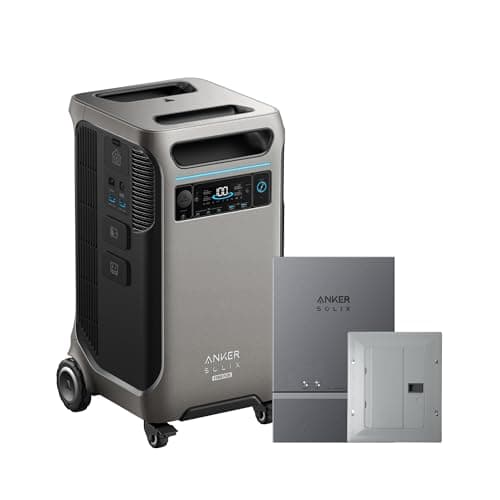
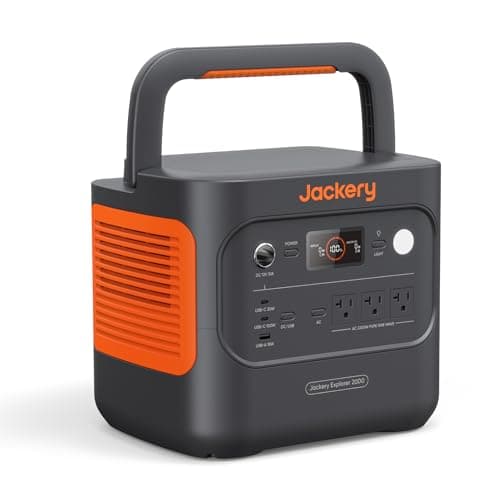
The default 2 kWh home backup battery
Jackery Explorer 2000 v2
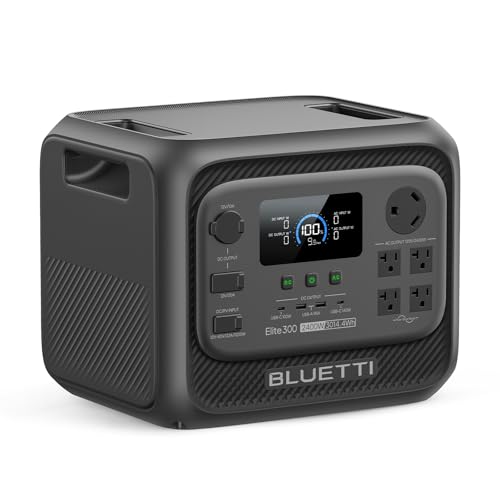
The SOLIX F3800 Plus is the only unit in this registry that publishes both 120 V and 240 V output, and it publishes the highest solar input ceiling here; the Explorer 2000 v2 is the lightest 2 kWh unit at 39.5 lb. Check each one's published maximum solar input against the array you are planning before you buy either half.
If you would rather buy both halves together, the best solar generators for home backup ranks the bundled kits — a battery and panels sold as one line item, usually cheaper than the two bought separately. The best home backup power stations is the ranking for the battery alone, and how to charge a power station in an outage covers every recharge route including the car and the generator. If you have not chosen the battery yet, Jackery vs EcoFlow for home backup compares the two brands on the published solar input and recharge figures that decide how useful panels will be.
And if you already have solar on the roof and assumed it would cover an outage, read portable solar vs rooftop solar for backup first — a grid-tied array produces nothing when the grid is down, and the fix is not more panels.
In short
Our recommendation
Best Solar Panel
9.4/10Renogy 200W Portable Solar Panel (RPP200EF-SE)
The best rated watts per dollar here, and the only panel in the group naming a safety standard — held back by a missing IP rating and an adapter you have to buy.
Runner-up
9.3/10Anker SOLIX PS200 Bifacial Solar Panel
The panel to buy if you will carry it often and keep it for a decade: lightest in class, best-documented durability, priced accordingly.
#ad Price as of November 19, 2026; it may have changed since. How we are funded.
Brands: want your product tested? For Brands.
Questions people actually ask
What size solar panel do I need for a power station?
Work in watt-hours, not watts. Take your daily draw, divide by the usable sun hours you actually get where the panel will sit, then divide by about 0.6 to 0.75 to account for angle, temperature and cable loss. For a refrigerator-only outage plan on a 1 kWh battery, 200 rated watts is usually the right starting point; for a 2 kWh battery carrying more than the fridge, 400 rated watts.
Do solar panels actually produce their rated watts?
No. Rated watts are measured under standard test conditions, with a defined light level, cell temperature and a square-on sun angle. Renogy states this explicitly on its own 400 W listing. In good real conditions plan on roughly 60-75% of the rating, and in poor conditions — overcast, low winter sun, a panel lying flat, partial shade — considerably less.
Can I use any solar panel with any power station?
No, and this is the most common expensive mistake. Three things must match: the connector, the input voltage and current range, and the power station's maximum solar input wattage. Jackery states its SolarSaga 100W Air is not compatible with the Explorer 300 or 300 v2 and returns an F7 voltage error, which is a good illustration that a plug fitting proves nothing.
Is it better to buy one 400 W panel or two 200 W panels?
One 400 W panel if you have a single open, unshaded area: one carry, one cable, one setup. Two 200 W panels if your sun moves around trees or a roof line, because you can place them separately and they are light enough for one person to reposition. Check both prices, because which route is cheaper changes week to week.
Are bifacial solar panels worth it?
Only where the ground reflects. Anker claims up to 10% more power from the rear surface of the SOLIX PS200, and Jackery builds the SolarSaga 100W Air on the same bifacial principle — gains that depend on snow, sand, concrete or water behind the panel. Over grass or dirt the rear-side contribution is close to nothing, and neither manufacturer publishes the conditions behind its headline figure.
Can a solar panel recharge a power station during a power outage?
Yes, and that is the entire point of owning one. The grid is down, so the wall outlet is dead and a panel is the only input left apart from a car or a generator. It will not refill a large battery in an afternoon, but it converts a battery from a fixed number of hours into a daily budget you can keep drawing from.
What happened to the BougeRV FS200W 200 W panel?
Its Amazon listing is no longer available, and BougeRV's current 200 W panels are rigid 12 V/24 V modules and a flexible panel rather than a foldable one for a power station. Our budget 200 W pick is now the Arkpax SP200, which covers the same job — 200 rated watts, foldable, IP65, with an XT60 cable in the box — at a lower price, though it publishes 23% efficiency against the BougeRV's 25% and ships only the one connector.
Can I leave a portable solar panel out in the rain?
Check its published IP rating first, because this category is inconsistent. The Anker SOLIX PS200 publishes IP68; the Renogy 220 W, the Renogy 400 W and the Bluetti panels publish IP67; the Arkpax publishes IP65, which is rain-resistant rather than weatherproof — and Arkpax says outright not to soak it or leave it out in the rain. The Renogy 200 W and Bluetti 200 W publish no IP rating at all, so bring those in.
Sources
- Eugene Water & Electric Board — Generator Sizing ConsiderationsPublished appliance running and additional-starting watt figures used in the capacity arithmetic on this page.
- FoodSafety.gov — food safety during a power outageThe 4-hour refrigerator and 48-hour full-freezer guidance referenced when deciding how much capacity is needed.
- US Department of Energy — Solar Photovoltaic Performance and Efficiency BasicsPublished statement that solar cells work best at low temperatures, used on the panel roundup where it explains why a hot panel underperforms its rating.
Read next
Best Solar Kit
Best Solar Generators for Home Backup
Battery-plus-panel kits ranked on solar input ceiling and capacity, with honest expectations for real-world panel output.
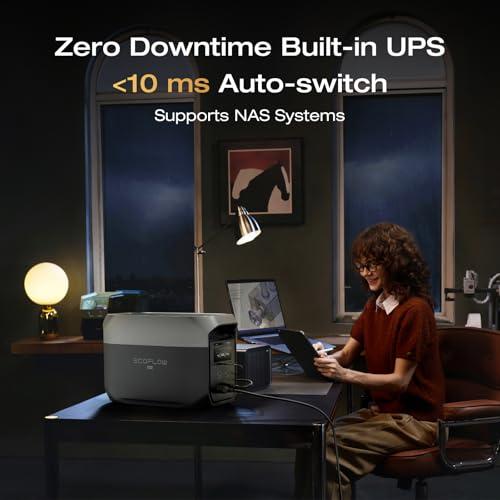
Top pick · EcoFlow DELTA 3 Max + 2x100W Solar
$1,229.00See the DELTA 3 Max + 2x100W Solar on Amazon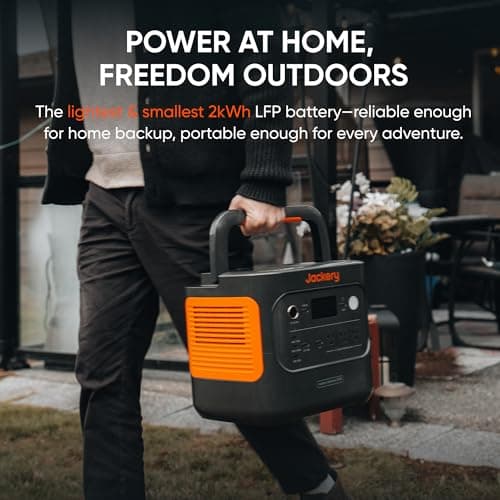
Best Overall Power Station
The Best Home Backup Power Stations
Battery power stations ranked for home backup on surge, capacity, recharge speed and cycle life.
Top pick · Jackery Explorer 2000 v2
$999.00See the Explorer 2000 v2 on Amazon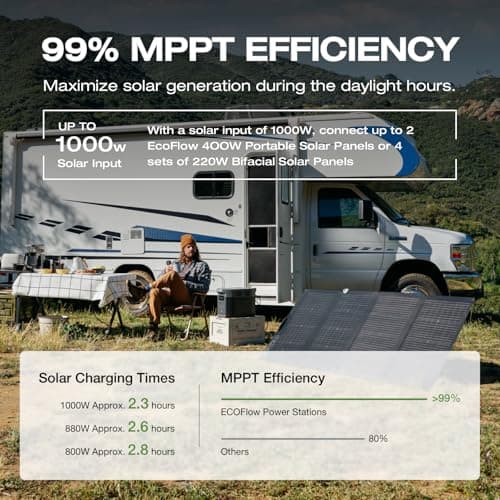
Guide
How to Recharge a Power Station in an Outage
The four recharge routes during an outage, with published charge speeds and the realistic limits of each.
Guide
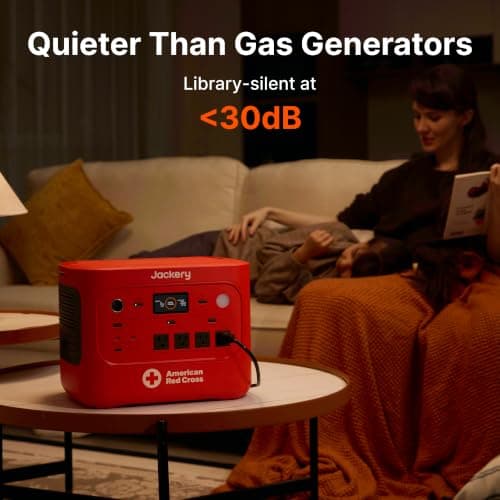
How Home Battery Backup Works
The four parts of a home battery backup system, the difference between a plug-in unit and a hard-wired one, and the loads a battery genuinely cannot take.
Comparison
Solar Generator vs Gas Generator
Solar kits against gas generators on refueling, output, surge capability and real-world panel performance.
Portable vs Rooftop Solar
Portable Solar vs Rooftop Solar for Backup
Why grid-tied rooftop solar goes dark in an outage, what portable panels and a battery genuinely cover, and the published cost of each route to backup power from the sun.