Comparisons
Portable Power Station vs a UPS
A UPS is a shutdown device measured in minutes. A power station is a supply measured in hours — and the good ones now hand over just as fast.
Written byMike M.
Published
Disclosure: we earn a commission on purchases made through links on this page, at no cost to you. It does not affect what we recommend or what we say about it — how we are funded.
The short answer
A UPS exists to keep a computer alive for the few minutes it takes to shut down cleanly, and to smooth the supply while the grid is up. A portable power station exists to carry a real load for hours — a refrigerator, a furnace blower, a CPAP. The capability that used to separate them, instant handover, no longer does: EcoFlow publishes under 10 ms switchover on the DELTA 3 Classic and Max, Anker under 10 ms on the C1000 Gen 2 and S2000, and Bluetti 10 ms on the FridgePower. If what you want is the fridge still running in the morning, the power station is the device.
This comparison was simple until recently. A UPS switched over instantly and lasted minutes; a power station lasted hours and required you to plug things into it by hand. The second half of that stopped being true, and the result is that a large part of the home-backup job has moved from one category to the other.
What each one is actually built for
| UPS | Portable power station | |
|---|---|---|
| Primary job | Clean shutdown and supply conditioning | Carry a load through an outage |
| Runtime | Minutes, at a desktop load | Hours — 230 to 3,840 Wh published here |
| Handover | Instant, by design | Published under 10 ms on most current units |
| Typical chemistry | Sealed lead-acid in most consumer units | LiFePO4 across this registry |
| Recharges from | The wall | Wall, car, or solar with a built-in MPPT |
| Portable | Rarely, in practice | Published weight on every unit, 7.5 lb up |
| Runs a refrigerator | Not for a useful length of time | Yes — this is the design case |
The figure that decides it: standby draw
If you want a power station to behave like a UPS, it has to live plugged in, permanently, waiting. That makes its idle consumption the most important specification on the sheet and almost nobody publishes it.
Bluetti does, for the FridgePower: an ultra-low 4 W standby consumption, which it states produces 26% longer runtime as a result. A device drawing 4 W doing nothing can be left plugged in for months at a trivial cost. One drawing twenty or thirty watts cannot, and over a year it quietly spends more than the difference between models.
Published UPS behavior in this registry
- Bluetti FridgePower
- 10 ms DualGuard UPS; 4 W standby
- EcoFlow DELTA 3 Max
- Under 10 ms transfer time
- EcoFlow DELTA 3 Classic
- Under 10 ms UPS switchover
- Anker SOLIX C1000 Gen 2
- Under 10 ms UPS switchover
- Anker SOLIX S2000
- Under 10 ms UPS switchover
- EcoFlow RIVER 3 230
- Under 20 ms auto-switching UPS
Each manufacturer's published figure. Bluetti also publishes four UPS modes on the FridgePower — Standard, PV Priority, Time of Use and Customized — and states the unit reverts to grid power automatically if it faults, which is the failure mode worth asking about.
Where a UPS is still the right answer
Two cases, and they are real:
- A desktop, a NAS or a server that must shut down cleanly. A UPS does this with signaling the operating system understands, so the machine saves its state and powers off by itself. A power station keeps it running, which is a different and less complete answer if the outage outlasts the battery.
- Supply conditioning. A line-interactive or online UPS corrects sags and surges continuously, not just during an outage. That is a data-integrity feature rather than a backup-power one.
What a UPS does not do is carry a household load. A refrigerator's compressor draws several times its running watts for a moment at every start — see starting watts versus running watts — and a desktop UPS sized for a computer will not take it at all, let alone for the four hours of grace a closed refrigerator gives you.
The short answer
Units publishing a UPS switchover time
| # | Product | Best for | Score | Price |
|---|---|---|---|---|
| 1 | 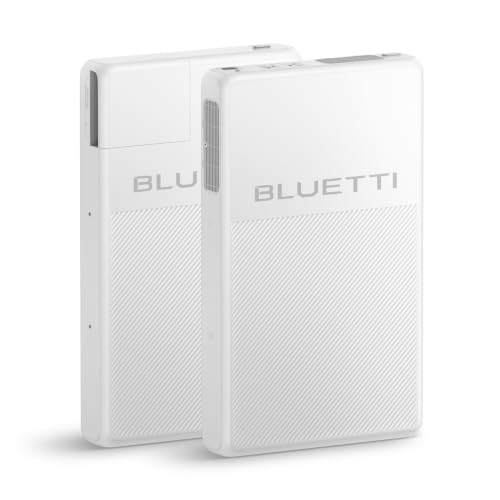 Bluetti FridgePower Backup System If the problem you are solving is specifically the refrigerator, this is the system designed for that problem — the 4 W standby and storm auto-charge are genuine engineering answers to it. | Purpose-built refrigerator backup | 9.5/10 | $1,899.00 |
| 2 | 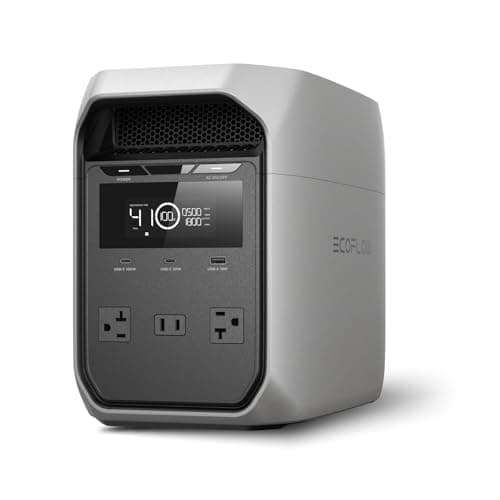 EcoFlow DELTA 3 Classic The best-value battery on the site: UPS-grade switchover, 1,800 W and a 45-minute recharge for roughly half what the 2 kWh units cost. | Best value 1 kWh with UPS | 9.3/10 | $462.00 |
| 3 | 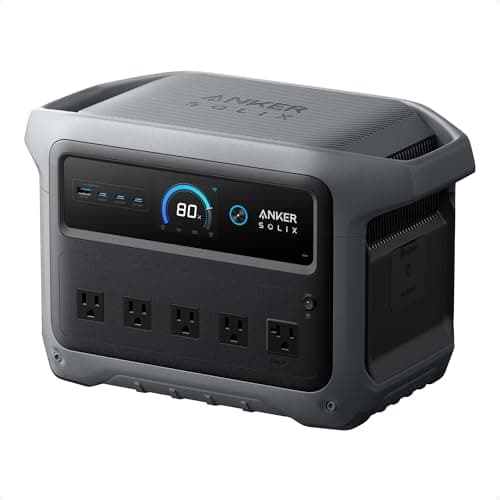 Anker SOLIX C1000 Gen 2 The right 1 kWh battery if your problem is short high-draw bursts rather than long low-draw endurance — and the fastest refill here by a wide margin. | Fastest 1 kWh recharge | 9.2/10 | $529.99 |
| 4 | 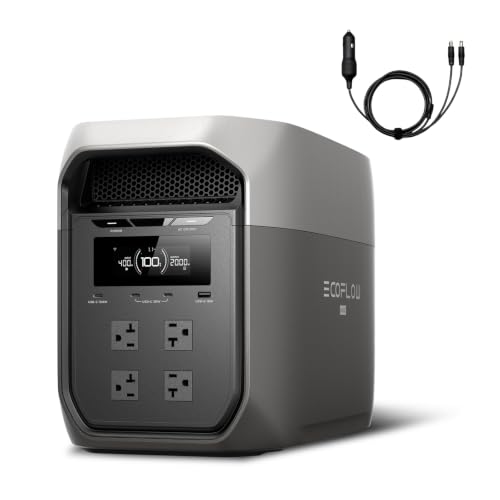 EcoFlow DELTA 3 Max The best battery here for keeping specific things running without interruption — the sub-10 ms transfer is a real functional difference, not a spec-sheet flourish. | UPS-grade switchover for a fridge | 9.4/10 | $999.00 |
| 5 | 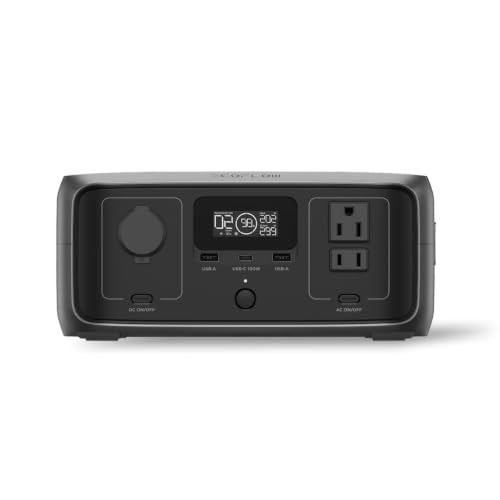 EcoFlow RIVER 3 230 The best small power station on this site: a published sub-20 ms UPS switchover and a one-hour full recharge on a LiFePO4 pack — genuine backup hardware rather than a camping battery, even if the listing leaves its weight and cycle rating unstated. | The small unit that behaves like backup gear | 8.6/10 | $319.00 |
#ad Amazon prices as of November 19, 2026; they may have changed since. Scores are our editorial judgment from published specifications, not test results — how we pick. How we are funded.
Power stations with published UPS switchover
Purpose-built refrigerator backup
Bluetti FridgePower Backup System
The one built around a refrigerator and publishing its standby draw, the best-value 1 kWh, the fastest-recharging 1 kWh, and a small unit with a published sub-20 ms handover for a router and a laptop. Full rankings on best home backup power stations.
The practical recommendation
- 1Keep a small UPS on the computer if clean shutdown or supply conditioning matters to you. It is a different job and it is cheap.
- 2Buy the power station for the house. Plug the refrigerator into it and leave it plugged into the wall; with a published sub-10 ms switchover the appliance never notices the outage started.
- 3Check the standby figure before you commit to leaving it on. It is the number that decides whether permanent UPS duty is sensible or expensive, and most manufacturers do not publish it.
- 4Remember it is still a capacity. How long a power station runs a fridge is the arithmetic, and past that the question becomes battery or generator.
In short
Our recommendation
Top pick
9.3/10EcoFlow DELTA 3 Classic
The best-value battery on the site: UPS-grade switchover, 1,800 W and a 45-minute recharge for roughly half what the 2 kWh units cost.
Runner-up
9.5/10Bluetti FridgePower Backup System
If the problem you are solving is specifically the refrigerator, this is the system designed for that problem — the 4 W standby and storm auto-charge are genuine engineering answers to it.
#ad Price as of November 19, 2026; it may have changed since. How we are funded.
Questions people actually ask
Can a portable power station be used as a UPS?
Most current ones publish exactly that function. EcoFlow states under 10 ms switchover on the DELTA 3 Classic and Max, Anker under 10 ms on the C1000 Gen 2 and S2000, and Bluetti 10 ms on the FridgePower configured as a UPS. The appliance plugged into it does not notice the grid has gone.
Is a power station better than a UPS for home backup?
For home backup, yes — a UPS is built to buy minutes for a clean shutdown, not to carry a refrigerator for hours. For a desktop or a NAS that must shut itself down properly, a UPS is still the right device because it signals the operating system to do it.
Can I leave a portable power station plugged in all the time?
That is what UPS mode assumes, and the figure to check first is standby draw. Bluetti publishes 4 W standby for the FridgePower and states it yields 26% longer runtime; most manufacturers publish nothing. A unit drawing 4 W can sit plugged in for months cheaply; one drawing thirty cannot.
How long will a UPS run a refrigerator?
Not usefully long, and a desktop-class UPS often will not start one at all. A refrigerator compressor draws several times its running watts at every start, and a UPS sized for a computer has neither the surge headroom nor the capacity. A power station is the device for that job.
What switchover time do I need for a refrigerator?
A refrigerator is forgiving — it is computers and networking gear that care about milliseconds. The published sub-10 ms figures on current power stations are comfortably inside what any household appliance needs, which is why the specification has stopped being a reason to choose a UPS instead.
Sources
- Eugene Water & Electric Board — Generator Sizing ConsiderationsPublished appliance running and additional-starting watt figures used in the load arithmetic on this page.
Read next
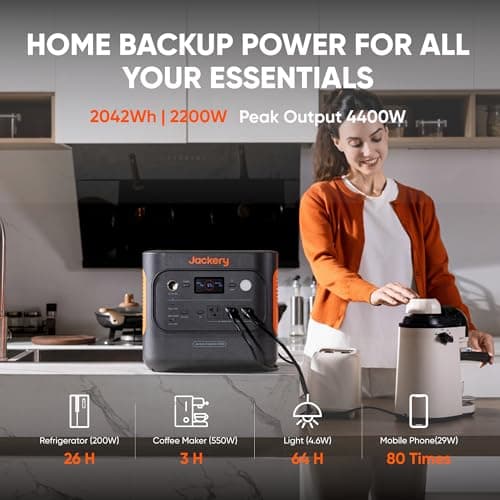
Best Overall Power Station
The Best Home Backup Power Stations
Battery power stations ranked for home backup on surge, capacity, recharge speed and cycle life.
Top pick · Jackery Explorer 2000 v2
$999.00See the Explorer 2000 v2 on Amazon
Comparison
Portable Power Station vs a Deep Cycle Battery and Inverter
Power station against a DIY deep-cycle battery and inverter: what the box actually integrates, what a build has to replicate, and which one suits which job.
Guide
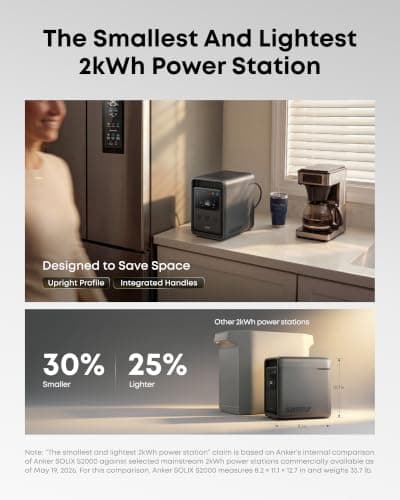
How Long Will a Power Station Run a Fridge?
The runtime calculation shown in full, the manufacturer claims, and why a cycling fridge lasts far longer than its running watts suggest.
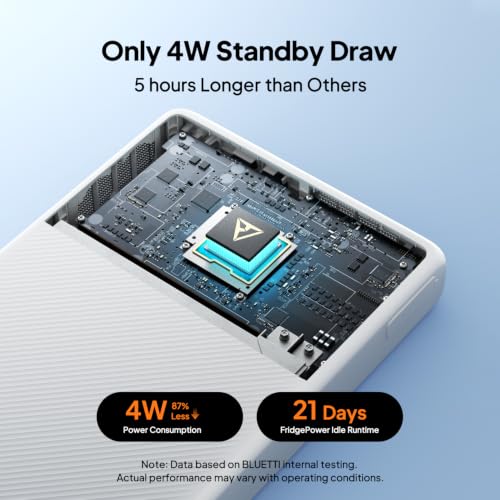
Best for a Refrigerator
Best Power Station for a Refrigerator
Power stations that reliably start a fridge compressor, ranked on surge, idle draw and UPS switchover.
Top pick · Bluetti FridgePower Backup System
$1,899.00See the FridgePower Backup System on Amazon27% off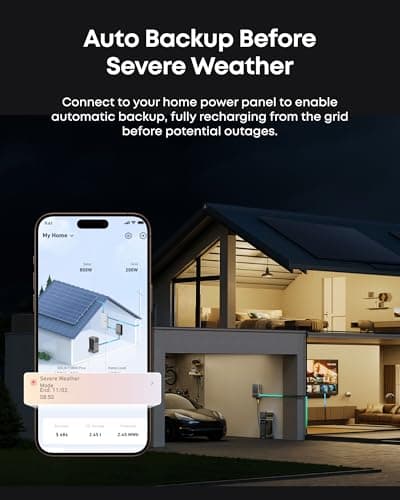
Comparison
Home Battery Backup vs Generator
Installed home battery systems against generators, and the expandable portable units that sit between them.