Costs
What a Home Battery Backup System Costs
The battery is one of four costs. Expansion, solar and the panel connection are the three that move the total.
Disclosure: we earn a commission on purchases made through links on this page, at no cost to you. It does not affect what we recommend or what we say about it — how we are funded.
The short answer
- The battery itself — a 2 kWh plug-in unit is the entry point; a 3.8 kWh dual-voltage unit is several times that.
- Expansion batteries, if you want real multi-day capacity. Each one costs about as much as a complete smaller unit.
- Solar panels, if you want to recharge without the grid. Optional, and the only way the system refills during a long outage.
- The panel connection, if you want it to feed circuits rather than cords. Licensed electrical work, priced like a transfer switch installation.
- Zero running cost — no fuel, no oil, no filters. This is the line item that distinguishes it from a generator.
This site does not print prices in prose, and that is deliberate rather than coy: a figure typed into a page is wrong within days, and a cost page full of stale numbers is worse than one with none. Every live price you see on this site comes from a data feed with the date attached, and disappears on its own when it goes stale. What this page gives you instead is the structure of the cost — which components exist, what each one buys, and where the money actually goes — so you can price your own configuration against current numbers rather than ours.
Component one: the battery
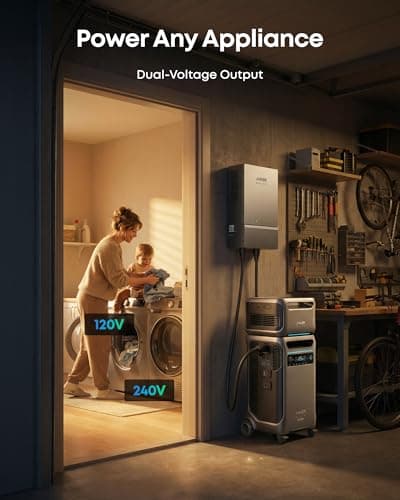
This is the obvious cost and it spans a wide range, because "home battery backup" covers two quite different products. A 2 kWh plug-in unit — a Jackery Explorer 2000 v2, an EcoFlow DELTA 3 Max, an Anker SOLIX S2000 — is a box with outlets that runs appliances through cords. A dual-voltage system like Anker's SOLIX F3800, at a published 3,840 Wh with both 120 V and 240 V output, is a different class of equipment that can feed panel circuits the way a generator does, and is priced accordingly.
| Tier | Capacity | What it does | Cost driver |
|---|---|---|---|
| Entry plug-in | 1,000-1,200 Wh | A fridge overnight, electronics | Capacity |
| Standard home backup | 2,000-2,300 Wh | A fridge plus furnace blower and lights for a day | Capacity and output |
| Dual-voltage system | 3,840 Wh | Panel circuits, including 240 V | Output capability, not just capacity |
The cost-per-watt-hour is lowest in the middle tier and worst at both ends — small units carry a fixed cost of inverter, case and controls over very little capacity, and the dual-voltage tier charges for capability. The best home backup batteries ranks the field on those terms.
Component two: expansion, which is where budgets go
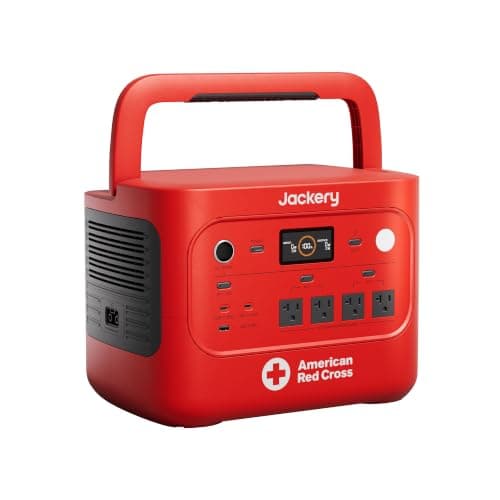
The headline capacity figures on modular systems are destinations, not purchases. Jackery publishes 12 kWh as the HomePower 2000 Plus v2's ceiling, Anker 26.9 kWh for an expanded SOLIX F3800 Plus and EcoFlow 6 kWh for the DELTA 2 Max with up to two extra batteries — and in each case the expansion batteries are sold separately at roughly the cost of a complete smaller unit each.
What expansion is really buying
- More watt-hours
- Yes, linearly
- More output watts
- No — the inverter is unchanged
- Staged spending
- Yes, and this is the real value
- Cost per watt-hour
- Roughly the same as the base unit
Expansion ceilings are each manufacturer's published figures. The cost-per-watt-hour assessment is our reasoning from how these products are packaged, not a quoted figure.
The genuine value of a modular system is not that 12 kWh is cheap. It is that you can spend in stages without replacing hardware — buy one battery now, add capacity after the next bad winter, and keep the same inverter and controls. For a household that cannot commit the whole budget at once, that option is worth paying a small premium for.
Component three: solar, and the only reason to buy it
Solar panels are optional for backup and essential for one specific scenario: an outage long enough that the battery empties. A battery without a recharge path is a one-shot device. With panels, it is a system that refills every day the sun is up.
The specification that governs how useful panels will be is the solar input ceiling, and it varies widely. Anker publishes 3,200 W of solar input for the SOLIX F3800 Plus, the highest in this registry, while EcoFlow publishes 1,000 W for the DELTA 2 Max, along with 0-80% in 43 minutes when combining solar with AC input. A unit that accepts only 200 W of solar can technically be charged by panels and will not meaningfully refill from them in a day.
Buying the kit rather than the pieces usually costs less than assembling the equivalent, and the best solar generators for home backup covers the matched kits in this registry. How to recharge a power station in an outage covers the alternatives — car charging, and charging from a generator, which is a legitimate and under-discussed combination.
Component four: the panel connection
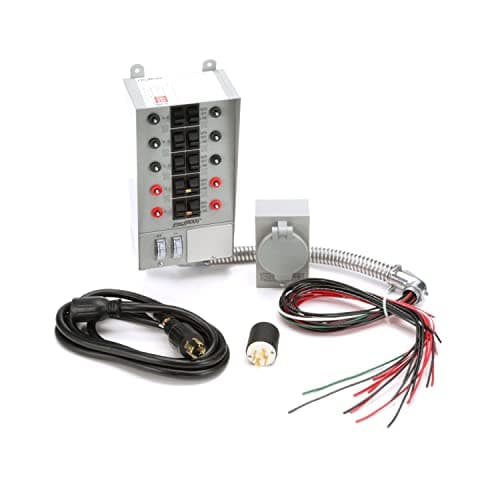
This is the cost people do not anticipate, and it is the same cost as the equivalent generator installation. A battery used with cords needs no electrician at all — you plug appliances into it. A battery that feeds circuits is wired into your panel, and in most US jurisdictions that is licensed electrical work requiring a permit and an inspection, priced much like a transfer switch installation.
What transfer switch installation costs covers the structure of that cost in detail, and it transfers directly: the labor, the permit and the inspection do not care whether the thing on the other end of the wiring burns propane or stores electrons.
The three configurations these costs describe
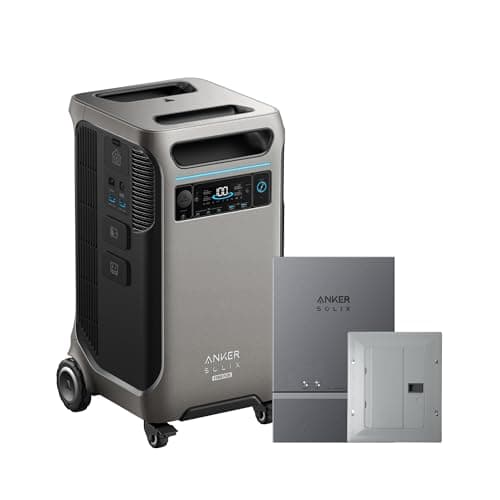
Expandable whole-circuit backup
Jackery HomePower 2000 Plus v2
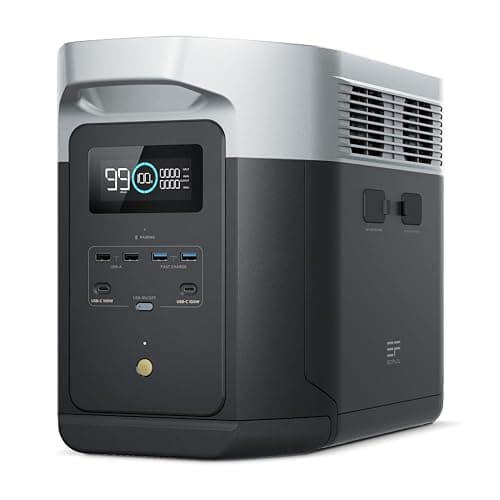
A dual-voltage system that can feed 240 V circuits, a modular system built for staged expansion, and the unit with the fastest published recharge for outages with brief windows of restored power.
The running cost, which is where a battery wins
A generator's purchase price is the start of its cost. A battery's is very nearly the end of it.
| Ongoing cost | Generator | Battery |
|---|---|---|
| Fuel | Every hour it runs | None |
| Oil, filters, plugs | Annually | None |
| Fuel stabilizer, stored fuel rotation | Annually | None |
| Starting battery | Every few years | N/A |
| Exercise runs | Quarterly, consuming fuel | None |
| Cell degradation | N/A | Over thousands of cycles |
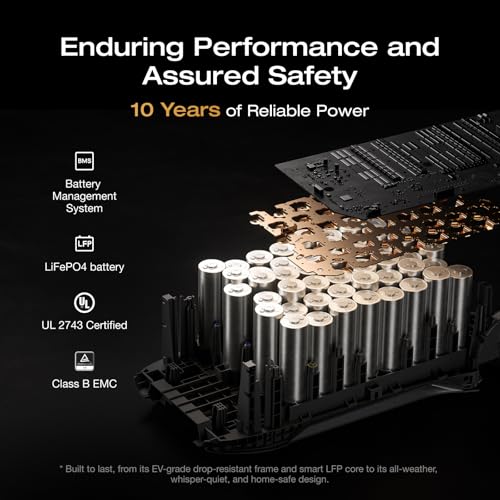
Cell degradation is the battery's equivalent of wear, and on these products it is remote: Anker rates the SOLIX S2000's cells at 10,000 cycles with a stated 15-year lifespan, Jackery publishes 6,000+ cycles and a 16-year design life for the HomePower, and EcoFlow and Bluetti publish 3,000 cycles for their 2 kWh units. At a handful of outages a year, none of these is the limiting factor on ownership.
Is it worth it against a generator?
The honest framing is that they are not competing for the same job. For a short outage a battery is better on every axis except price — silent, fuel-free, no carbon monoxide, works unattended at 3 a.m. For a multi-day outage the battery empties and the generator does not, and no amount of capacity changes that asymmetry; it only delays it.
Which is why the configuration many households land on is both: a 2 kWh battery that covers the common four-hour outage without anyone going outside, and a dual fuel generator for the rare multi-day one. That total is often less than a dual-voltage battery system alone, and it covers more. Home battery backup vs generator argues it properly.
For the hardware itself rather than the installed-system cost base, battery backup for a home ranks the portable and expandable units on what each one will actually carry.
For what the money actually buys — the four parts of a system, the plug-in route against the hard-wired one, and how it recharges in a multi-day outage — see how home battery backup works.
Questions people actually ask
How much does a home battery backup system cost?
It depends on four components, not one: the battery, any expansion batteries, solar panels if you want to recharge off-grid, and the licensed panel connection if you want it to feed circuits rather than cords. We do not print figures in prose because they go stale — live prices on this site come from a data feed with the date attached.
Why is a 240V home battery so much more expensive?
Because you are mostly paying for output capability rather than capacity. Anker's SOLIX F3800 publishes 3,840 Wh with both 120 V and 240 V output, and that dual-voltage ability is what lets a battery feed panel circuits the way a generator does. Watt-hours are the cheap part; delivering 240 V is not.
Do expansion batteries make a system cheaper per kWh?
No, roughly the same — each expansion battery costs about as much as a complete smaller unit. What modularity buys is the ability to spend in stages without replacing the inverter and controls, which is genuinely valuable if you cannot commit the full budget now.
Do I need an electrician to install a home battery?
Only if you want it to feed house circuits. Running appliances from the battery's own outlets with cords needs no electrician at all. A panel connection is permanent wiring on the supply side of your panel, which in most US jurisdictions requires a permit and an inspection, and is priced like a transfer switch installation.
Is a home battery cheaper than a generator?
Usually more expensive to buy and cheaper to own — no fuel, oil, filters, stabilizer or exercise runs. The deciding input is how long your outages are: for a few hours a battery wins on everything but price, and for a few days a generator wins because a battery empties and an engine does not.
How long does a home backup battery last before replacement?
Longer than most owners keep the house. Anker rates the SOLIX S2000 at 10,000 cycles with a stated 15-year lifespan, Jackery publishes 6,000+ cycles and a 16-year design life, and EcoFlow and Bluetti publish 3,000 cycles for their 2 kWh units. At a few outages a year, cell degradation is not the constraint.
Sources
- Eugene Water & Electric Board — Generator Sizing ConsiderationsPublished appliance running-watt figures used in the load arithmetic on this page.
- US Energy Information Administration — Propane and Heating Oil PricesWhere to find current residential propane prices for the same purpose.
Read next
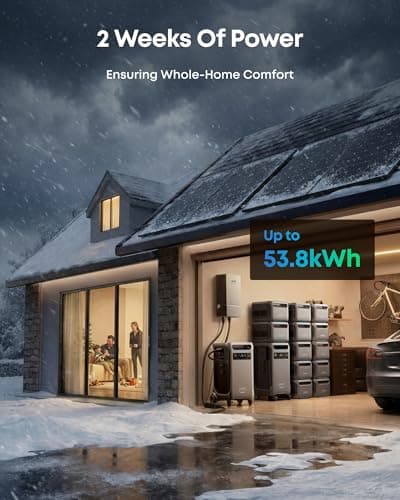
Best Battery System
Battery Backup for a Home, Sized to Carry Circuits
Home backup batteries ranked on expandable capacity, 240V capability and what each unit will carry — not on portability.
Top pick · Anker SOLIX F3800 Plus
$4,099.99See the SOLIX F3800 Plus on Amazon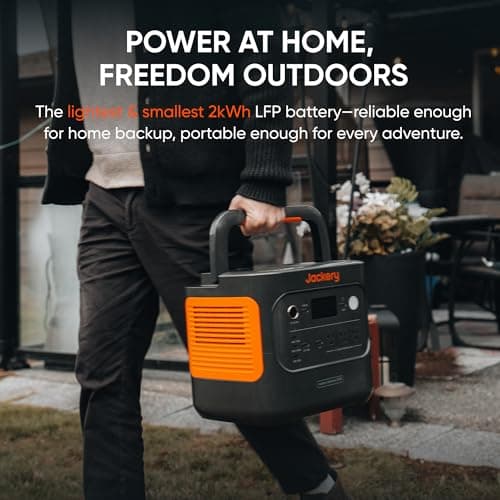
Comparison
Power Station vs Generator: Total Cost
Five-year ownership cost compared between a battery and a generator, including the connection and maintenance lines.
Comparison
Home Battery Backup vs Generator
Installed home battery systems against generators, and the expandable portable units that sit between them.
Guide
What Transfer Switch Installation Costs
What a transfer switch installation quote consists of, the hardware choices that reduce labor, and how to compare quotes.
Best Solar Kit
Best Solar Generators for Home Backup
Battery-plus-panel kits ranked on solar input ceiling and capacity, with honest expectations for real-world panel output.
Top pick · EcoFlow DELTA 3 Max + 2x100W Solar
$1,229.00See the DELTA 3 Max + 2x100W Solar on Amazon