Outage Prep
Generator Runs But There Is No Power
A healthy-sounding engine and dead outlets is a different fault from a machine that will not start, and it has a different list.
Written byMike M.
Published
Disclosure: we earn a commission on purchases made through links on this page, at no cost to you. It does not affect what we recommend or what we say about it — how we are funded.
The short answer
- 1Reset the generator's own circuit breakers. Nearly every machine has one per outlet group and they trip without being obvious.
- 2Press the GFCI test and reset buttons on the outlets that have them. A tripped GFCI looks identical to a dead generator.
- 3Check whether only the 240 V outlet is dead, which points at one leg or its breaker rather than at the alternator.
- 4Turn eco or idle mode off. Some machines will not step up from idle for a load they cannot see.
- 5Swap the cord and try a different appliance. A failed cord or a tripped inlet is the most common cause of all.
- 6Only then suspect the alternator — lost residual magnetism or a failed AVR, which is where the driveway diagnosis ends.
Work the list in order. The first five are free, take two minutes, and account for most cases. The sixth is a repair.
This is a genuinely different problem from a machine that will not start, which is covered on generator won't start and is almost always fuel, oil or a switch. Here the engine is running, it sounds normal, the hour meter is counting — and nothing is coming out of the outlets. The fault is downstream of the engine, and the order you check things in matters because the expensive explanation is also the least likely one.
1. The generator's own breakers
Almost every portable generator has circuit breakers of its own, usually one per outlet group, mounted on the control panel next to the receptacles. They protect the alternator from an overload and they trip silently — there is no bang and often no visible change beyond a small button or toggle sitting slightly out of position.
Push every one of them firmly to reset. On a machine with a 120 V duplex, an RV outlet and a transfer-switch outlet, the breakers are frequently separate, which is why one outlet can be live while another is dead. An overload is the normal cause: a compressor starting up draws several times its running watts for a second, which is the point of starting watts versus running watts.
2. The GFCI, which looks exactly like a dead generator
Many 120 V receptacles on current machines are GFCI-protected. A GFCI trips on a tiny imbalance between the hot and neutral currents — moisture in a cord end, a damp extension lead, a slightly wet appliance — and once it has tripped the outlet is simply dead. There is no indication other than a small reset button, and in daylight you may not see it has moved.
Press test, then reset, on every GFCI outlet. If it trips again immediately with nothing plugged in, that is a fault in the generator's wiring. If it holds with nothing plugged in and trips the moment you connect a particular cord or appliance, you have found the problem and it is the cord or the appliance, not the generator.
3. Is it only the 240 V outlet?
This is the diagnostic that saves the most time, and most people skip it. If the 120 V receptacles work and only the L14-30R or 14-50R is dead, the alternator is clearly producing power — so the fault is in that outlet, its breaker, or one of the two 120 V legs that combine to make 240 V.
The reverse case is just as informative. If the 240 V outlet feeds your transfer switch and half the house works while the other half does not, you have lost one leg, not the generator. Either way this is a repair on a specific circuit rather than a dead machine, and it is worth telling a service technician which of the two you are seeing.
4. Eco mode, idle control and the load it cannot see
Inverter machines and some conventional ones have an economy or idle setting that drops engine speed when little is being drawn. Westinghouse publishes Eco Mode on the iGen12000DFc as part of how it reaches as low as 64 dBA. The mode is doing its job, but a very small load — a phone charger, an LED bulb — can sit below the threshold the machine steps up at, and the symptom reads as no power.
Switch eco or idle off and retry before concluding anything. It costs nothing and it eliminates a whole class of false alarm.
5. The cord, the inlet and the transfer switch
If the generator's own outlets are live when you test them directly but the house is dark, the generator is fine and the fault is in what connects it. Generator cords live outdoors, get driven over, pinched in doors and coiled wet, and a broken conductor inside an intact-looking jacket produces exactly this symptom.
- Test the generator's outlet directly with something simple — a lamp, a drill — before blaming anything downstream.
- Swap the cord if you have a second one. This single substitution resolves more of these cases than any other step.
- Check the inlet box and the transfer switch, including the switch's own breakers and whether every circuit rocker is actually thrown to the generator position.
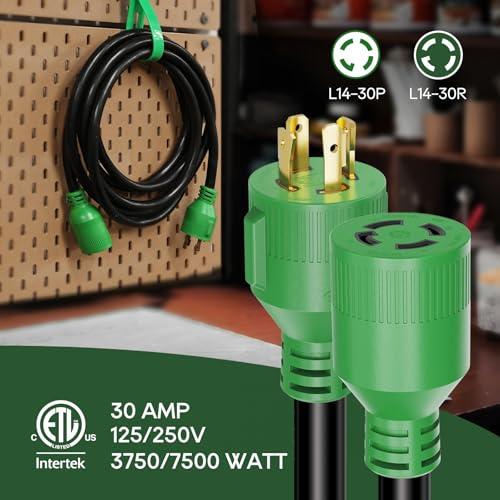
- Look at the cord ends, not the middle. Twist-lock connectors take the abuse and corrode, and a loose L14-30 that is not fully rotated into lock makes intermittent contact.
The parts that fail in this chain
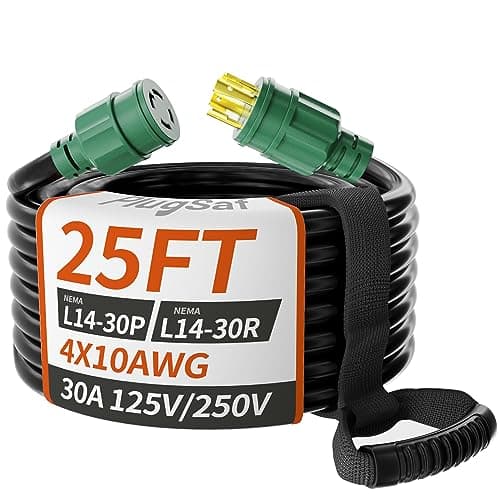
The default generator cord
PlugSaf 25 ft 30A L14-30 Cord, 10 AWG
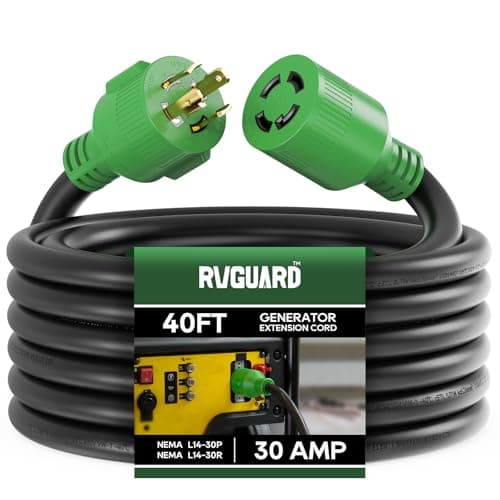
ETL listing and pure copper
RVGUARD 40 ft 30A L14-30 Cord, ETL Listed
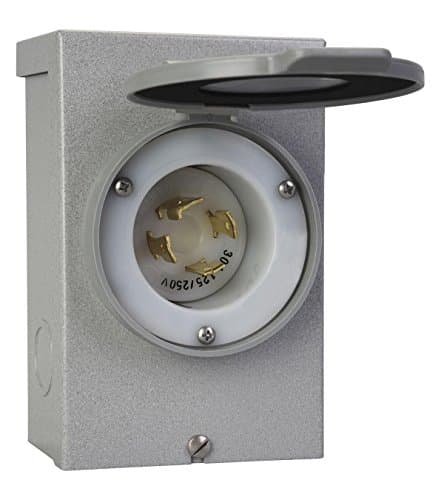
The standard 30A inlet
Reliance Controls PB30 30A Power Inlet Box
A spare cord is the cheapest insurance against this entire fault class, and the one with a published ETL listing and a stated conductor material is the one to keep. Cord gauge and length are covered on the cord gauge guide.
6. The alternator, which is where this stops being a driveway job
If every breaker is reset, every GFCI holds, eco mode is off, the cord is known good and the outlets are still dead, you are into the alternator. Two things commonly go wrong there. The automatic voltage regulator can fail, which produces no output or wildly wrong output. Or the alternator can lose its residual magnetism — the small permanent field that lets it start generating at all — which happens on machines stored for a long time or run to a hard overload.
At that point the economics are worth a thought. An AVR and the labor to fit it are a meaningful fraction of what several machines in this registry cost outright, and a generator that has reached this state has usually also reached an age worth reviewing — how long portable generators last is the honest version of that calculation.
Questions people actually ask
Why does my generator run but produce no power?
Most often a tripped breaker on the generator's own control panel, a tripped GFCI outlet, or a failed cord — all free to check and all easy to miss. Eco or idle mode can also mask a very small load. Only when those are ruled out does the alternator become likely, usually a failed AVR or lost residual magnetism.
How do I reset a generator that has power but no output?
Push every circuit breaker on the control panel firmly in, then press test and reset on each GFCI receptacle. Switch eco or idle mode off. Then test the generator's own outlet with a lamp or a drill before suspecting anything downstream of it.
My generator works but there is no power to the house. What is wrong?
If the generator's own outlets are live, the generator is fine and the fault is in the chain to the house — the cord, the inlet box, or the transfer switch and its breakers. Check that every circuit rocker on the switch is actually thrown to the generator position, and that the twist-lock connectors are fully rotated into lock.
What is lost residual magnetism on a generator?
The alternator needs a small permanent magnetic field to begin generating. Long storage or a hard overload can leave it too weak to start, so the engine runs normally and nothing comes out. Some manufacturers publish a restoration procedure for their own machines; if yours does not, treat it as a service job rather than following a generic trick.
Can a bad extension cord stop a generator producing power?
It cannot stop the generator producing, but it produces exactly the same symptom at the appliance, and it is the most common cause of all. A broken conductor inside an undamaged jacket, a corroded twist-lock end, or a connector not fully rotated into lock will all do it. Swapping the cord is the fastest single test in the whole list.
Sources
- US Consumer Product Safety Commission — Portable Generator Information CenterThe placement, never-indoors and CO-alarm guidance this site repeats on every generator page.
Read next

Guide
Generator Won't Start: What to Check
A generator that will not start, diagnosed in order: the switches, the fuel, the oil shutdown, the battery and the carburetor.
Reference
Generator Cord Gauge Guide
Conductor gauge requirements by amperage, the copper-versus-copper-clad question, and how length affects voltage drop.

Best Generator Cord
The Best Generator Extension Cords
Generator cords by gauge, length and connector type, with the certification and connector-match checks that matter.
Top pick · PlugSaf 25 ft 30A L14-30 Cord, 10 AWG
$64.99See the 25 ft 30A L14-30 Cord, 10 AWG on Amazon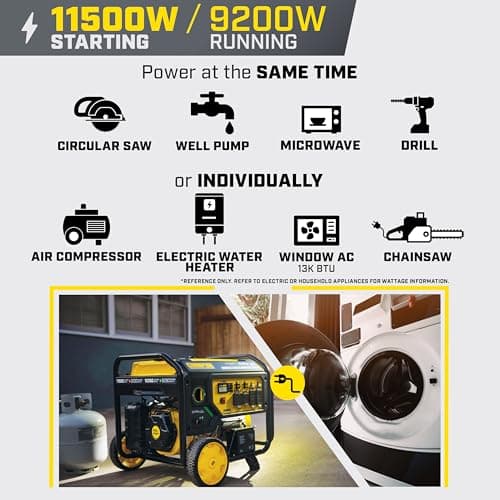
Guide
Starting Watts vs Running Watts
What the surge figure means, why motors need it, and how to read the peak-watt number on a generator box.
Guide
How Long Do Portable Generators Last?
What manufacturers actually publish about generator durability, what really ends most machines, and the maintenance that decides which group yours lands in.