Outage Prep
How Long Can a Generator Run Continuously?
The tank is the limit people plan around. The oil is the limit that decides it, and no portable in this registry is published as a continuous-duty machine.
Written byMike M.
Published
Disclosure: we earn a commission on purchases made through links on this page, at no cost to you. It does not affect what we recommend or what we say about it — how we are funded.
The short answer
One tank, as published by the manufacturers in our registry, buys between about 8 and 19 hours depending on the machine and the load. Past that the limits stop being the tank: gasoline refueling requires stopping the engine and letting it cool, and oil is consumed over running hours, so a multi-day run becomes a sequence of planned stops rather than one continuous one. A generator plumbed to natural gas is the exception — the fuel supply does not run out, and the oil interval becomes the only clock.
People ask this question for two different reasons. One group wants to know whether the machine will survive a long outage. The other has read a runtime figure on a box and wants to know whether it is true. Both answers are on this page, and they are different: the engine will almost certainly outlast the outage, and the box figure is true only at the load the manufacturer quoted it at.
Limit one: the tank, and why the figure moves so much
Every published runtime carries a stated load, usually 25% or 50%. That qualifier does most of the work. The Honda EU3000iS publishes 6.9 to 19.6 hours on one 3.4-gallon tank — a factor of nearly three, on the same machine, from load alone.
| Machine | Published runtime | Tank | Stated load |
|---|---|---|---|
| Westinghouse WGen11500TFc | Up to 19 h | 9.5 gal | Manufacturer's stated load |
| Westinghouse iGen5000c | Up to 18 h | 3.4 gal | Manufacturer's stated load |
| Westinghouse WGen14500TFc | Up to 16 h | 10.5 gal | 25% |
| Westinghouse WGen9500TFc | Up to 12 h | 6.6 gal | Manufacturer's stated load |
| Champion 4,500 W inverter | Up to 14 h | Manufacturer's stated tank | Manufacturer's stated load |
| WEN TF-1450X | Up to 12 h | 8.2 gal | 50% |
| Generac GP8000E | Up to 12 h | Steel tank with gauge | Manufacturer's stated load |
| Westinghouse iGen1500c | 12 h | 0.79 gal | Manufacturer's stated load |
| Westinghouse iGen2550DFc | Up to 11 h | 1.16 gal | 25% |
| WEN DF8000X | Up to 10.5 h | 6.7 gal | 50% |
| Generac 8,125 W | Up to 10.5 h continuous | Manufacturer's stated tank | Manufacturer's stated load |
| WEN DF1100X | Up to 8.5 h | 6.6 gal | 50% |
Notice what the inverter machines do to the gallons column. The iGen5000c gets 18 hours from 3.4 gallons; the WEN DF1100X gets 8.5 from 6.6. That gap is the engine throttling to the load instead of holding a fixed speed, and over a multi-day outage it is the difference between three fuel runs and eight. Inverter versus conventional covers what else that costs and buys.
Limit two: the oil, which is the one that actually decides it
An engine consumes oil over running hours, and every portable generator in this registry has an automatic low-oil shutdown whose job is to stop the engine before damage rather than to warn you in time to prevent the stop. Westinghouse publishes automatic low-oil shutdown on the WGen9500DF and the ecoGen10000; Generac publishes it with a digital hour meter on the GP8000E and the 8,125 W; the feature is effectively universal.
This is why a four-day outage is not a four-day run. It is a sequence of runs punctuated by oil checks, and the hour meter fitted to most of these machines exists precisely so you can track it. The published intervals and what oil to put in are on the maintenance schedule and what oil a generator takes.
Limit three: the refuel, which has to be a stop
Gasoline is refueled with the engine off and cooled. That is the manufacturer's instruction on every one of these machines, and the reason is that fuel spilled onto a hot exhaust ignites. So a gasoline run is structurally punctuated: run, stop, cool, fill, restart. The cool-down is not a formality and it is the part people skip.
Propane removes the pour. A 20 lb tank swap is a connector operation on a running-cool machine, and the fuel stores indefinitely so you can hold a real quantity of it. Natural gas removes the problem completely — a plumbed line keeps supplying the machine for as long as the utility's distribution system holds, which is the closest thing to unlimited runtime anyone in this category can honestly offer.
What a genuinely long run needs
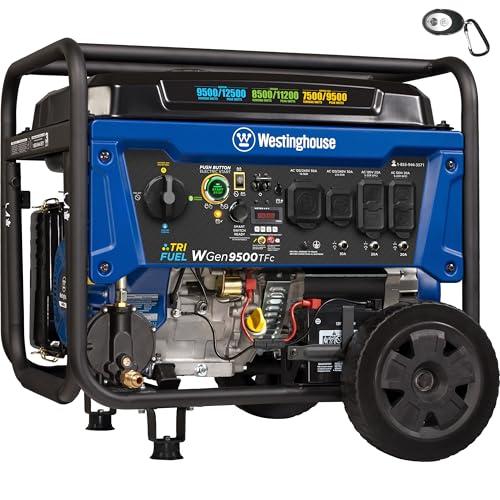
Natural-gas hookup at the lowest cost
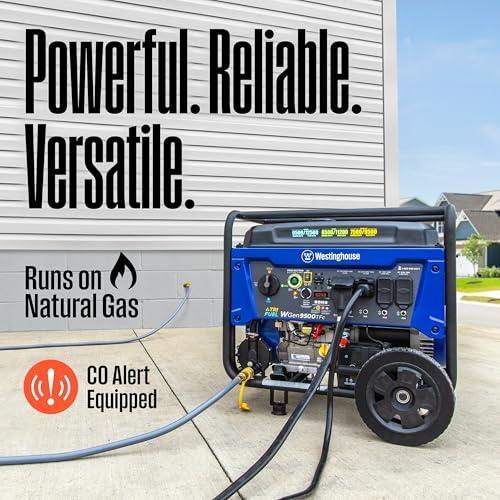
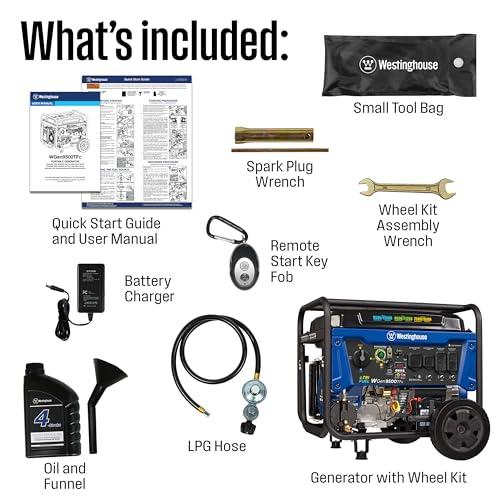
Westinghouse WGen9500TFc 12,500W Tri-Fuel
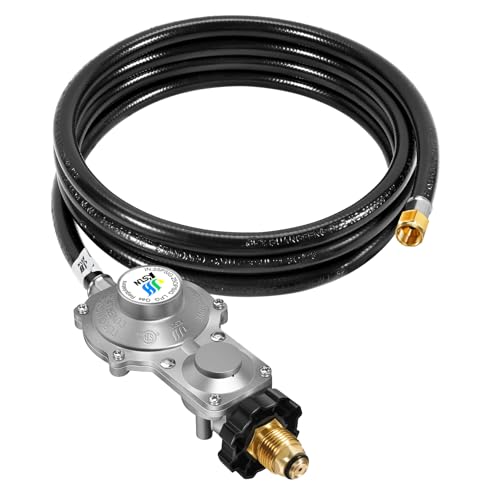
Running a dual fuel generator on a tank
GasSaf 10 ft Two-Stage Propane Regulator + Hose
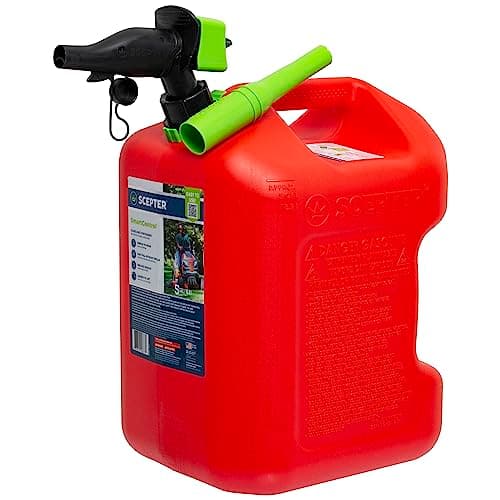
Pouring without spilling
Scepter 5 Gallon Gas Can, SmartControl Spout
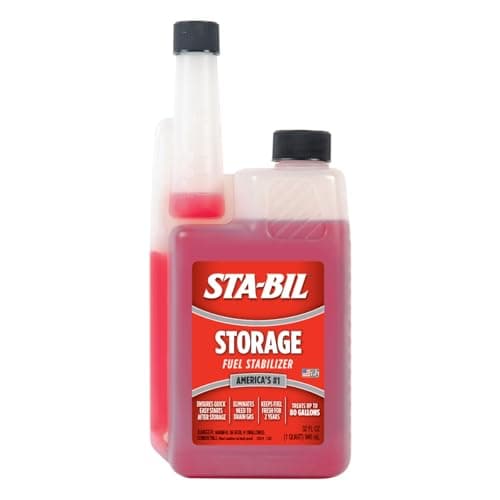
Keeping stored gasoline usable
STA-BIL Storage Fuel Stabilizer, 32 oz
A tri-fuel machine so the fuel supply is a line rather than a trip, a two-stage regulator so pressure holds as a propane tank empties, a can that pours without spilling, and stabilizer so what you stored still burns.
"Continuous duty" is a specification, and none of these carry it
In industrial equipment, continuous duty is a published rating: the machine is specified to produce its stated output indefinitely, with a service schedule built around that. No portable generator in this registry publishes a continuous-duty rating. They publish runtime at a load, which is a fuel statement, not a duty statement.
That distinction is the honest answer to the question in the title. These machines will run for as long as you keep oil and fuel in them, across days, and people do exactly that every hurricane season. What the manufacturer has not published is a promise about doing it continuously, and anyone planning a business or a medical dependency around one should read that gap carefully — backup power for CPAP and medical devices is where that case is handled properly.
Questions people actually ask
How long can a generator run continuously without stopping?
On gasoline, one tank — between about 8 and 19 hours in this registry, depending on the machine and the load, because refueling requires stopping and cooling the engine. On propane you can swap tanks, and on a plumbed natural gas line the fuel never runs out, which leaves the oil interval as the only limit.
Can a generator run for 24 hours straight?
Not on one tank of gasoline — the longest published figure in this registry is 19 hours on a Westinghouse WGen11500TFc, and that is at the manufacturer's stated load. On natural gas, 24 hours is unremarkable. Across a multi-day outage, plan around oil checks rather than around a single unbroken run.
How many hours can a generator run before an oil change?
That is the manufacturer's published interval for your model, and the first one after break-in comes much sooner than the rest. Every portable here has an automatic low-oil shutdown, which protects the engine but is not a warning system — check the level on a schedule instead of waiting for it. See [the maintenance schedule](/generators/generator-maintenance-schedule).
Is it bad to run a generator for days?
Not inherently. These engines will run for days if you keep oil and fuel in them, and that is what they are bought for. What no portable generator in this registry publishes is a continuous-duty rating, which is a specific industrial specification — so plan a run of days as a series of monitored runs with oil checks, not as an unattended machine.
Does running on propane change how long a generator can run?
It changes the refueling, which is the real constraint. Output drops by roughly 10% on propane, but a tank swap is faster and cleaner than pouring gasoline near a hot engine, propane stores indefinitely so you can hold more of it, and exchange cages are often restocked while fuel pumps are still without power.
Sources
- US Consumer Product Safety Commission — Portable Generator Information CenterThe placement, never-indoors and CO-alarm guidance this site repeats on every generator page.
- Ready.gov — Power OutagesFederal preparedness guidance on outage planning referenced in the checklist sections.
Read next
Guide
How Long Will a Generator Run?
Published runtime figures across fuels and loads, and why fuel choice matters more than tank size.
Guide
Can You Run a Generator Overnight?
Whether a generator can run through the night, settled on published runtimes, the CPSC placement rules and the one job you must never do in the dark.

Guide
Generator Maintenance Schedule
A maintenance schedule built around the real failure mode of a standby-duty generator: fuel, battery and the quarterly test run.
Guide
What Oil Does a Generator Take?
Generator oil by viscosity and temperature from published small-engine guidance, plus why a standby machine's interval runs on the calendar.
Guide
Hurricane Season Power Preparation
Preparing for long outages: the fuel logistics problem, why natural gas or propane wins, and a week-before checklist.