Model Reviews
Westinghouse Generators Reviewed
The widest home backup range on the market, the most transfer-switch outlets, and one specification the cheaper models quietly omit.
Written byMike M.
Published
Disclosure: we earn a commission on purchases made through links on this page, at no cost to you. It does not affect what we recommend or what we say about it — how we are funded.
The short answer
Westinghouse builds the broadest home backup range here, from the 32 lb iGen1500c to the 713cc V-twin WGen14500TFc, and it is the brand most likely to publish a transfer-switch-ready outlet pair. For a house, the WGen9500DF remains the default at 9,500 running watts on gasoline and 8,500 on propane with both an L14-30R and a 14-50R — accepting that it has no carbon monoxide shutdown. The WGen10500DFc is the same machine with CO shutdown and 1,000 more running watts; the iGen12000DFc is the inverter-clean version at under 3% THD.
The useful thing to understand about this range is that it is three ranges wearing one name, and the letters tell you which: WGen is the conventional open-frame family, iGen is the enclosed inverter family, and ecoGen is the odd and interesting hybrid — an open-frame inverter. The suffixes matter too: DF means dual fuel, TF means tri-fuel, and a trailing c or C generally marks the newer models that added a CO sensor.
The range, as published
| Model | Running watts | Fuel | 240 V outlets | CO shutdown | Weight |
|---|---|---|---|---|---|
| WGen14500TFc | Not published (18,000 W peak) | Gas / LP / NG | 14-50R + L14-30R | Yes | Not published |
| WGen11500TFc | 11,500 gas / 10,500 LP / 9,500 NG | Gas / LP / NG | 50 A | Not published | 230 lb |
| iGen12000DFc | Not published (12,000 W peak) | Gas / LP | 14-50R + L14-30R | Not published | 187.4 lb |
| WGen10500DFc | 10,500 gas / 9,500 LP | Gas / LP | 14-50R + L14-30R | Yes | 230 lb |
| WGen9500DF | 9,500 gas / 8,500 LP | Gas / LP | 14-50R + L14-30R | No | 210 lb |
| ecoGen10000 | 7,600 W | Gasoline | 14-50R + L14-30R | Not listed | 147.7 lb |
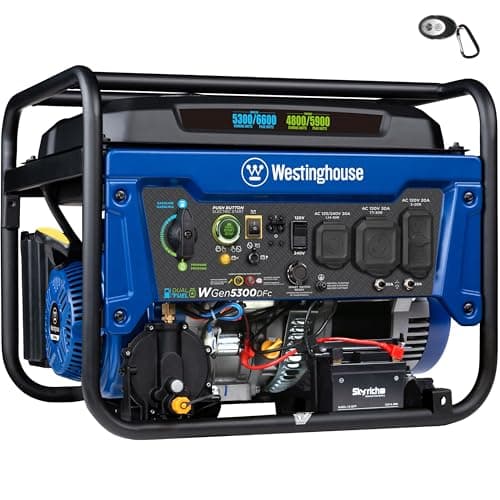
| WGen5300DFc | 5,300 gas / 4,800 LP | Gas / LP | L14-30R | Yes | 135.6 lb |
| iGen5000DFc | Not published (5,000 W peak) | Gas / LP | None (TT-30R) | CO sensor | 105.8 lb |
| iGen2550DFc | 1,900 W | Gas / LP | None (TT-30R) | Yes | 42 lb |
| iGen1500c | 1,000 W | Gasoline | None | Yes | 32 lb |
Two patterns are worth pulling out. Seven of the ten machines publish a transfer-switch-ready 240 V outlet, which is the highest proportion of any brand here and the main practical reason Westinghouse dominates this site's roundups. And the CO shutdown is not universal — it is on the newer "c" models and not on the WGen9500DF or the ecoGen10000, both of which are otherwise excellent machines.
Why the WGen9500DF is still the default, and its one real flaw
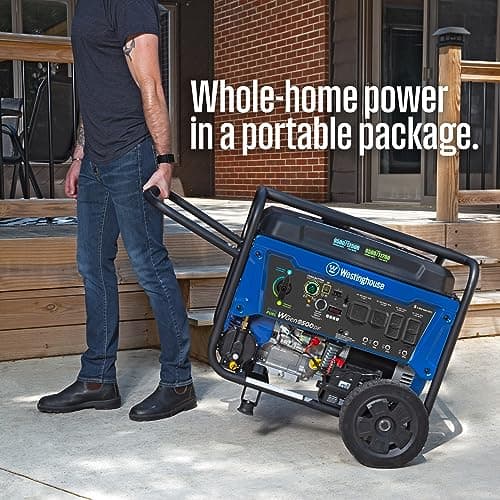
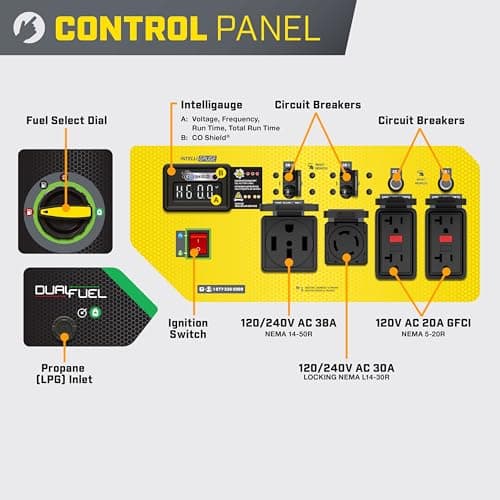
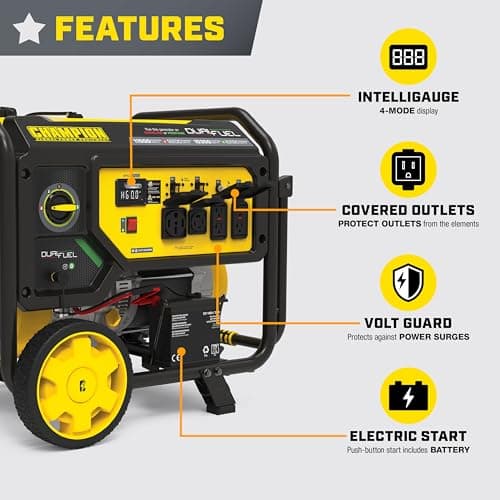
Westinghouse publishes 9,500 running and 12,500 peak watts on gasoline, 8,500 running and 11,200 peak on propane, from a 457cc OHV engine with a cast-iron sleeve. It has remote key-fob start, electric start and recoil backup; two 120 V 5-20R GFCI outlets, an L14-30R and a 14-50R — all transfer-switch ready; automatic low-oil shutdown and a digital hour meter; 210 lb; and a 3-year limited warranty.
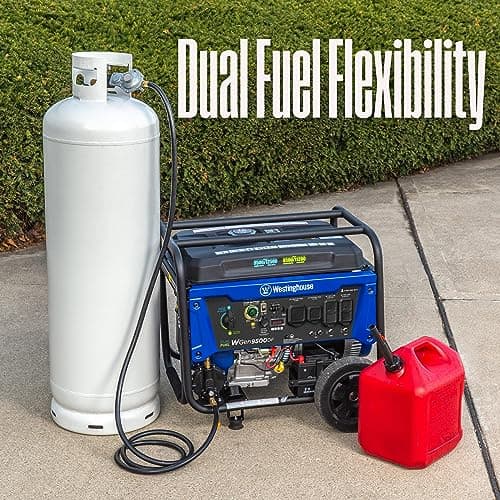
That combination is why it wins the best home backup generators: enough running watts for a full essential-circuit panel, both transfer-switch outlets so it fits a 30 amp interlock now and a 50 amp panel later, and dual fuel so propane is a real plan when the gas stations have no power either.
The flaw is no carbon monoxide shutdown, on a machine at a price where several rivals include one. We will not minimize it: CO is how generators kill people, and a sensor is a backstop worth having. If the price gap is tolerable, the WGen10500DFc adds the shutoff and 1,000 running watts. If it is not, buy the WGen9500DF and spend the difference on battery CO alarms for every sleeping level — which you need either way. The full model-level read is at the Westinghouse WGen9500DF review.
Which Westinghouse for which house
- A house with central air or electric water heating — WGen11500TFc. It publishes a running figure on all three fuels, which nothing else in the range does, and 9,500 running watts on natural gas is the most NG output published by any portable here. It anchors the best natural gas generators.
- A house with a well pump and a furnace — WGen9500DF or WGen10500DFc. Both publish both transfer-switch outlets and a propane figure; the DFc adds the CO shutoff.
- A furnace control board you are worried about — iGen12000DFc at 3% THD or less, or the ecoGen10000 at under 3% THD for considerably less money. The best generator for a furnace explains why distortion matters there.
- Essential circuits only — WGen5300DFc: 5,300 running watts, CO shutdown, remote key fob, a propane hose in the box and 135.6 lb, which is the lightest machine here with a real L14-30R.
- Quiet above all, on cords — iGen5000DFc, published as low as 52 dBA with a double-insulated cover and variable-speed engine. No 240 V outlet, so no transfer switch. It has its own review at the Westinghouse iGen5000DFc.
- A fridge and some lamps — iGen2550DFc at 42 lb or iGen1500c at 32 lb, both with a CO sensor, both under 3% THD, neither of them a house generator.
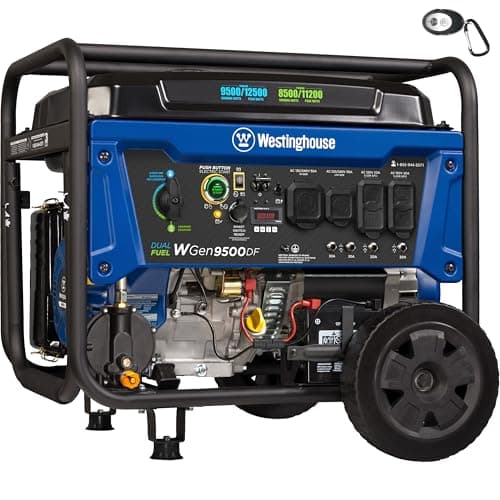
- Running watts
- 9,500 W gas / 8,500 W LP
- Starting watts
- 12,500 W gas
- Outlets
- L14-30R + 14-50R
#1 · The default whole-house pick
Westinghouse WGen9500DF 12,500W Dual Fuel
The most broadly sensible home backup generator on the market: enough running watts for a whole essential-circuit panel, both transfer-switch outlets, and dual fuel — with the caveat that it has no CO shutoff.
#ad Price as of November 19, 2026; it may have changed since. How we are funded.
Why we picked it
- 9,500 running watts covers a well pump, furnace blower, fridge and a lot of lighting simultaneously — the load most homes actually need
- Both the L14-30R and the 14-50R are transfer-switch ready, so it fits a 30A interlock setup now and a 50A panel later
- Dual fuel means a propane tank is a legitimate plan when the gas stations have no power either
- Remote start matters more than it sounds: you start it from inside without going out in the weather
Good to know
- 210 lb is a two-person move on anything but flat, dry ground
Published specification & our scoring
- 9,500 running / 12,500 peak watts on gasoline (manufacturer)
- 8,500 running / 11,200 peak watts on propane (manufacturer)
- 457cc Westinghouse 4-stroke OHV engine with cast-iron sleeve
- Remote key-fob start, electric start and recoil backup
- Two 120V 5-20R GFCI, one L14-30R 30A, one 14-50R 50A — all transfer-switch ready
- Automatic low-oil shutdown and digital hour meter
- Published weight 210 lb
- 3-year limited warranty (manufacturer)
- Output headroom
- 9
- Fuel flexibility
- 9
- Transfer-switch fit
- 10
- Runtime
- 8
- Safety features
- 6
- Value
- 9
Specification figures are the manufacturer’s published values. Scores are our editorial judgment from those figures and are never published as structured review data — how we pick.
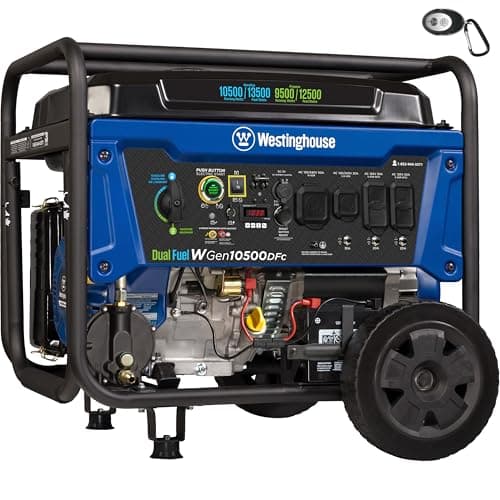
- Running watts
- 10,500 W gas / 9,500 W LP
- Starting watts
- 13,500 W gas
- CO shutdown
- Yes
#2 · Same layout, with CO shutdown
Westinghouse WGen10500DFc 13,500W Dual Fuel
The WGen9500DF with the two things it is missing fixed: more running watts and a CO shutdown, at a higher price.
#ad Price as of November 19, 2026; it may have changed since. How we are funded.
Why we picked it
- A thousand running watts more than the WGen9500DF, and it adds the CO shutdown that model lacks
- Propane output of 9,500 running watts is higher than many units manage on gasoline
- Same twin transfer-switch outlets, so the connection plan does not change
Good to know
- 230 lb and open-frame — this is not getting carried anywhere
Published specification & our scoring
- 10,500 running / 13,500 peak watts on gasoline (manufacturer)
- 9,500 running / 12,500 peak watts on propane (manufacturer)
- 500cc Westinghouse 4-stroke OHV engine, cast-iron sleeve
- Automatic low-oil AND carbon monoxide (CO) shutdown
- Two 120V 5-20R GFCI, one L14-30R 30A, one 14-50R 50A
- Remote key-fob start plus electric and recoil start
- Published weight 230 lb
- Output headroom
- 10
- Fuel flexibility
- 9
- Transfer-switch fit
- 10
- Runtime
- 8
- Safety features
- 9
- Value
- 8
Specification figures are the manufacturer’s published values. Scores are our editorial judgment from those figures and are never published as structured review data — how we pick.
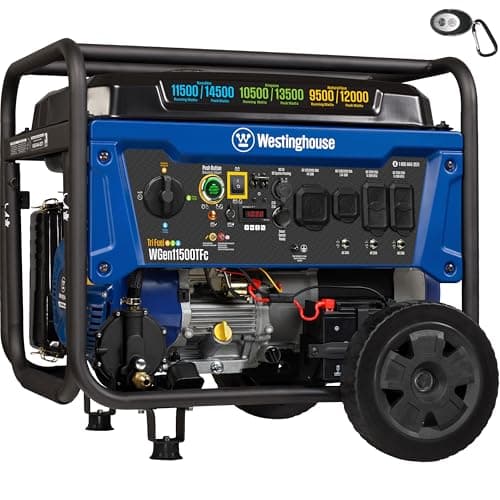
- Running watts
- 11,500 W gas / 9,500 W NG
- Starting watts
- 14,500 W gas
- Runtime
- Up to 19 h (mfr)
#3 · Larger homes with real 240V loads
Westinghouse WGen11500TFc 14,500W Tri-Fuel
Buy this when the sizing math genuinely lands above 10,000 running watts — not because bigger feels safer.
#ad Price as of November 19, 2026; it may have changed since. How we are funded.
Why we picked it
- 11,500 running watts is enough to add central air to the essential-circuit list in many homes
- 19-hour runtime means one overnight refuel instead of three
- Low THD on a conventional frame is unusual and genuinely useful if you are running computers and a modern furnace board
Good to know
- 230 lb, and at this output you are firmly in permanent-location territory
Published specification & our scoring
- Gasoline: 14,500 peak / 11,500 running watts (manufacturer)
- Propane: 13,500 peak / 10,500 running watts (manufacturer)
- Natural gas: 12,000 peak / 9,500 running watts (manufacturer)
- 550cc 4-stroke OHV Westinghouse engine with cast-iron sleeve
- Up to 19 hours on the 9.5-gallon tank (manufacturer)
- Low THD — manufacturer states it is safe for sensitive electronics
- Published weight 230 lb
- Output headroom
- 10
- Fuel flexibility
- 10
- Transfer-switch fit
- 10
- Runtime
- 10
- Power quality
- 9
- Value
- 7
Specification figures are the manufacturer’s published values. Scores are our editorial judgment from those figures and are never published as structured review data — how we pick.
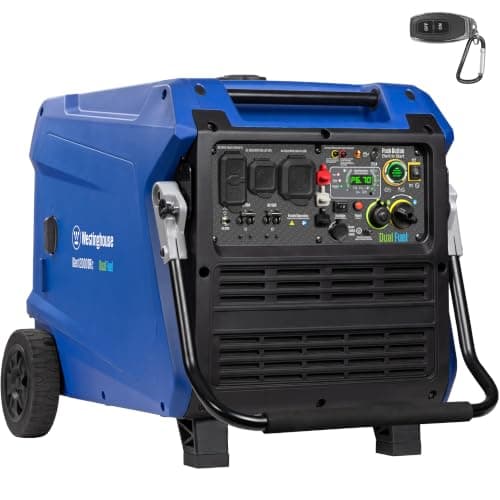
- Output
- 12,000 W peak
- THD
- Under 3% (mfr)
- Outlets
- 14-50R + L14-30R
#4 · Whole-house backup with clean power
Westinghouse iGen12000DFc 12,000W Dual Fuel Inverter
The best technical answer for whole-house backup if the budget allows: transfer-switch-ready output, inverter-clean power, and far less noise than the conventional alternative.
#ad Price as of November 19, 2026; it may have changed since. How we are funded.
Why we picked it
- Whole-house output AND under 3% THD — this is the combination most homes with modern furnace boards and electronics actually want
- 64 dBA at 12,000 peak watts is dramatically quieter than any open-frame machine of similar output
- Both 240V outlets are transfer-switch ready, so it works with a 30A interlock or a 50A switch
Good to know
- 187 lb and enclosed — harder to service at home than an open frame
Published specification & our scoring
- 12,000 peak watts at 3% THD or less (manufacturer)
- As low as 64 dBA with Eco Mode, insulation and mufflers (manufacturer)
- Dual fuel: gasoline or propane
- Manufacturer states inverter technology halves fuel consumption versus a conventional generator
- One 120/240V 14-50R 50A and one L14-30R 30A — both transfer-switch and interlock ready
- LED data center with fuel level, output, remaining runtime, voltage and lifetime hours
- Remote electric start; published weight 187.4 lb
- Output headroom
- 10
- Power quality
- 10
- Noise
- 9
- Transfer-switch fit
- 10
- Fuel flexibility
- 9
- Value
- 6
Specification figures are the manufacturer’s published values. Scores are our editorial judgment from those figures and are never published as structured review data — how we pick.
- Running watts
- 5,300 W gas / 4,800 W LP
- Starting watts
- 6,600 W gas
- Weight
- 136 lb
#5 · Light essential circuits, easy to move
Westinghouse WGen5300DFc 6,600W Dual Fuel
The right generator for a house without a well pump or central air: light enough to actually move, with CO shutoff and remote start included.
#ad Price as of November 19, 2026; it may have changed since. How we are funded.
Why we picked it
- 136 lb is genuinely one-person movable on a flat driveway, which changes how practical a generator is
- CO shutdown, remote start and a propane hose all included at the bottom of the dual-fuel range
- 5,300 running watts covers a fridge, furnace blower, sump pump and lighting with headroom
Good to know
- Good to know: sized for an essential-circuit load — run the sizing math before counting on a well pump, a furnace and a fridge together
Published specification & our scoring
- Gasoline: 6,600 peak / 5,300 running watts (manufacturer)
- Propane: 5,900 peak / 4,800 running watts (manufacturer)
- 274cc Westinghouse 4-stroke OHV engine, cast-iron sleeve
- Automatic low-oil AND carbon monoxide shutdown
- Push-button electric start with remote key fob
- 4.7-gallon tank; one 5-20R duplex, one TT-30R RV, one L14-30R transfer-switch ready
- Propane hose included; published weight 135.6 lb
- Output headroom
- 6
- Fuel flexibility
- 9
- Transfer-switch fit
- 8
- Portability
- 9
- Safety features
- 9
- Value
- 9
Specification figures are the manufacturer’s published values. Scores are our editorial judgment from those figures and are never published as structured review data — how we pick.
The ecoGen10000 is the most interesting machine in the range
An open-frame inverter is an unusual thing. Westinghouse publishes 7,600 running and 10,000 peak watts at under 3% THD from a 420cc cast-iron-sleeved engine, with four GFCI 120 V outlets plus both the L14-30R and the 14-50R, remote key-fob start with auto choke, and 147.7 lb — roughly 60 lb lighter than the conventional machines of similar output.
What that buys is inverter-clean power at essential-circuit output for substantially less than an enclosed inverter costs, and a machine that fills a 30 amp connection almost exactly — which is why it tops the best 30 amp generators. What you give up is the acoustic enclosure, so Westinghouse publishes no dBA figure for it, plus propane capability and a listed CO shutdown.
What Westinghouse does not publish
Three consistent gaps, and they are the same three across the range. Continuous watts on the two biggest machines, which is the figure a house actually runs on. Decibel ratings on the open-frame models, where Champion publishes a figure with a distance for its inverters. And outlet lists on some listings where the wattage is prominent and the connector configuration is not — which matters because the outlet, not the engine, decides what reaches your panel.
Where a figure is missing above, the table says so rather than carrying an estimate. Size a machine from the lowest number its manufacturer is willing to put in print.
What turns a Westinghouse into a house connection
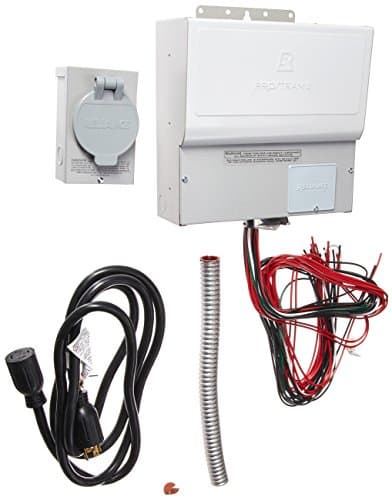
The ten-circuit default
Reliance Controls 310CRK 10-Circuit 30A Kit
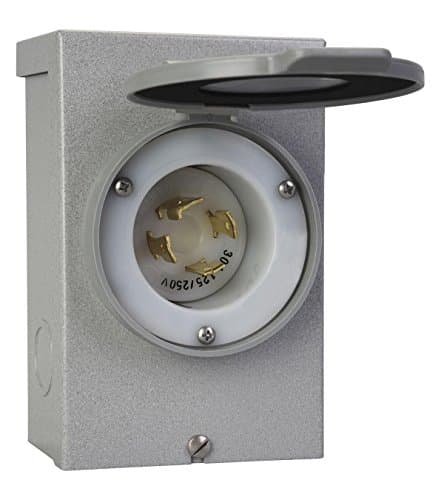
The standard 30A inlet
Reliance Controls PB30 30A Power Inlet Box
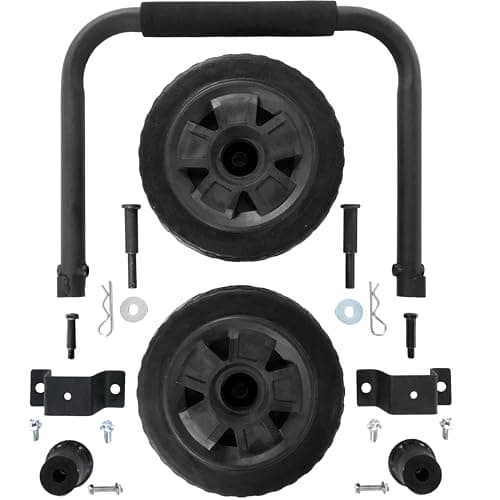
Making a small Westinghouse movable
Westinghouse Wheel and Handle Kit — WGen3600 series
A 10-circuit 30 A manual transfer switch, a NEMA 3R steel inlet box published for generators up to 7,500 running watts, and the factory wheel and handle kit for the smaller WGen3600 series machines. The 50 amp equivalents are on the 50 amp pages, and the machine's outlet pair decides which you need.
For Westinghouse against the rest of the field, the best generator brands compared sets it beside Champion, DuroMax, Generac, WEN and Honda. Champion generators reviewed is the range-level read on its closest rival — the brand that publishes fewer transfer-switch outlets and more decibel figures.
Brands: want your product tested? For Brands.
Questions people actually ask
Are Westinghouse generators good?
They are the strongest range here for home backup specifically, because more Westinghouse machines publish a transfer-switch-ready outlet pair — an L14-30R and a 14-50R — than any other brand's, and most publish running watts on both fuels. The weakness is that the two largest machines do not publish a continuous watt figure at all.
Which Westinghouse generator is best for a house?
The WGen9500DF for most houses: 9,500 running watts on gasoline, 8,500 on propane, both transfer-switch outlets, remote key-fob start and a 3-year warranty. Choose the WGen10500DFc instead if you want the carbon monoxide shutdown the 9500DF omits, or the WGen11500TFc if you have a natural gas line.
What is the difference between WGen and iGen?
WGen machines are conventional open-frame generators: more output per dollar, louder, no published THD figure on most models. iGen machines are enclosed inverters: quieter, published low distortion, lighter for their output, and more expensive. The ecoGen sits between them as an open-frame inverter.
Do all Westinghouse generators have a CO shutdown?
No, and this is the thing to check before buying. The newer models with a trailing "c" generally carry a CO sensor; the WGen9500DF and the ecoGen10000 do not list one. Verify the exact model rather than assuming the family has it, and buy battery CO alarms for indoors regardless.
What does "DF" and "TF" mean on a Westinghouse generator?
DF is dual fuel — gasoline or propane. TF is tri-fuel — gasoline, propane or natural gas. Both publish a lower running figure on the alternative fuels than on gasoline, and the natural gas penalty on the tri-fuel machines is the larger of the two at around 17%.
How long is the Westinghouse warranty?
Three years limited on the machines in this registry. No Westinghouse listing here publishes an expected service life in hours, which is normal for the category — the warranty is the only durability commitment any of these brands puts in writing.
Sources
- Eugene Water & Electric Board — Generator Sizing ConsiderationsPublished appliance running and additional-starting watt figures used to judge what this machine's output actually covers.
- US Consumer Product Safety Commission — Portable Generator Information CenterThe placement and carbon monoxide guidance referenced in the safety notes on this page.
Read next
Review
Westinghouse WGen9500DF Review
A close reading of the WGen9500DF's published specification against real household loads, including its missing CO shutdown.
Review
Champion Generators Reviewed
Champion's home backup range read end to end: the 11,500 W dual fuel, the 12,500 W tri-fuel, three inverters and the transfer switch, with every published figure side by side.
Brand Comparison
Generator Brands Compared, Model by Model
Each major brand's best home backup generator compared on published specifications, with omissions marked.
Best Overall Home Backup
The Best Home Backup Generators
Nine conventional-frame generators ranked for whole-house backup, with per-fuel running watts and transfer-switch fit.
Top pick · Westinghouse WGen9500DF 12,500W Dual Fuel
$999.00See the WGen9500DF 12,500W Dual Fuel on Amazon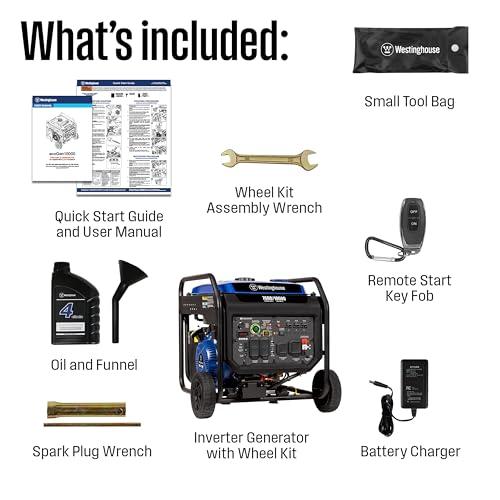
Best 30A Match
The Best 30 Amp Generators for Home Backup
Generators matched to a 30 amp connection, ranked on published output against the 7,200 watt ceiling and on having a real L14-30R outlet.
Top pick · Westinghouse ecoGen10000 10,000W Open-Frame Inverter
$1,149.00See the ecoGen10000 10,000W Open-Frame Inverter on Amazon