Generator Sizing
What Can a 5,000 Watt Generator Run?
Enough of a house to be comfortable, and not enough to be careless. Here is the load list, from published figures.
Written byMike M.
Published
Disclosure: we earn a commission on purchases made through links on this page, at no cost to you. It does not affect what we recommend or what we say about it — how we are funded.
The short answer
- A 5,000 watt generator runs the essentials of a typical house at once, provided the big motors do not start at the same moment. From published appliance figures, a realistic simultaneous load is:
- Refrigerator / freezer — 700 running watts (EWEB)
- Furnace fan blower, 1/3 HP — 700 running watts (EWEB)
- Water well pump, 1/3 HP — 1,000 running watts (EWEB)
- Sump pump, 1/3 HP — 800 running watts (EWEB)
- Lights, phones, laptop, router, TV — roughly 300-400 running watts combined
- Total: about 3,500 running watts, leaving headroom for the single largest start-up surge — the well pump's additional 2,000 watts (EWEB)
That list is the honest answer, and the headroom at the end is the part people leave out. A generator does not have to carry its loads; it has to start them, and a 1/3 HP well pump demands 2,000 additional watts for the second or two it takes to spin up. Add the largest surge to your running total, not all of them.
First: is yours a 5,000 watt generator?
This is not a pedantic question. Machines are marketed on peak watts, which is the two-second figure, and the number on the box is routinely 15-25% above the figure the machine can hold. In this registry, DuroMax's XP5500HX publishes 5,500 peak watts and no running figure at all — which works out at roughly 4,500 running watts, a full 1,000 below what the label implies.
The two numbers, and the one to plan from
- Starting / peak / surge watts
- A momentary capability, 1-3 seconds
- Running / rated / continuous watts
- What it holds for three days
- At 80% continuous
- ~4,000 W of a 5,000 W machine
- Plan from
- Running watts, derated 20%
The 80% derating is our own addition and is labeled wherever it appears on this site — it is the margin that keeps a small engine from running at its limit for days. [Starting watts versus running watts](/sizing/starting-watts-vs-running-watts) explains why the two figures differ by so much.
So read "what can a 5,000 watt generator run" as "what can about 4,000 watts of continuous load cover". That is still a great deal of house, and it is the figure the examples below use.
What fits, from the published charts
| Load | Running watts | Additional starting watts | Source |
|---|---|---|---|
| Refrigerator / freezer | 700 | 2,200 | EWEB |
| Furnace fan blower, 1/3 HP | 700 | 1,400 | EWEB |
| Water well pump, 1/3 HP | 1,000 | 2,000 | EWEB |
| Sump pump, 1/2 HP | 1,050 | 2,200 | EWEB |
| Space heater | 1,500 | 0 | EWEB + Champion |
| Microwave, 1,000 W rated | 1,000 | 0 | EWEB |
| Coffee maker | 1,000 | 0 | EWEB |
| Washing machine | 500 | 1,200 | Champion |
| Television, LED | 80 | 0 | Champion |
| Laptop | 60 | 0 | EWEB |
| LED bulb | 15 | 0 | EWEB |
Two worked examples
A house with city water and gas heat
Refrigerator at 700, furnace blower at 700, five LED fixtures at 75, a TV at 80, a laptop and phones at 100, and the router: about 1,700 running watts. The largest single surge is the refrigerator's 2,200 additional watts. A 5,000 watt machine carries this with room to run a 1,000 watt microwave or a 1,500 watt space heater on top — one at a time.
A house with a well and a wet basement
Refrigerator at 700, furnace blower at 700, 1/3 HP well pump at 1,000, 1/2 HP sump pump at 1,050, lights and devices at 250: about 3,700 running watts, which is already past the 80% derating of a 5,000 watt machine. The largest surge is the sump pump's 2,200 additional watts, and if the pump and the well start together you will trip the overload.
That second example is the real limit of this class, and it is why what size generator do I need exists: a house with a well and a sump is a 7,500 watt house, not a 5,000 watt one. A soft starter on the pump is often cheaper than the larger generator.
What a 5,000 watt generator will not run
- Central air conditioning. Not at any size in this class. Even a 12,000 BTU window unit publishes 3,250 running and 3,950 starting watts (EWEB), which consumes the whole machine on its own. Running AC on a generator covers what it really takes.
- An electric water heater. Published at 4,500 running watts (EWEB) — the entire output of the machine for one appliance. Gas water heating is unaffected by an outage apart from its controls.
- An electric range, or a dryer's heating element. An electric stove element alone is 2,000 watts (Champion) and a dryer publishes 1,000 running with a 3,000 watt surge. Possible in isolation, not alongside the essentials.
- Everything at once. This is the honest limit of the class: a 5,000 watt generator runs a house in which somebody is paying attention to what is switched on.
What to look for in a machine this size
- 1A published running-watt figure, not just a peak. Half the machines in this class publish only the peak number, and you cannot plan from it.
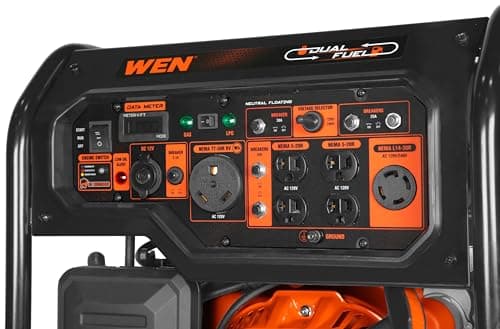
- 2A transfer-switch-ready L14-30R, if you want to feed circuits rather than run cords. Two picks below have one; two do not.
- 3Dual fuel. At this size the machine will sit unused for most of the year, and propane does not go stale.
- 4CO shutdown, which is published on most of this class now.
- 5Weight. This class runs from about 99 lb to 136 lb, which is genuinely movable by one person — one of the real advantages of buying the right size rather than the biggest.
Machines that genuinely deliver this
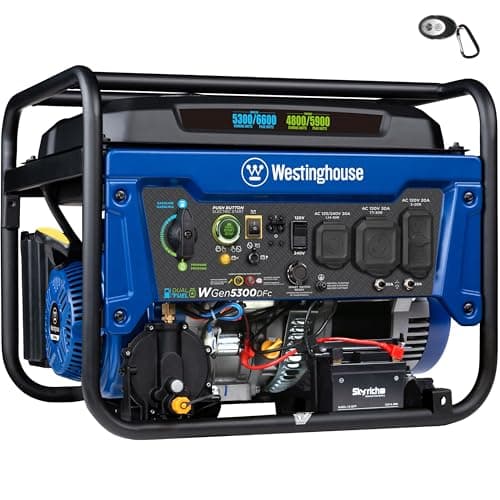
Light essential circuits, easy to move
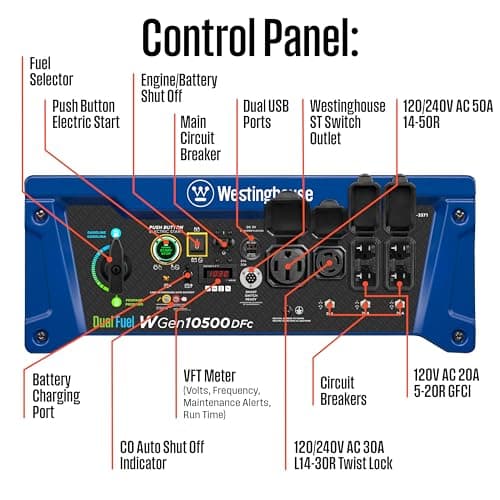
Westinghouse WGen5300DFc 6,600W Dual Fuel
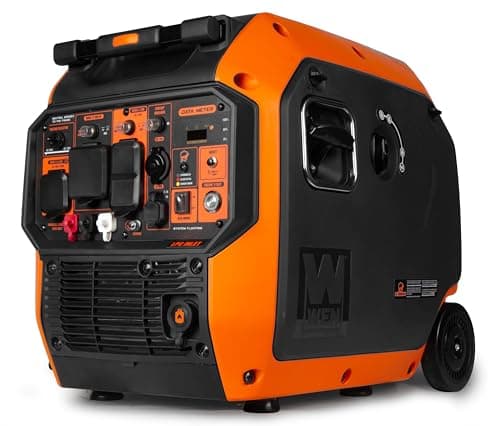
Dual fuel inverter with 240V
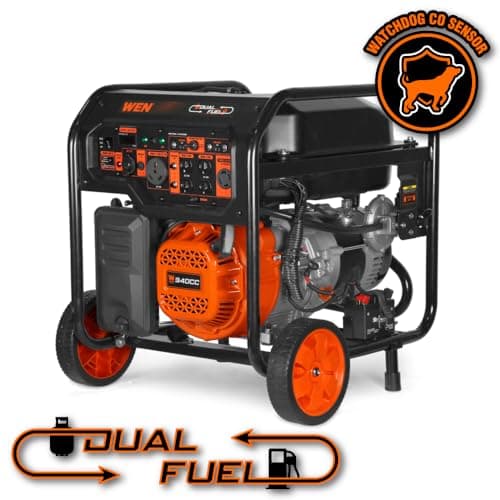
WEN DF680iX 6,800W Dual Fuel Inverter
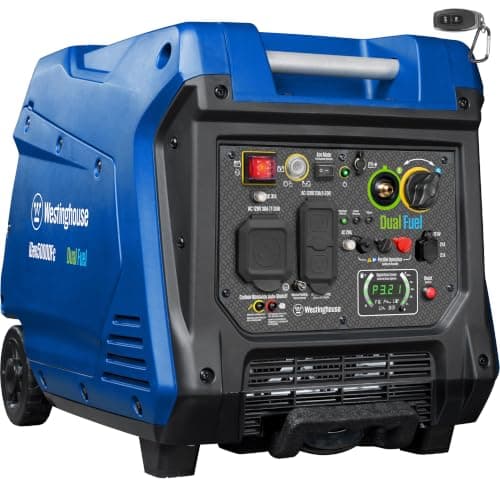
Quietest dual fuel at 4,000 running watts
Westinghouse iGen5000DFc 5,000W Dual Fuel Inverter
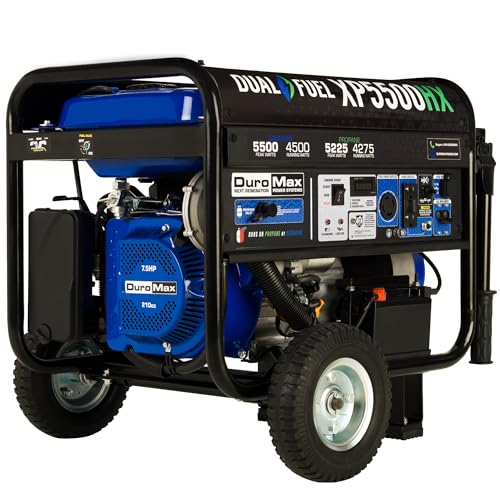
Small backup plus 120V doubling
DuroMax XP5500HX 5,500W Dual Fuel
The WGen5300DFc publishes 5,300 running watts on gasoline and 4,800 on propane with CO shutdown, a remote key fob and an L14-30R at 135.6 lb. The WEN DF680iX publishes 5,100 / 4,500 with an L14-30R at 99.2 lb — check its bonded neutral against your transfer switch. The iGen5000DFc is the quiet one at as low as 52 dBA, with no 240 V outlet. The DuroMax XP5500HX publishes peak watts only.
The best 30 amp generators is the roundup for this output class connected through a transfer switch, and the best generator for a cabin is the same class judged on storage and propane instead. If your load list came out higher than the examples above, what will a 10,000 watt generator run is the next step up.
Questions people actually ask
What can a 5,000 watt generator run?
A refrigerator, a furnace blower, a well pump, a sump pump, lights and devices — about 3,500 running watts together — with headroom for the single largest start-up surge. It will also run a microwave or a space heater on top of that, one at a time. It will not run central air or an electric water heater.
Will a 5,000 watt generator run a house?
It runs the essential circuits of a typical house, which is what most people mean. It does not run everything at once, and a house with a well pump, a sump pump and electric-dependent heat is already at the limit. Plan on about 4,000 watts of continuous load from a 5,000 watt machine.
Will a 5,000 watt generator run a refrigerator and a freezer?
Yes, comfortably. EWEB publishes 700 running watts for a refrigerator-freezer with an additional 2,200 watts to start, so two separate units are around 1,400 running watts — well inside the machine. Keep them from starting at the same instant as any other motor load.
Can a 5,000 watt generator run an air conditioner?
A single window unit, by itself and with little else running. EWEB publishes 3,250 running and 3,950 starting watts for a 12,000 BTU window air conditioner, which consumes almost the whole machine. Central air is out of reach at this size regardless of how it is connected.
How many amps is a 5,000 watt generator?
About 20.8 amps at 240 volts, or 41.7 amps at 120 volts, by simple arithmetic on the output. In practice the outlets limit you further: a 30 amp L14-30R connection carries about 7,200 watts, so a 5,000 watt machine never reaches its connection's ceiling.
Is 5,000 watts enough for a well pump?
For a 1/3 HP pump, yes — EWEB publishes 1,000 running watts with 2,000 additional to start, which fits alongside a fridge and a furnace blower. Larger pumps are the problem: a bigger motor's inrush can exceed the machine, and a soft starter on the pump is usually cheaper than a bigger generator.
Sources
- Eugene Water & Electric Board — Generator Sizing ConsiderationsPublic-utility wattage chart: the running and additional-starting figures quoted on this page, and the add-the-single-largest-surge method.
- Champion Power Equipment — Quick Reference WattageManufacturer wattage chart: the second published figure wherever it differs from EWEB's, and the kitchen and laundry loads EWEB does not list.
- US Consumer Product Safety Commission — Portable Generator Information CenterCarbon monoxide placement guidance referenced wherever this page tells a reader where to put the machine.
Read next
Guide
What Size Generator Do I Need?
The core sizing method: total running watts, add the single biggest surge, derate for continuous running, then match a wattage class.
Reference
Appliance Wattage Chart
The site's reference wattage table, with each row's source named and both figures shown wherever the published charts disagree.
Guide
What Will a 10,000 Watt Generator Run?
A worked load list for a 10,000 watt generator from published appliance wattages: the whole essential panel plus one large load, and why the connection may limit you first.

Best 30A Match
The Best 30 Amp Generators for Home Backup
Generators matched to a 30 amp connection, ranked on published output against the 7,200 watt ceiling and on having a real L14-30R outlet.
Top pick · Westinghouse ecoGen10000 10,000W Open-Frame Inverter
$1,149.00See the ecoGen10000 10,000W Open-Frame Inverter on Amazon
Guide
Starting Watts vs Running Watts
What the surge figure means, why motors need it, and how to read the peak-watt number on a generator box.