Model Reviews
Generac Generators Reviewed
The name everyone already knows, read on its published figures rather than its reputation — including the one machine in the range that is genuinely class-leading.
Written byMike M.
Published
Disclosure: we earn a commission on purchases made through links on this page, at no cost to you. It does not affect what we recommend or what we say about it — how we are funded.
The short answer
Generac is the only brand in this registry that sells both halves of a home backup plan — the generator and the transfer switch it plugs into — and the ecosystem is the reason to shortlist it rather than the specifications. The portables still listed are the 8,125 W and the GP8000E, both gasoline only: good hardware priced against dual-fuel rivals that offer a fuel contingency they do not. Of the two, the 8,125 W is the one to buy, because it publishes the running figure the GP8000E leaves blank.
Most people arrive at Generac from the other end of the category. The brand built its name on permanently installed standby units — the box on a concrete pad beside the house that starts itself when the lights go out — and that reputation is why its portables get shortlisted before anyone has read a spec sheet. That is worth naming openly, because buying on brand recognition in this category is how people end up with the wrong machine wearing the right badge.
So this page does the opposite. It reads the whole Generac range here — the portable generators still listed and three transfer switches — on nothing but published figures, and asks a different question from the usual brand roundup: does buying into Generac's ecosystem actually buy you anything? The answer is a qualified yes, and the qualification is specific enough to act on.
The portable range, as published
| Model | Running watts | Starting watts | Fuel | 240 V outlets | Weight |
|---|---|---|---|---|---|
| GP8000E | Not published | 10,000 W | Gasoline only | 120/240 V 30 A | 198 lb |
| 8,125 W Portable | 6,500 W | 8,125 W | Gasoline only | 120/240 V 30 A | 182 lb |
Two machines is a narrow range by the standards of this category, and the narrowness is itself informative: Generac's engineering attention is in its standby line, and the portable range on Amazon is a short value ladder. Read the table by published running watts rather than by headline watts and the ladder is plain — an unpublished figure behind a 10,000 W headline, then 6,500 published running watts.
The tri-fuel has left the range
Until recently the machine to buy here was Generac's 12,500 W tri-fuel: 9,500 published running watts on gasoline, fuel selection between gasoline, liquid propane and natural gas from a front dial, COsense shutdown, electric start, and both an L14-30R and a 120/240 V 50 A outlet. It is no longer listed on Amazon, and no Generac tri-fuel portable has taken its place there, so this page no longer recommends it and no longer carries a buy link for it.
That matters more than one model disappearing usually would, because natural gas capability is the single largest runtime upgrade available on a portable generator. Gasoline runs out, and the stations that sell it have no power either; a propane tank empties on a schedule you can calculate. A plumbed natural gas line keeps supplying for as long as the utility's distribution system holds, which in most outages is the whole time. Losing the tri-fuel takes that option out of Generac's portable lineup entirely.
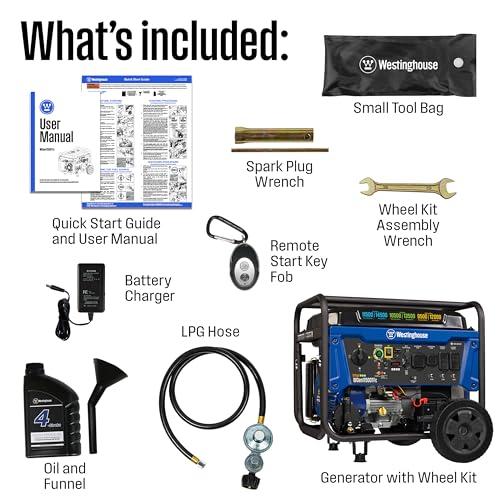
If the gas line was the reason you were shopping Generac, the closest live equivalent is Westinghouse's WGen9500TFc: the same 9,500 running watts on gasoline, plus 8,500 on propane and 7,500 on natural gas — all three published, which Generac never did — with CO shutdown, remote key-fob start, and both the L14-30R and a 14-50R, so it fits a 30 A transfer switch today and a 50 A one later. The best natural gas generators sets out that comparison across brands, and Generac alternatives maps the other routes away from the brand.
What stays true whichever machine you choose: the natural gas connection is work for a licensed gas fitter and should be budgeted as part of the purchase rather than after it, and output on natural gas is always below the gasoline figure. What size breaker for a generator covers matching the outlet to the panel, and the best 50 amp transfer switches covers the switch at the top of that range.
PowerRush and COsense: two real features, correctly understood
These are the two names Generac markets hardest, and both describe something genuine. Neither does quite what the marketing implies.
- PowerRush, on the 8,125 W machine, is how a 6,500 running-watt generator reaches 8,125 starting watts — Generac states it provides 40% more starting capacity. That is the figure that matters when a well pump or a compressor kicks in, and 1,625 watts of headroom above the running rating covers the published additional-starting demand of a refrigerator or a 1/3 HP well pump comfortably when the machine is otherwise lightly loaded. What it does not do is raise running capacity. 6,500 running watts is the ceiling your house lives under all week; see starting watts vs running watts.
- COsense monitors carbon monoxide around the machine and shuts the engine down when it accumulates. It is published on both portables here, which is better range coverage than several rivals manage. It is a backstop against a placement mistake, not a substitute for placement: a CO shutoff reacts after gas has already built up, which is too late if the build-up is happening inside your house rather than around the generator.
- Automatic voltage regulation, which Generac published on the discontinued tri-fuel, holds output voltage steadier under changing load than an unregulated alternator. It is not the same thing as inverter-grade power, and Generac does not publish a total harmonic distortion figure for any portable here, so treat sensitive electronics with the same care you would on any conventional machine.
The model-level detail on the two GP machines — the full outlet lists, the runtime figures and how PowerRush changes the sizing arithmetic — sits on the Generac GP series review. This page is the range-level read.
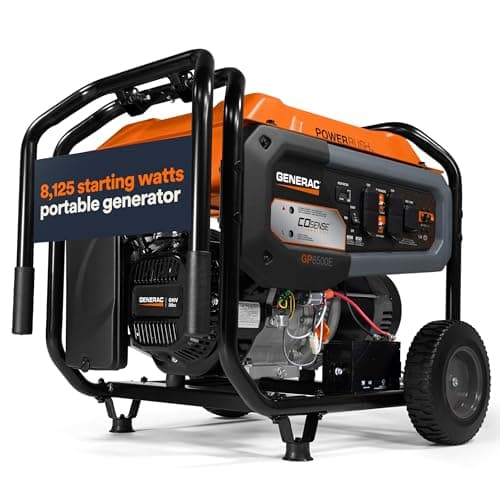
- Running watts
- 6,500 W
- Starting watts
- 8,125 W
- Runtime
- Up to 10.5 h (mfr)
#1 · Essential circuits on a budget
Generac 8,125W Starting Portable
The right size for most people who think they need 10,000 watts: enough running capacity for every essential circuit, with surge headroom for motor startup.
#ad Price as of November 19, 2026; it may have changed since. How we are funded.
Why we picked it
- 6,500 running watts is genuinely enough for a fridge, furnace blower, sump pump, lights and electronics — the realistic essential-circuit set
- PowerRush gives it surge headroom that punches above its running rating, which is exactly what a well pump needs
- Cheapest Generac with COsense and electric start
Good to know
- Gasoline only
Published specification & our scoring
- 6,500 running / 8,125 starting watts with PowerRush (manufacturer)
- PowerRush Advanced Technology provides 40% more starting capacity (manufacturer)
- Electric start with included battery
- Up to 10.5 hours continuous runtime (manufacturer)
- COsense CO detection with automatic shutdown
- Digital hour meter and automatic low-oil shutdown
- Published weight 182 lb
- Output headroom
- 7
- Fuel flexibility
- 4
- Transfer-switch fit
- 7
- Runtime
- 8
- Safety features
- 9
- Value
- 9
Specification figures are the manufacturer’s published values. Scores are our editorial judgment from those figures and are never published as structured review data — how we pick.
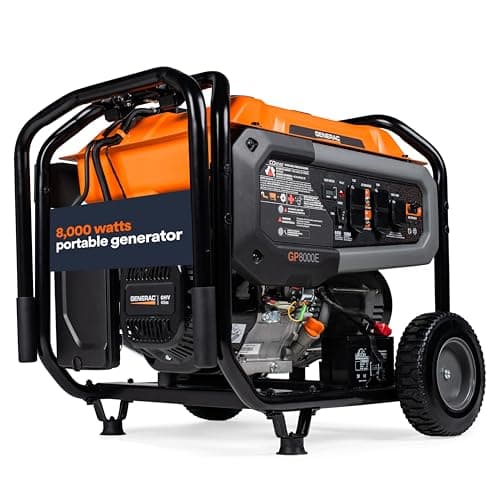
- Starting watts
- 10,000 W
- Runtime
- Up to 12 h (mfr)
- CO protection
- COsense
#2 · Gasoline-only, brand-name simplicity
Generac GP8000E 10,000W Starting
A solid gasoline-only generator from the brand with the best support network, held back by having no propane option at a dual-fuel price.
#ad Price as of November 19, 2026; it may have changed since. How we are funded.
Why we picked it
- Generac's dealer and parts network is the widest in the category — a real advantage five years in
- COsense is one of the better-regarded CO shutdown implementations
- Lighter than the 13kW dual fuel machines at 198 lb
Good to know
- Gasoline only — no propane option, which removes the most useful fuel contingency in a long outage
Published specification & our scoring
- 10,000 starting watts (manufacturer)
- GFCI outlets: two 120V 20A duplex plus one 120V/240V 30A
- Electric start with included battery
- Up to 12 hours runtime on the steel tank with fuel gauge (manufacturer)
- COsense carbon monoxide detection and shutdown
- Low-oil shutdown, digital hour meter, steel-tube cradle
- Published weight 198 lb
- Output headroom
- 8
- Fuel flexibility
- 4
- Transfer-switch fit
- 7
- Runtime
- 8
- Safety features
- 9
- Value
- 6
Specification figures are the manufacturer’s published values. Scores are our editorial judgment from those figures and are never published as structured review data — how we pick.
Where the gasoline-only machines lose
The 8,125 W and the GP8000E are well-made generators with CO shutdown, electric start and a battery included, and published runtimes of 10.5 and 12 hours respectively. The problem is not the hardware. It is that both are gasoline only at a price where dual fuel is normal.
Fuel flexibility is not a luxury feature in a long outage; it is the contingency that decides whether the generator runs on day four. Propane stores indefinitely in a sealed tank, does not gum a carburetor, and can be bought from a hardware store that is itself running on a generator. Gasoline degrades in storage, needs stabilizer, and is the fuel most likely to be unavailable precisely when you need it — the pumps need power too. Propane vs gasoline cost works through the running-cost side of that trade, and generator fuel storage and stabilizer covers keeping gasoline usable.
The GP8000E has a second problem: it publishes 10,000 starting watts and no running figure. A starting watt rating describes a second or two of motor inrush; it tells you almost nothing about the load the machine carries continuously, and sizing from it is the most common way people overload a generator on the first night. Across the machines in this registry that publish both figures, the running number sits roughly 20-25% below the starting number — which would put a 10,000 W starting machine somewhere near 7,500 to 8,000 running watts. That is our inference from the published ratios on other machines, not a Generac figure, and it is labeled as such because Generac has not published the number.
The switches are the actual Generac argument
Here is where the brand does something no other manufacturer in this registry does. Generac sells the transfer switch as well as the generator, at both ends of the range, and its manual switch is designed to become an automatic one later.
The HomeLink 6852 is a 30 A manual switch that routes portable generator power to selected hard-wired circuits through an electronic rocker — one button rather than ten individual circuit switches, which is a meaningful difference in the dark with a flashlight in your teeth. Generac states it converts to automatic standby capability with an upgrade kit, so if a standby generator becomes a real plan the switch stays on the wall and is upgraded rather than ripped out. The 6854 kit is the same switch with the 30 A power inlet in the box, which removes the risk of specifying a mismatched inlet.
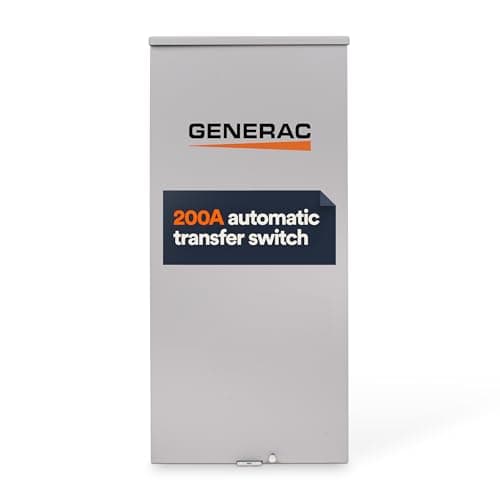
The 200 A Next Gen automatic transfer switch is the other end: Generac states it monitors utility power continuously, transfers the entire 200 A load without anyone being home, and carries a control module hardened against brownouts and power disturbances. It is listed here for completeness rather than as a recommendation for a portable generator plan — it is designed for a permanently installed standby unit, it is service-entrance work requiring permits and utility coordination, and a 200 A switch does not give you 200 A of generator. The engine is still the ceiling.
Generac's transfer switch range
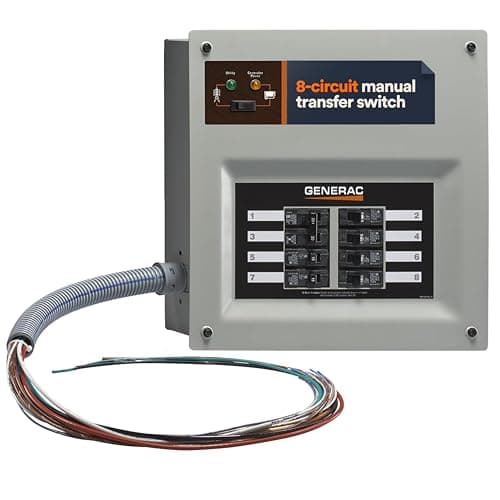
A path to automatic later
Generac HomeLink 6852 30A Manual
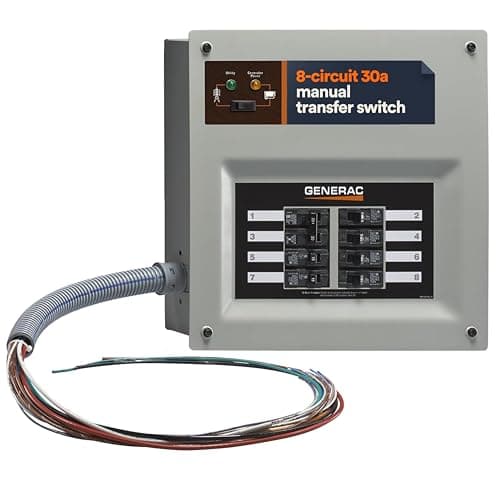
HomeLink with the inlet included
Generac HomeLink 6854 30A Kit
Whole-panel automatic transfer
Generac 200A Next Gen Automatic Transfer Switch
A 30 A manual switch with an upgrade path, the same switch with the inlet included, and the 200 A automatic switch that belongs to a standby installation. All three are licensed-electrician work, and the 200 A unit is permitted, utility-coordinated work at the service entrance.
The honest verdict on the upgrade path: it is real, and it is rarely worth paying a premium for. Generac's switches generally cost more than the Reliance equivalents that do the same manual job, and the upgrade requires buying both the kit and a standby generator — a far larger decision that will not be made cheaper by the switch you bought years earlier. Buy HomeLink if a standby unit is a genuine plan with a date attached. If it is a vague someday, buy the cheaper switch now. The best generator transfer switches compares the field, and manual vs automatic transfer switch is the decision underneath it.
What Generac does not publish
Stated plainly, because a buyer should know exactly where the spec sheet ends. There is no running watt figure on the GP8000E. There is no decibel rating on either portable, which means no Generac here can be compared on noise against a Champion or Westinghouse machine that publishes one. There is no total harmonic distortion figure anywhere in the portable range. And the tri-fuel, while it was listed, published running watts for gasoline only despite being sold on multi-fuel capability.
None of that makes these bad machines, and CO shutdown on both is better coverage than several competitors manage. It does mean Generac is bought on reputation and ecosystem rather than on documentation — which is the opposite of how Champion and WEN ask to be judged. The best generator brands compared puts all of them side by side.
Who should buy a Generac, and who should not
- Buy the 8,125 W if a Generac is what you want and 6,500 published running watts covers your load list. With the tri-fuel gone it is the only portable here whose continuous rating Generac actually prints.
- Buy the 8,125 W if 6,500 published running watts genuinely covers your load list, you want CO shutdown and electric start, and you have decided you do not need a propane option. It is the easiest Generac to size correctly, because the number you need is printed.
- Buy HomeLink if a standby generator is a dated plan rather than an aspiration.
- Look elsewhere if fuel flexibility matters and natural gas is not available — a dual-fuel machine from a brand that publishes its propane running watts will serve you better for the same money. The best dual fuel generators for home backup is the shortlist.
- Look elsewhere if noise is a deciding factor. Without a published dBA figure there is nothing to compare, and this site will not estimate one. The best quiet inverter generators covers the machines that publish theirs.
And if the reason Generac came to mind in the first place is the standby unit you have seen beside a neighbor's house, read portable vs standby generator before buying either. The two solve the same problem at completely different prices, and the comparison usually changes the decision.
If this range-level read has you weighing other brands, Generac alternatives maps each reason for shopping elsewhere — price at the same output, a second fuel, quieter running, or no engine at all — to the specific machine that answers it.
Brands: want your product tested? For Brands.
Questions people actually ask
Are Generac generators good?
The portables here are well-built machines with COsense carbon monoxide shutdown and electric start with a battery included. The weakness is documentation and fuel choice: the GP8000E publishes no running watt figure, no Generac portable here publishes a decibel rating, and since the 12,500 W tri-fuel stopped being listed, both remaining machines are gasoline only at prices where dual fuel is normal.
Which Generac generator is best for home backup?
The 8,125 W model, of the two still listed: 6,500 published running watts, COsense shutdown, electric start with the battery included, and PowerRush surge capability for motor startup. The 12,500 W tri-fuel was the stronger answer and is no longer listed on Amazon; the closest live equivalent is Westinghouse's WGen9500TFc at the same 9,500 running watts on gasoline.
What happened to the Generac 12,500 W tri-fuel?
It is no longer listed on Amazon, and no Generac tri-fuel portable has replaced it there, so we have removed its buy link rather than leave a dead one. It published 9,500 running watts on gasoline and ran on propane or natural gas from a front dial. The closest live equivalent is Westinghouse's WGen9500TFc, which matches the gasoline figure and additionally publishes 8,500 running watts on propane and 7,500 on natural gas.
What are the running watts of a Generac GP8000E?
Generac does not publish a running watt figure for it — the listing data states 10,000 starting watts and leaves the continuous rating blank. Across the machines in this registry that publish both numbers, running watts sit roughly 20-25% below starting watts, which would put it near 7,500 to 8,000 running watts. That is an inference from other machines' published ratios rather than a Generac specification, so size conservatively or choose a machine that publishes the figure.
What is the difference between PowerRush and a bigger generator?
PowerRush increases starting capacity, not running capacity. Generac states it provides 40% more starting capacity, which is what lets a 6,500 running-watt machine reach 8,125 starting watts and handle the inrush when a well pump or compressor cycles on. It does not raise the load the generator can carry continuously, so it helps you start a motor rather than run more appliances at once.
Is the Generac HomeLink upgrade path worth paying for?
Only if a standby generator is a real plan with a date on it. The upgrade is genuine — Generac states the switch converts to automatic standby capability with a kit rather than being replaced — but it requires buying both the kit and a standby unit, which is a far larger decision than the switch. Generac's switches typically cost more than the Reliance manual equivalents, so if the standby is a vague someday, the cheaper switch now is the better buy.
Can a Generac portable generator run on natural gas?
Not any of the ones still listed. The 12,500 W tri-fuel did, switched from a front dial, but it is no longer sold on Amazon and the two remaining portables are gasoline only. For a tri-fuel machine today, Westinghouse's WGen9500TFc publishes 7,500 running watts on natural gas. Either way the house side of a gas connection is work for a licensed gas fitter and should be budgeted with the generator.
How loud is a Generac portable generator?
Generac does not publish a decibel figure for either portable in this registry, so there is no number to compare and this site will not estimate one. Champion publishes dBA with a stated measuring distance on several machines and Westinghouse publishes figures as low as 52 dBA on some of its inverters, which is why those brands lead the quiet-generator pages here.
Sources
- Eugene Water & Electric Board — Generator Sizing ConsiderationsPublished appliance running and additional-starting watt figures used to judge what this machine's output actually covers.
- US Consumer Product Safety Commission — Portable Generator Information CenterThe placement and carbon monoxide guidance referenced in the safety notes on this page.
Read next
Generac Alternative
Generac Alternatives for Home Backup
The honest read on what Generac does well, then four different routes away from it — big dual fuel, tri-fuel, inverter and battery.
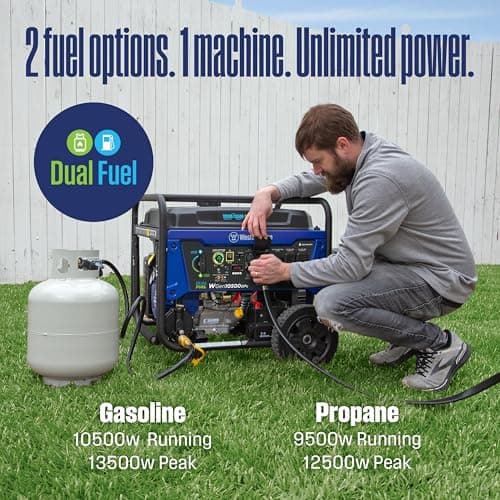
Top pick · Westinghouse WGen10500DFc 13,500W Dual Fuel
$1,099.00See the WGen10500DFc 13,500W Dual Fuel on Amazon
Review
Generac GP Series Review
Generac's GP portable range: COsense, PowerRush and the service network, against gasoline-only operation.
Brand Comparison
Generator Brands Compared, Model by Model
Each major brand's best home backup generator compared on published specifications, with omissions marked.
Comparison
Portable vs Standby Generator
Portable against permanently installed standby generators, and where the top of the portable range starts to overlap.
Best on Natural Gas
The Best Natural Gas Generators for Home Backup
Five tri-fuel generators ranked on published natural gas running watts, plus what a gas quick-connect actually involves and the conversion-kit alternative.
Top pick · Westinghouse WGen11500TFc 14,500W Tri-Fuel
$1,499.00See the WGen11500TFc 14,500W Tri-Fuel on Amazon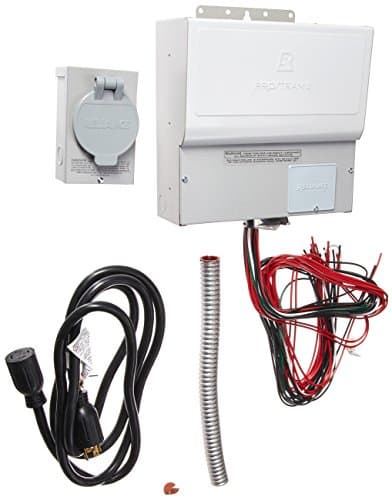
Best Transfer Switch
The Best Generator Transfer Switches
Transfer switches ranked on circuit count, amp rating and kit completeness, from 6-circuit 30A to 10-circuit 50A.
Top pick · Reliance Controls 310CRK 10-Circuit 30A Kit
$474.86See the 310CRK 10-Circuit 30A Kit on Amazon