Comparisons
Jackery vs EcoFlow for Home Backup
The two brands optimize for opposite things, and the published specs say which one plainly once you know what to look for.
Written byMike M.
Published
Disclosure: we earn a commission on purchases made through links on this page, at no cost to you. It does not affect what we recommend or what we say about it — how we are funded.
The short answer
| Jackery | EcoFlow | |
|---|---|---|
| UPS switchover published | No | Under 10 ms |
| Fastest AC recharge to 80% | 66 min (Explorer 2000 v2) | 43 min (DELTA 2 Max) |
| Highest published solar input | Not published per unit | 1,000 W (DELTA 2 Max) |
| Lightest 2 kWh unit | 39.5 lb | 50.7 lb |
| Highest published cycle count | 6,000+ (HomePower 2000 Plus v2) | 3,000 (DELTA 2 Max) |
| Expansion ceiling | 12 kWh | 6 kWh |
| Starts a well pump | No | No |
Manufacturer published figures for the units in this site's registry, not the brands' full catalogs. The two blanks are real: Jackery does not publish a UPS transfer time for the units here, and does not publish a maximum solar input figure on these listings.
These two brands dominate the home backup battery shelf, and the usual comparison between them is a draw — similar capacities, similar prices, similar marketing. The published specifications are not a draw at all. Each brand has optimized hard for a different thing, and once you know which thing you need, the answer stops being close.
Two facts about your house settle it.
- 1Does anything need to stay on without a flicker? A refrigerator does not care about a two-second gap. A desktop computer, a modem on a work call, an aquarium pump or a powered medical device does. EcoFlow publishes a sub-10 millisecond transfer time on the DELTA 3 Max and DELTA 3 Classic; Jackery publishes no transfer figure for the units here. If the answer is yes, EcoFlow.
- 2Will you carry it, and do you want to grow it? Jackery's 2 kWh unit is 39.5 lb against EcoFlow's 50.7 lb, its HomePower expands to 12 kWh against EcoFlow's 6 kWh, and it publishes 6,000+ cycles against EcoFlow's 3,000. If the battery will move between floors, or if you intend to buy more capacity over the next few years, Jackery.
Everything below is the detail behind those two sentences. If you have not yet decided between a battery and an engine at all, portable power station vs generator is the decision that comes first, and it is the more consequential one.
The two ranges, as published
| Unit | Capacity | AC output | Recharge to 80% | Cycles | Weight |
|---|---|---|---|---|---|
| Jackery Explorer 2000 v2 | 2,042 Wh | 2,200 W | 66 min | Up to 10 years stated | 39.5 lb |
| Jackery HomePower 2000 Plus v2 | 2,048 Wh (to 12 kWh) | 2,400 W | Not published | 6,000+ | 40.6 lb |
| Jackery Explorer 1000 v2 | 1,070 Wh | 1,500 W / 3,000 W surge | 60 min to full | Over 70% retained | 23.8 lb |
| Jackery Explorer 300 | 292 Wh | 300 W / 600 W peak | Not published | Over 4,000 | 7.5 lb |
| EcoFlow DELTA 2 Max | 2,048 Wh (to 6 kWh) | 2,400 W | 43 min | 3,000 | 50.7 lb |
| EcoFlow DELTA 3 Max | 2,048 Wh | 2,400 W / 3,400 W boost | 1.13 hours | 10-year life stated | Not published |
| EcoFlow DELTA 3 Classic | 1,024 Wh | 1,800 W / 3,600 W surge | 45 min | 10+ years stated | 26.7 lb |
One pattern worth naming before the detail: at the same nominal 2 kWh, EcoFlow consistently publishes 2,400 W of output against Jackery's 2,200 W, and Jackery consistently publishes a lower weight. That is the trade in miniature — EcoFlow spends the engineering on output and speed, Jackery spends it on weight and longevity.
Where EcoFlow wins: switchover, recharge and solar
The sub-10 millisecond switchover is the strongest single argument either brand makes. It means the unit sits permanently between the wall and your equipment, and when the grid drops the equipment never registers it. A desktop does not reboot. A modem does not drop. A CPAP does not alarm. EcoFlow publishes that figure for both the DELTA 3 Max and the DELTA 3 Classic; Jackery publishes no equivalent for the units in this registry.
That changes what the product is. A battery you plug things into after the lights go out is an emergency supply. A battery you plug things into permanently is backup infrastructure. For a home office, a chest freezer or anything on medical device backup power, that distinction is the whole purchase.
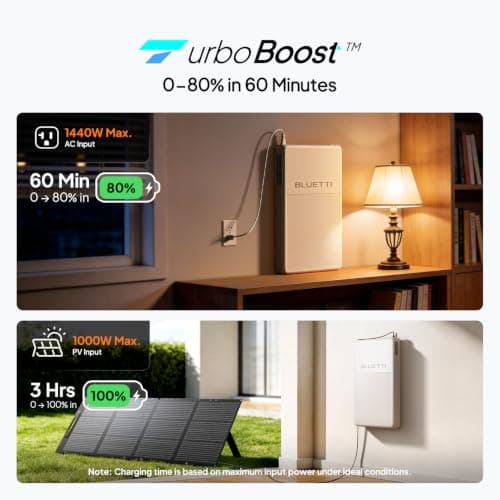
Recharge speed is the second EcoFlow advantage and it matters more than it sounds. The DELTA 2 Max publishes 0-80% in 43 minutes. In a rolling outage where the grid comes back for an hour and then fails again, 43 minutes means you are full before the next interruption; 66 minutes means you are not. The same unit publishes 1,000 W of solar input, which is double what most 2 kWh units accept and is the difference between solar being a real recharge route and a trickle. The best solar panels for a power station covers the panel side of that, including the input ceiling you have to check first.
The honest caveat on EcoFlow's output figures: X-Boost, which produces the 3,400 W and 3,600 W surge numbers, works by reducing voltage to resistive loads. It will run a heater or a kettle the nominal rating would refuse. It is not a true inverter rating and it is not a motor-starting capability, and EcoFlow's own description supports reading it that way.
Where Jackery wins: weight, cycle life and the 12 kWh ceiling
Jackery's Explorer 2000 v2 is 39.5 lb for 2,042 Wh, against 50.7 lb for EcoFlow's DELTA 2 Max at 2,048 Wh. Eleven pounds sounds academic until the battery has to go up a flight of stairs, out to a porch, or into a car. The unit that stays in the basement because it is awkward to move is worth nothing in the room where the freezer is.
Cycle life is the second Jackery advantage, and it is the one that decides the ten-year cost. The HomePower 2000 Plus v2 publishes over 6,000 LFP cycles with a stated 16-year design life; EcoFlow's DELTA 2 Max publishes 3,000 cycles to 80% capacity. For a battery that only discharges during outages, either is more than enough. For a battery you cycle daily — time-of-use shifting, a solar setup, a workshop — 6,000 against 3,000 is twice the service life for roughly comparable money. LiFePO4 vs lithium-ion explains why those numbers are so much higher than a laptop's.
The third advantage is the ceiling. Jackery's HomePower expands to 12 kWh; EcoFlow's DELTA 2 Max expands to 6 kWh. If your plan is to start with one battery and add capacity as the budget allows, Jackery's path runs twice as far before you have to replace the hardware rather than extend it. Be clear-eyed about the cost: each expansion battery is priced like a complete smaller unit, so 12 kWh is a destination rather than a near-term option.
Jackery's Priority Routing on the HomePower is the one feature on either side that behaves like a backup system rather than a large extension cord: it keeps essential circuits fed as capacity falls instead of running everything until nothing runs. How home battery backup works covers what that implies for installation.
Where neither brand wins
Both ranges stop at the same wall, and no amount of comparing them moves it. Every unit here publishes 2,400 W or less of true inverter output, and none publishes a 240 V output. That rules out the same list on both sides: a well pump, a central air compressor, an electric water heater, an electric range, a well-pump-fed shower — anything with a large motor or a hard-wired 240 V circuit.
If your essential list includes a well pump, neither brand's portable units are the answer and the comparison is moot. Home battery backup vs generator works through that properly, and the best home backup batteries includes the two units in this registry that do publish 240 V output — neither of which is a Jackery or an EcoFlow.
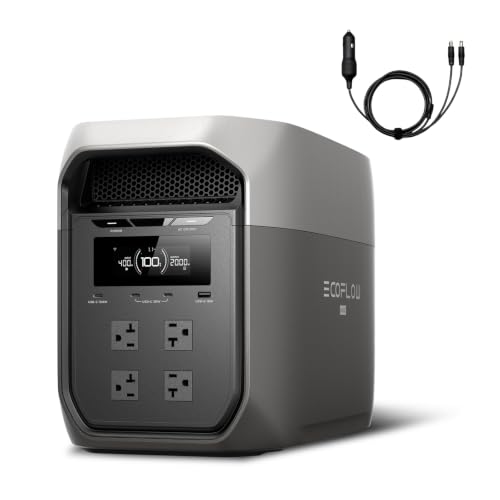
- Capacity
- 2,048 Wh
- AC output
- 2,400 W / 3,400 W boost
- Switchover
- Under 10 ms (mfr)
#1 · UPS-grade switchover for a fridge
EcoFlow DELTA 3 Max
The best battery here for keeping specific things running without interruption — the sub-10 ms transfer is a real functional difference, not a spec-sheet flourish.
#ad Price as of November 19, 2026; it may have changed since. How we are funded.
Why we picked it
- A sub-10 ms switchover means plugged-in equipment never notices the outage — this is what makes it genuinely usable for a fridge, a modem or a home office
- 3,400 W in X-Boost handles appliances the 2,400 W rating would reject
- Usually cheaper than the DELTA 2 Max it replaces
Good to know
- EcoFlow states this version takes no expansion batteries, so 2,048 Wh is the ceiling — the older DELTA 2 Max reaches 6 kWh
Published specification & our scoring
- 2,048 Wh LFP battery, 2,400 W output (manufacturer)
- Up to 3,400 W continuous in X-Boost mode (manufacturer)
- Under 10 ms transfer time for home backup (manufacturer)
- 0-80% in 1.13 hours with X-Stream charging (manufacturer)
- Manufacturer states a decade of daily use and a 5-year service commitment
- Published weight 45 lb; 19.44 x 12 x 9.4 in. Current listing adds a cigarette-to-DC5521 adapter cable
- Usable capacity
- 9
- Output ceiling
- 8
- UPS behavior
- 10
- Recharge speed
- 8
- Cycle life
- 9
- Value
- 9
Specification figures are the manufacturer’s published values. Scores are our editorial judgment from those figures and are never published as structured review data — how we pick.
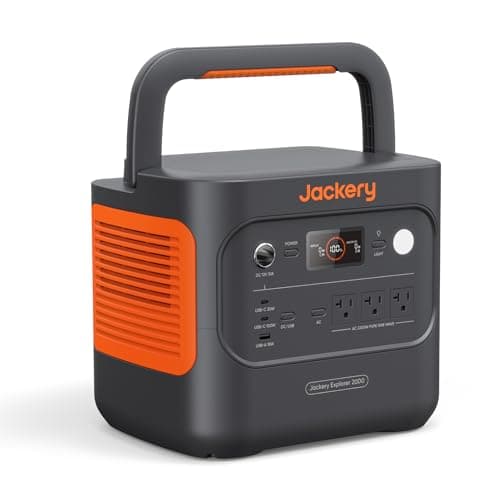
- Capacity
- 2,042 Wh
- AC output
- 2,200 W
- Weight
- 39.5 lb
#2 · The default 2 kWh home backup battery
Jackery Explorer 2000 v2
The most sensible battery backup for most homes: enough capacity to carry a fridge and electronics through a typical outage, indoors, silently.
#ad Price as of November 19, 2026; it may have changed since. How we are funded.
Why we picked it
- 2,042 Wh runs a modern fridge for roughly a day and a half of cycling — the single most useful thing a battery does in an outage
- 39.5 lb for 2 kWh is genuinely carryable by one person, which no generator at equivalent usefulness is
- Zero exhaust means it runs indoors, which is the entire point versus a generator
- 66 minutes to 80% means you can top it up fast from a generator or during a brief grid restoration
Good to know
- Costs about the same as a 9,500-running-watt dual fuel generator with ten times the output
Published specification & our scoring
- 2,042 Wh capacity, 2,200 W total AC output across three AC ports (manufacturer)
- 0-80% in 66 minutes on AC fast charging (manufacturer)
- LiFePO4 battery rated for up to 10 years (manufacturer)
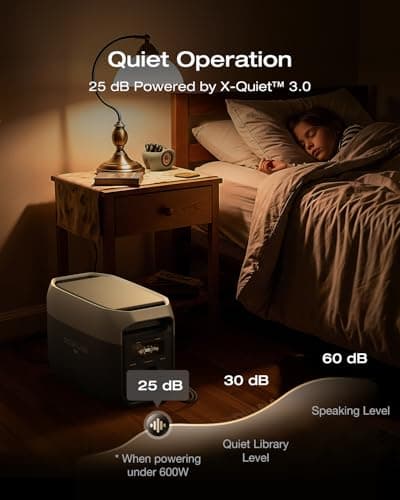
- Silent Charging Mode under 30 dB (manufacturer)
- Published weight 39.5 lb — manufacturer states it is the lightest 2 kWh unit
- App control
- Usable capacity
- 9
- Output ceiling
- 7
- Recharge speed
- 10
- Cycle life
- 9
- Portability
- 9
- Value
- 9
Specification figures are the manufacturer’s published values. Scores are our editorial judgment from those figures and are never published as structured review data — how we pick.
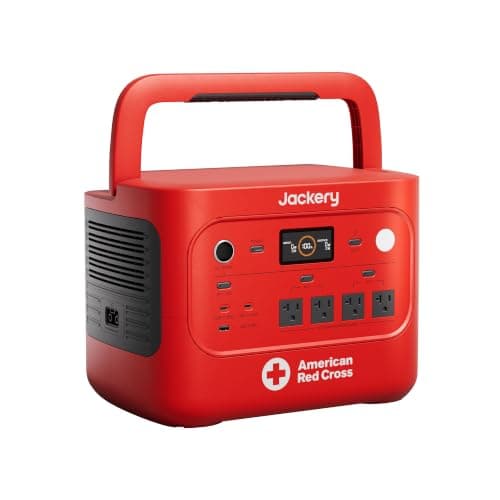
- Capacity
- 2,048 Wh (to 12 kWh)
- AC output
- 2,400 W
- Cycles
- 6,000+ LFP (mfr)
#3 · Expandable whole-circuit backup
Jackery HomePower 2000 Plus v2
The right battery if you intend to grow the system: start at 2 kWh, add capacity as budget allows, and keep the same hardware.
#ad Price as of November 19, 2026; it may have changed since. How we are funded.
Why we picked it
- Expandable to 12 kWh means you can start at one battery and grow into genuine multi-day capacity
- 6,000 cycles is double what most LiFePO4 power stations claim
- Priority Routing is the feature that makes a battery behave like a backup system rather than a big extension cord
Good to know
- Expansion batteries cost as much as a complete smaller unit each — the 12 kWh figure is an expensive destination
Published specification & our scoring
- 2,048 Wh expandable to 12 kWh, 2,400 W output (manufacturer)
- 6,000+ LFP cycles; manufacturer states a 16-year design life
- Smart Energy Management with Priority Routing to keep essential circuits running (manufacturer)
- Manufacturer states it is the lightest expandable 2 kWh system and 34% lighter than the previous generation
- Published weight 40.6 lb
- Usable capacity
- 9
- Expandability
- 10
- Output ceiling
- 7
- Cycle life
- 10
- Portability
- 9
- Value
- 7
Specification figures are the manufacturer’s published values. Scores are our editorial judgment from those figures and are never published as structured review data — how we pick.
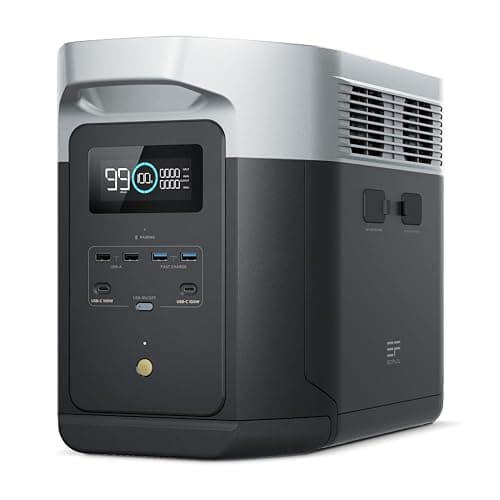
- Capacity
- 2,048 Wh (to 6 kWh)
- AC output
- 2,400 W
- Outlets
- 15
#4 · Most outlets, expandable to 6 kWh
EcoFlow DELTA 2 Max
The best choice if solar recharging is part of your plan: 1,000 W of solar input and a 43-minute AC recharge make it the hardest unit here to actually run flat.
#ad Price as of November 19, 2026; it may have changed since. How we are funded.
Why we picked it
- 43 minutes to 80% is the fastest recharge here — it means a two-hour window of restored grid power refills it completely
- 1,000 W of solar input is double what most 2 kWh units accept, which is the difference between solar being useful and decorative
- 15 outlets means no adapter juggling in the dark
Good to know
- 50.7 lb — the heaviest 2 kWh unit here
Published specification & our scoring
- 2,048 Wh, 2,400 W output, 15 outlets (manufacturer)
- 0-80% in 43 minutes combining up to 1,000 W solar with AC input (manufacturer)
- LFP chemistry rated 3,000 cycles to 80% capacity (manufacturer)
- Expandable from 2 kWh to 6 kWh with up to two extra batteries (manufacturer)
- Published weight 50.7 lb
- Usable capacity
- 9
- Recharge speed
- 10
- Solar input
- 10
- Output ceiling
- 7
- Cycle life
- 8
- Value
- 8
Specification figures are the manufacturer’s published values. Scores are our editorial judgment from those figures and are never published as structured review data — how we pick.
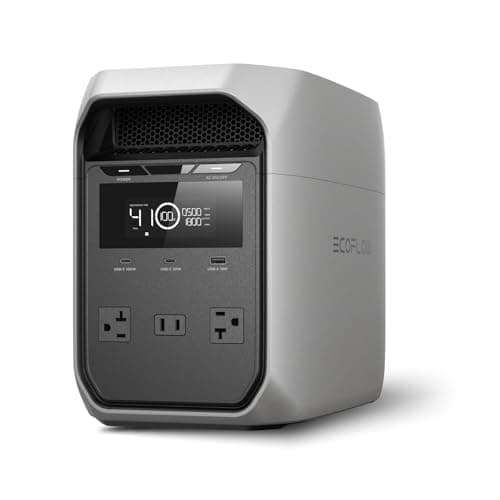
- Capacity
- 1,024 Wh
- AC output
- 1,800 W / 3,600 W surge
- Switchover
- Under 10 ms (mfr)
#5 · Best value 1 kWh with UPS
EcoFlow DELTA 3 Classic
The best-value battery on the site: UPS-grade switchover, 1,800 W and a 45-minute recharge for roughly half what the 2 kWh units cost.
#ad Price as of November 19, 2026; it may have changed since. How we are funded.
Why we picked it
- UPS behavior at a 1 kWh price point — you can put the fridge or the home office behind it permanently
- 1,800 W continuous is higher than Jackery's 1,500 W at similar capacity
- 45 minutes to 80% and 26.7 lb
Good to know
- 1,024 Wh is a single night of fridge duty, not a weekend
Published specification & our scoring
- 1,024 Wh, 1,800 W output with 3,600 W surge via X-Boost (manufacturer)
- 0-80% in 45 minutes with X-Stream AC charging (manufacturer)
- Under 10 ms UPS switchover (manufacturer)
- LiFePO4 cells rated for 10+ years of daily use, EV-grade cell-to-chassis design (manufacturer)
- Published weight 26.7 lb
- Usable capacity
- 6
- Output ceiling
- 7
- UPS behavior
- 10
- Recharge speed
- 10
- Portability
- 9
- Value
- 10
Specification figures are the manufacturer’s published values. Scores are our editorial judgment from those figures and are never published as structured review data — how we pick.
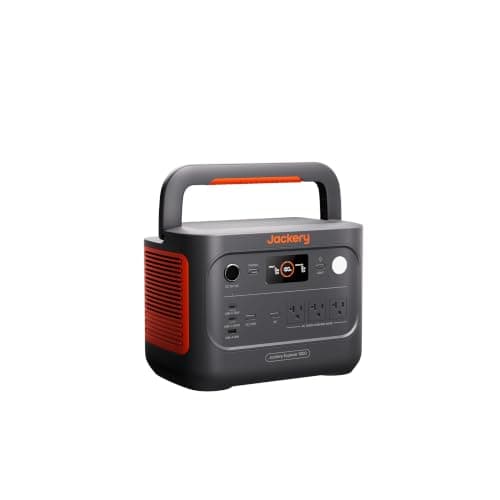
- Capacity
- 1,070 Wh
- AC output
- 1,500 W / 3,000 W surge
- Weight
- 23.8 lb
#6 · A fridge overnight, nothing heavier
Jackery Explorer 1000 v2
The right size for the job most people actually want: a refrigerator and the phones carried through the night, at 23.8 lb and a full recharge in an hour.
#ad Price as of November 19, 2026; it may have changed since. How we are funded.
Why we picked it
- The 3,000 W surge rating is what lets it start a fridge compressor — the figure that actually matters, and many rivals understate it
- 23.8 lb is carry-it-upstairs light
- One hour to full is faster than most units twice its price
Good to know
- 1,070 Wh is roughly 15-20 hours of fridge cycling, not multiple days
Published specification & our scoring
- 1,070 Wh capacity, 1,500 W AC output with 3,000 W surge peak (manufacturer)
- 0-100% in one hour with emergency charging (manufacturer)
- LFP battery holding over 70% of original capacity after its rated life (manufacturer)
- Two USB-C, one USB-A, one DC car port, three pure sine wave AC ports, LED lights
- App control with a 30 dB quiet charging mode
- Published weight 23.8 lb
- Usable capacity
- 6
- Output ceiling
- 6
- Recharge speed
- 10
- Cycle life
- 9
- Portability
- 10
- Value
- 9
Specification figures are the manufacturer’s published values. Scores are our editorial judgment from those figures and are never published as structured review data — how we pick.
The matchups, model by model
At 2 kWh: Explorer 2000 v2 vs DELTA 3 Max
This is the matchup most buyers are actually in. The Jackery publishes 2,042 Wh, 2,200 W, 0-80% in 66 minutes, 39.5 lb and a 30 dB silent charging mode. The EcoFlow publishes 2,048 Wh, 2,400 W with 3,400 W in X-Boost, a sub-10 ms transfer time, 0-80% in 1.13 hours and no weight at all on its listing.
Pick the EcoFlow if the battery will live in one place behind your important loads — the transfer time earns its keep every time the grid blinks. Pick the Jackery if it will move around the house, or if you want the published silent-charging behavior for a bedroom. Capacity is a wash and you should not let a 6 Wh difference decide anything.
At 1 kWh: Explorer 1000 v2 vs DELTA 3 Classic
The EcoFlow wins this one more clearly. The DELTA 3 Classic publishes 1,024 Wh, 1,800 W continuous, 3,600 W surge, a sub-10 ms UPS switchover and 0-80% in 45 minutes at 26.7 lb. The Explorer 1000 v2 publishes 1,070 Wh, 1,500 W continuous, 3,000 W surge and a full charge in an hour at 23.8 lb.
Jackery is 2.9 lb lighter and holds 46 more watt-hours. EcoFlow gives you 300 W more continuous output and UPS behavior at the same capacity class. At this size, where the realistic job is the refrigerator and the devices, the extra 300 W and the switchover are worth more than three pounds. The best budget power stations covers the tier below this one.
Expandable: HomePower 2000 Plus v2 vs DELTA 2 Max
Jackery wins the expandable matchup on paper and it is not close: 12 kWh against 6 kWh, 6,000+ cycles against 3,000, 40.6 lb against 50.7 lb, plus Priority Routing. EcoFlow's answer is speed — 43 minutes to 80% and 1,000 W of solar input, both best in this registry.
Which matters depends on how the battery gets refilled. If you have panels or a generator and want the fastest possible turnaround, the DELTA 2 Max is genuinely the hardest unit here to run flat. If you are building toward multi-day capacity and want the longest-lived hardware, the HomePower is the better foundation. Power station vs generator cost of ownership puts numbers on which of those two plans is cheaper over a decade.
The verdict
For most people buying one battery for home backup, EcoFlow is the better choice, and the sub-10 millisecond switchover is the reason. It converts the product from something you deploy during an outage into something that is already working when the outage starts, and that is a functional difference rather than a specification flourish. The DELTA 3 Max is the pick at 2 kWh and the DELTA 3 Classic is the best value on this site at 1 kWh.
Jackery is the better choice in three specific situations, and they are common enough to matter: you will carry the battery regularly, you intend to expand past 6 kWh, or you will cycle it daily rather than only in outages. In all three the weight, the 12 kWh ceiling and the 6,000-cycle rating decide it, and no EcoFlow unit in this registry answers them.
What neither brand does is replace an engine. If the honest essential list includes a well pump, central air or anything hard-wired at 240 V, the comparison to be having is a battery against a generator, not Jackery against EcoFlow. If you are also weighing Bluetti, Bluetti vs Jackery for home backup is the third side of that triangle — and no unit across those three brands publishes a 240 V output — on this site only Anker's SOLIX F3800 Plus does.
In short
Our recommendation
Jackery vs EcoFlow
9.4/10EcoFlow DELTA 3 Max
The best battery here for keeping specific things running without interruption — the sub-10 ms transfer is a real functional difference, not a spec-sheet flourish.
Runner-up
9.4/10Jackery Explorer 2000 v2
The most sensible battery backup for most homes: enough capacity to carry a fridge and electronics through a typical outage, indoors, silently.
#ad Price as of November 19, 2026; it may have changed since. How we are funded.
Questions people actually ask
Is Jackery or EcoFlow better for home backup?
EcoFlow for most single-battery purchases, because it publishes a sub-10 millisecond UPS switchover on the DELTA 3 Max and DELTA 3 Classic and Jackery publishes no transfer time for the units here — which means EcoFlow can sit permanently behind a fridge, a modem or a computer. Jackery is better if you will carry the battery often, want to expand past 6 kWh, or will cycle it daily.
Which recharges faster, Jackery or EcoFlow?
EcoFlow. The DELTA 2 Max publishes 0-80% in 43 minutes and the DELTA 3 Classic publishes 45 minutes, against 66 minutes for Jackery's Explorer 2000 v2. Jackery's Explorer 1000 v2 publishes a full charge in one hour, which is competitive at that capacity. The EcoFlow DELTA 3 Max is the exception on its own side at 1.13 hours to 80%.
Which lasts longer, a Jackery or an EcoFlow battery?
On published figures, Jackery: the HomePower 2000 Plus v2 states over 6,000 LFP cycles and a 16-year design life, against 3,000 cycles to 80% capacity for EcoFlow's DELTA 2 Max. Be careful comparing the DELTA 3 units, which publish a design life in years rather than a cycle count — a years claim and a cycle claim are not the same thing.
Can a Jackery or EcoFlow run a well pump?
No. Every Jackery and EcoFlow unit in this registry publishes 2,400 W or less of true inverter output and none publishes a 240 V output, and a well pump's starting surge is beyond both. EcoFlow's X-Boost surge figures work by reducing voltage to resistive loads and do not apply to motors. A well pump needs a generator.
What does EcoFlow's 10 ms switchover actually do?
It lets the unit act as an uninterruptible power supply. Equipment plugged into it stays powered through the grid failure with a gap too short to notice, so a computer does not reboot, a modem does not drop and a fridge compressor is not interrupted mid-cycle. It only works if the equipment is already plugged into the battery before the outage.
Is a bigger EcoFlow or two smaller Jackerys better?
One larger unit, in almost every case. Two batteries cannot pool their capacity — each one powers only what is plugged into it, so you end up moving appliances between them. The exception is deliberately splitting duty, for example one unit permanently behind the refrigerator and a small one upstairs for devices and a CPAP.
Do Jackery and EcoFlow solar panels work on each other's batteries?
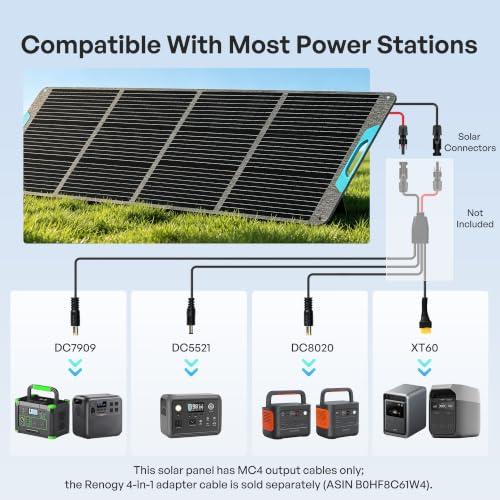
Sometimes, and you have to check three things rather than one: the connector, the input voltage and current range, and the battery's maximum solar input wattage. Third-party MC4 panels are often the more flexible route. Jackery states outright that its SolarSaga 100W Air is not compatible with its own Explorer 300, which is a good reminder that a plug fitting proves nothing.
Sources
- Eugene Water & Electric Board — Generator Sizing ConsiderationsPublished appliance running and additional-starting watt figures used in the load arithmetic on this page.
- US Consumer Product Safety Commission — Portable Generator Information CenterThe placement and carbon monoxide guidance referenced wherever this page compares indoor and outdoor operation.
Read next
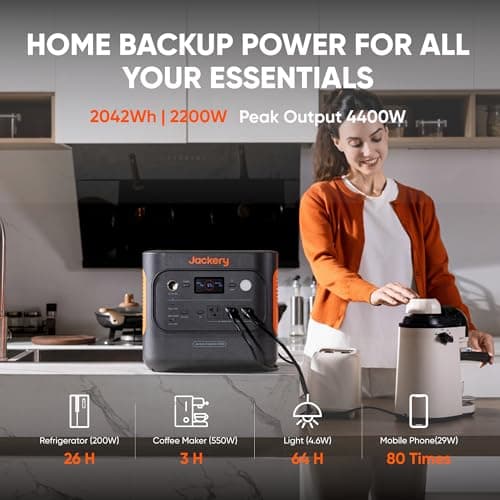
Best Overall Power Station
The Best Home Backup Power Stations
Battery power stations ranked for home backup on surge, capacity, recharge speed and cycle life.
Top pick · Jackery Explorer 2000 v2
$999.00See the Explorer 2000 v2 on Amazon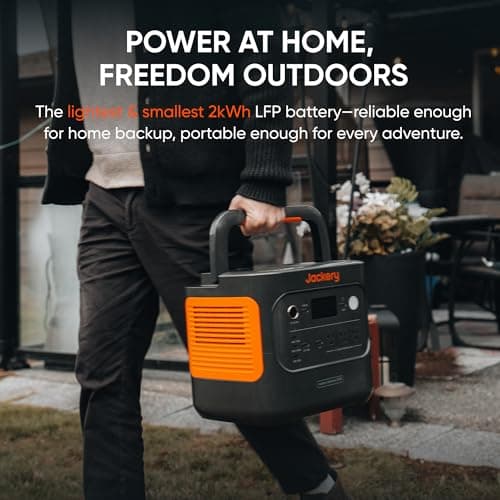
Battery vs Engine
Portable Power Station vs Generator
Battery against generator on surge capability, runtime, placement and cost, with the two facts that decide it.
Best Solar Panel
The Best Solar Panels for a Power Station
Nine standalone portable solar panels ranked on rated watts per dollar, published weather protection and connector fit — with the arithmetic for how many you actually need.
Top pick · Renogy 200W Portable Solar Panel (RPP200EF-SE)
$252.97See the 200W Portable Solar Panel (RPP200EF-SE) on Amazon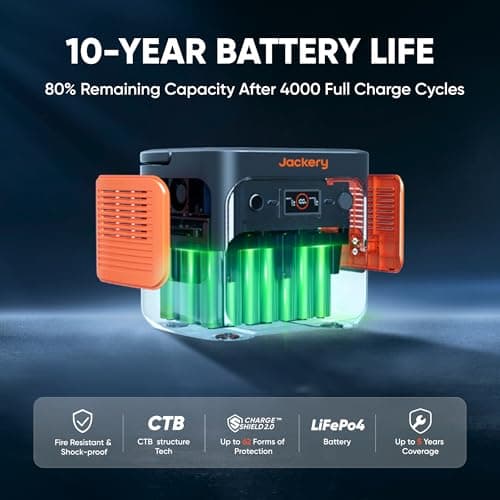
Review
Jackery for Home Backup
Jackery's Explorer and HomePower lines for home backup, with published capacity, cycle life and expansion figures.
Review
EcoFlow DELTA for Home Backup
EcoFlow's DELTA 2 Max, DELTA 3 Max and DELTA 3 Classic compared, including what X-Boost can and cannot do.
Bluetti vs Jackery
Bluetti vs Jackery for Home Backup
Bluetti against Jackery on the published figures that decide a home backup purchase: UPS transfer time, solar input ceiling, standby draw, weight, cycle life and the expansion path.