Comparisons
Solar Generator vs Inverter Generator
A solar generator is a capacity. An inverter generator is a supply. Almost every disagreement about these two is really an argument about the length of the outage.
Written byMike M.
Published
Disclosure: we earn a commission on purchases made through links on this page, at no cost to you. It does not affect what we recommend or what we say about it — how we are funded.
The short answer
A solar generator is a battery with panels: silent, emission-free, usable indoors, and limited to the energy it holds — typically 1 to 2.7 kWh in this registry, refilled slowly from the sun. An inverter generator makes power continuously while it has fuel, at 3,600 to 4,000-plus running watts on the popular models, as quietly as a published 52 dBA, but it burns fuel, produces carbon monoxide and must stay outdoors. For an outage of hours, the solar generator is usually the better experience. For an outage of days with a real load, the inverter generator is the one that is still working.
The naming does most of the damage here. A solar generator generates nothing — it is a portable power station sold with panels, and the panels refill it rather than power the house. Once you read it as a capacity rather than a supply, the comparison becomes straightforward.
The figures side by side
| Solar generator | Inverter generator | |
|---|---|---|
| What it holds | 1,152-3,014.4 Wh published in this registry | Nothing — it makes power while fueled |
| Continuous output | 550-2,400 W published | 1,500-13,000 running watts published |
| Refill | Solar, slowly; AC fast if there is a grid | Fuel, in minutes |
| Noise | Silent | As low as 52 dBA published (Westinghouse) |
| Carbon monoxide | None | Yes — outdoors only, 20 ft, per CPSC |
| Indoors | Yes | Never |
| Maintenance | None between outages | Oil, fuel, stabilizer, test runs |
| Cold start | Unaffected | Harder as temperature drops |
What the solar half actually delivers
This is where the category oversells itself, so the published numbers are worth reading carefully. EcoFlow publishes a solar-only charge of 11.6 hours with one panel, or 5.8 hours with both, for the DELTA 2 Max with 440 W of panel in the box. Bluetti publishes 2.8 to 3.3 hours solar-only for the AC180 at its 500 W input ceiling.
Those are good figures, and they are quoted in ideal conditions. A panel at an imperfect angle, in winter, under cloud, produces a fraction of its rating — the DOE's own published point is that solar cells work best at low temperatures, which is one of the few things working in your favor during a winter outage. The honest planning assumption is that solar turns a one-day battery into a several-day battery, not that it refills one every day.
What the inverter generator gives up, and what it does not
An inverter generator is the quiet, fuel-efficient end of the engine category. Westinghouse publishes as low as 52 dBA on the iGen5000c and iGen2550DFc, and 18 hours of runtime from a 3.4-gallon tank on the iGen5000c — a figure a conventional machine does not approach, because the engine throttles to the load instead of holding a fixed speed.
What it does not give up is output. The iGen5000DFc, the Champion 4,500 W and the WEN DF680iX produce their rated power for as long as there is fuel in the tank, which no battery in this registry can do. That is the entire argument for owning one.
The short answer
One of each, ranked
| # | Product | Best for | Score | Price |
|---|---|---|---|---|
| 1 | 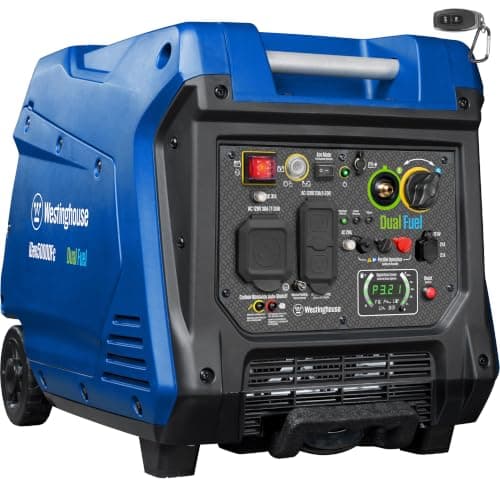 Westinghouse iGen5000DFc 5,000W Dual Fuel Inverter The quietest way to get around 4,000 running watts on either fuel, provided you are running cords rather than a transfer switch. | Quietest dual fuel at 4,000 running watts | 9.3/10 | $999.00 |
| 2 | 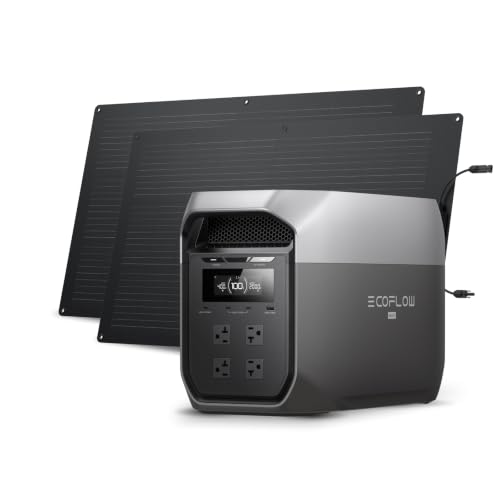 EcoFlow DELTA 3 Max + 2x100W Solar The best-rounded 2 kWh kit: a current-generation station, a 1.13 hour AC recharge and a sub-10 ms handover that keeps the fridge running through the cut itself, with two 100 W panels in the box. | A 2 kWh kit that rides through the cut | 9.0/10 | $1,229.00 |
| 3 | 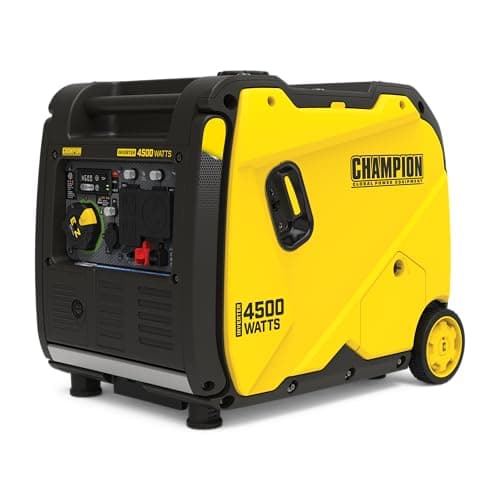 Champion 4,500W RV Ready Inverter The best balance of quiet, clean power and real output for cord-based backup: enough for the essentials, under 3% THD, half the price of the Honda equivalent. | Quiet backup at a sane price | 9.2/10 | $749.00 |
| 4 | 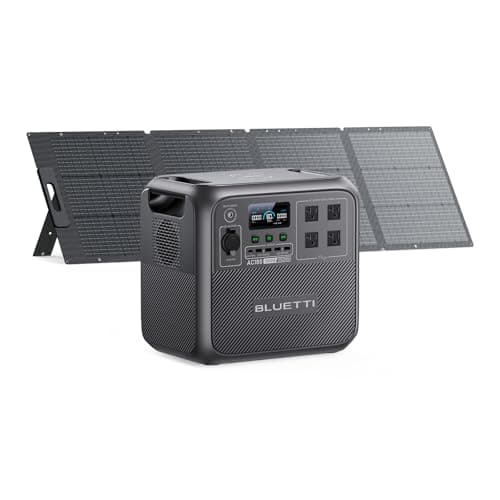 Bluetti AC180 + 200W Solar The budget entry into solar backup that still carries a refrigerator: 1,152 Wh, 1,800 W and a panel in the box, for well under the 2 kWh kits. | Cheapest solar kit that runs a fridge | 8.8/10 | $899.00 |
| 5 | 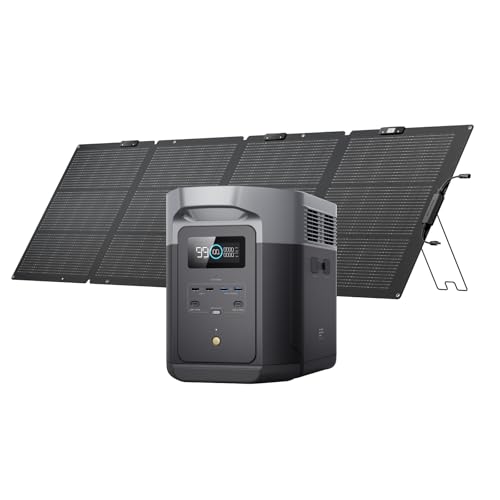 EcoFlow DELTA 2 Max + 220W Solar The right solar kit if you intend to expand: 1,000 W of solar headroom, 6 kWh of battery headroom and the fastest published recharge here, all from the same hardware. | Fastest solar recharge | 9.0/10 | $1,629.00 |
#ad Amazon prices as of November 19, 2026; they may have changed since. Scores are our editorial judgment from published specifications, not test results — how we pick. How we are funded.
One of each, at the sensible size
Quietest dual fuel at 4,000 running watts
Westinghouse iGen5000DFc 5,000W Dual Fuel Inverter
A 2 kWh kit that rides through the cut
EcoFlow DELTA 3 Max + 2x100W Solar
Cheapest solar kit that runs a fridge
Bluetti AC180 + 200W Solar
Quiet backup at a sane price
Champion 4,500W RV Ready Inverter
A dual fuel inverter at 4,000 running watts, the 2 kWh solar kit, the cheapest solar kit that runs a refrigerator, and the quiet 3,500-watt-class default. Full rankings on best quiet inverter generators and best solar generators.
Which one, for which outage
- Outages of a few hours, a few times a year — solar generator. It is silent, it needs no fuel stored, it works from indoors, and it is ready without you having tested anything.
- Outages of days, with a refrigerator, a furnace blower and a well pump — inverter generator. A 2 kWh battery does not carry that load for days and no amount of panel changes it.
- Apartment, condo, or no 20-foot clearance — solar generator, and the decision is made for you by the placement rule, not by preference. The best generator for an apartment explains why that page recommends not buying one.
- Both — the combination most people with real outages end up at. The generator carries the day's load and tops up the battery; the battery carries the night silently. That is also the answer to the noise problem described on can you run a generator overnight.
If the comparison you actually want is against a conventional open-frame machine rather than an inverter one, inverter versus conventional covers that, and portable power station versus generator covers the battery side without the panels.
For the engine half of this comparison in more depth, the inverter generator hub sets out what an inverter generator is, why the engine speed follows the load, and how the models in this registry compare on published specifications.
In short
Our recommendation
Top pick
9.3/10Westinghouse iGen5000DFc 5,000W Dual Fuel Inverter
The quietest way to get around 4,000 running watts on either fuel, provided you are running cords rather than a transfer switch.
Runner-up
9.0/10EcoFlow DELTA 3 Max + 2x100W Solar
The best-rounded 2 kWh kit: a current-generation station, a 1.13 hour AC recharge and a sub-10 ms handover that keeps the fridge running through the cut itself, with two 100 W panels in the box.
#ad Price as of November 19, 2026; it may have changed since. How we are funded.
Questions people actually ask
What is the difference between a solar generator and an inverter generator?
A solar generator generates nothing — it is a battery with panels, holding a fixed amount of energy that the sun refills slowly. An inverter generator is an engine that makes power continuously while it has fuel. One is a capacity, the other is a supply, and that difference decides everything else.
Is a solar generator better than a gas inverter generator for home backup?
For short outages, usually — it is silent, needs nothing stored, and can sit indoors. For multi-day outages with a refrigerator, a furnace blower and a pump, no. The batteries in this registry hold 1,152 to 3,014.4 Wh, and no amount of panel turns that into days of a real household load.
How long does it take to recharge a solar generator from panels?
EcoFlow publishes no solar-only charge time for the two-panel DELTA 2 Max kit, and states the station accepts up to 1,000 W of panel; Bluetti publishes 2.8 to 3.3 hours for the AC180 at its 500 W ceiling. Those are ideal-condition figures — in winter, at an imperfect angle, plan on solar extending a battery rather than refilling it daily.
Can I run a solar generator indoors?
Yes. It has no engine, no exhaust and no carbon monoxide, which is the single clearest difference between the two. An inverter generator can never be run inside a home, garage, basement, crawlspace, shed or other enclosed space, per the CPSC.
Should I buy both a solar generator and an inverter generator?
It is where most people with genuinely long outages end up. The engine carries the daytime load and tops the battery back up; the battery carries the night silently, which also solves the noise problem that night-time generator running creates with neighbors and local ordinances.
Sources
- US Consumer Product Safety Commission — Portable Generator Information CenterThe placement and carbon monoxide guidance referenced wherever this page compares indoor and outdoor operation.
- US Department of Energy — Solar and Resilience BasicsPublished statement that residential solar panels alone are not enough for resilience because grid-tied systems switch off when grid power is lost, and that independent operation needs a properly configured inverter plus storage. Quoted directly on this page.
Read next
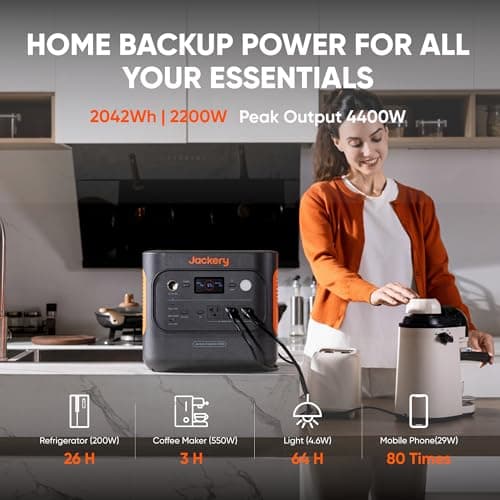
Battery vs Engine
Portable Power Station vs Generator
Battery against generator on surge capability, runtime, placement and cost, with the two facts that decide it.
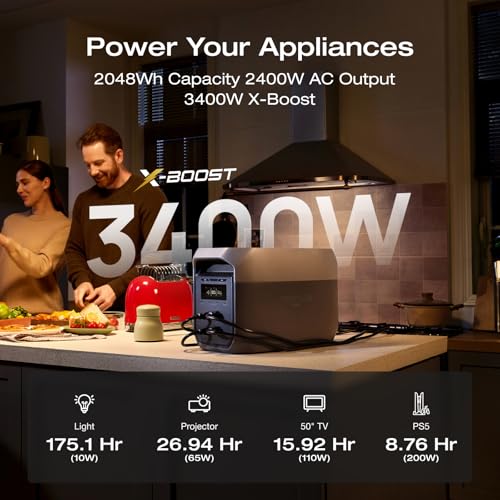
Comparison
Solar Generator vs Gas Generator
Solar kits against gas generators on refueling, output, surge capability and real-world panel performance.
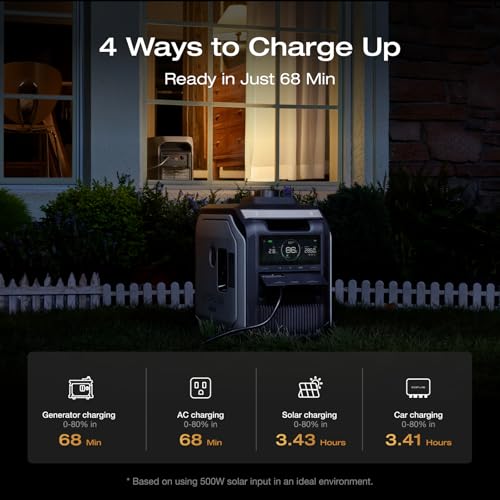
Best Solar Kit
Best Solar Generators for Home Backup
Battery-plus-panel kits ranked on solar input ceiling and capacity, with honest expectations for real-world panel output.
Top pick · EcoFlow DELTA 3 Max + 2x100W Solar
$1,229.00See the DELTA 3 Max + 2x100W Solar on Amazon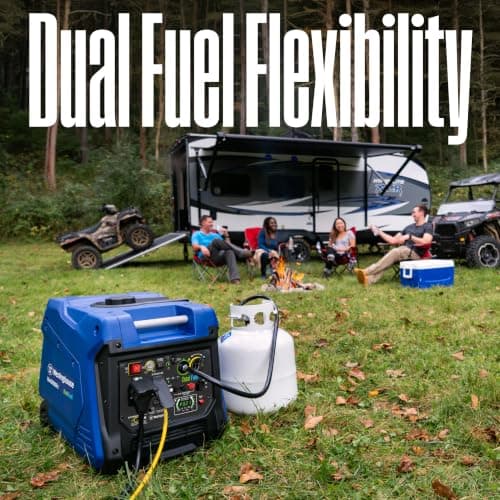
Best Quiet Inverter
Best Quiet Inverter Generators for Home Backup
Inverter generators ranked on published noise and THD figures, with the brands that publish no measurable claim named.
Top pick · Westinghouse iGen5000DFc 5,000W Dual Fuel Inverter
$999.00See the iGen5000DFc 5,000W Dual Fuel Inverter on Amazon23% off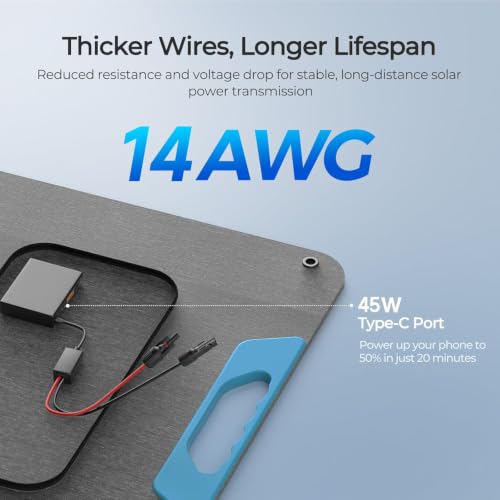
Guide
How Many Solar Panels Do You Need for a Power Station?
The published maximum solar input for every station in this registry, the derate arithmetic that turns rated watts into delivered watt-hours, and a worked panel count for each unit.