Outage Prep
How to Store a Generator When Not in Use
A backup generator spends 99% of its life in storage. Almost every failure to start is something that happened during that time.
Written byMike M.
Published
Disclosure: we earn a commission on purchases made through links on this page, at no cost to you. It does not affect what we recommend or what we say about it — how we are funded.
The short answer
- 1Deal with the fuel. Either run the carburetor dry using the fuel shutoff, or fill the tank and treat it with stabilizer. Do not leave it half full and untreated.
- 2Change the oil while the engine is warm, if it is due. Old oil sitting all winter absorbs moisture.
- 3Disconnect or tend the starting battery on electric-start machines, and charge it before winter.
- 4Store it dry, level, off the ground and covered — in an unheated shed or garage, never inside the living space.
- 5Run it under load for 30 minutes every few months. This is the step that actually keeps it working.
A home backup generator is an unusual machine in that its working life is almost entirely storage. It might run ten hours in a year and sit for the other 8,750. Every piece of storage advice below exists because something degrades during that sitting, and the failure always presents the same way: the day you need it, it will not start.
The fuel decision, which matters more than everything else combined
Gasoline is the problem. Modern pump fuel contains ethanol, which draws moisture out of the air; the fuel oxidizes, the ethanol and water can separate, and what is left deposits gums and varnish in the very small passages of a carburetor. Twelve months is enough to do it. The engine is not damaged — it simply will not run.
There are three legitimate ways to store a gasoline generator, and the one to avoid is the one most people default to.
| Approach | What you do | Verdict |
|---|---|---|
| Run it dry | Close the fuel shutoff and let the engine run until it stops | Best, where the machine has a shutoff |
| Full and stabilized | Fill the tank, add stabilizer, run it a few minutes to draw treated fuel into the carburetor | Good, and keeps fuel on hand |
| Half a tank, untreated | Nothing | The failure case. Air space plus ethanol plus time |
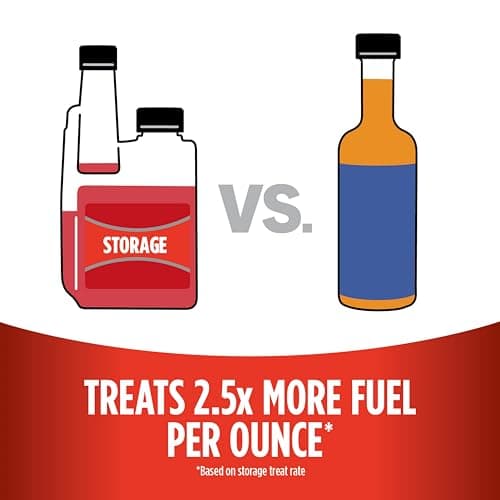
If you stabilize rather than run dry, two details matter. Add the stabilizer while the fuel is fresh — it prevents degradation, it does not reverse it. And run the engine for a few minutes afterward so treated fuel reaches the carburetor bowl, otherwise you have protected the tank and left untreated fuel in the part that actually clogs. STA-BIL's storage product states it keeps gasoline fresh for up to 24 months and protects the engine and fuel system from the effects of ethanol and non-ethanol fuels.
And the version of this problem that does not exist: propane. It does not oxidize, absorb moisture or leave varnish, and a dual fuel machine stored with its carburetor dry and a full tank beside it has no fuel-degradation failure mode at all. Is a dual fuel generator worth it makes that argument in full; for a machine that sits unused, it is the strongest one there is.
Oil, filters and the battery
Oil. If a change is due, do it going into storage rather than coming out of it, and do it while the engine is warm so the oil carries contaminants out with it. Fresh oil sits better than used oil: combustion by-products in old oil acidify slowly, and oil in a cold crankcase absorbs condensation regardless. What oil does a generator take covers viscosity and intervals.
Air filter. Check it rather than replacing it on principle, but do check it — a mouse will build a nest in an airbox over a summer, and that is a genuinely common discovery.
The starting battery, on electric-start machines, is the second most common failure after fuel. A lead-acid battery self-discharges in storage and discharges faster when cold, and a battery that was marginal in October is dead in January. Either disconnect it and charge it periodically, or leave a tender on it. DuroMax includes a battery tender with its iH series, which solves the problem by design; on machines without one, a trickle charger is a small purchase against a large annoyance.
Where to put it
Storage location requirements
- Dry
- Rain and snow off it entirely
- Level
- So oil sits where the dipstick reads it
- Off bare ground
- Pavers, a pallet, a shelf
- Ventilated if fueled
- Unheated shed or garage, not a basement
- Never
- Inside the living space, or near an ignition source
Requirements derived from how the machine and its fuel behave. A generator stored with gasoline in it is a fuel container as well as a machine, which is why the ventilation and ignition-source rows are there.
A close-fitting storage cover is the right product here — unlike a running canopy, a snug cover is exactly what you want on a machine that is switched off, because it keeps dust, pollen, rodents and UV off it. A 600D PVC polyester cover with stated dimensions does the job. The rule that goes with it: the storage cover comes off completely before you start the engine. The best generator covers explains why a running cover is a different shape of product.
The storage shelf
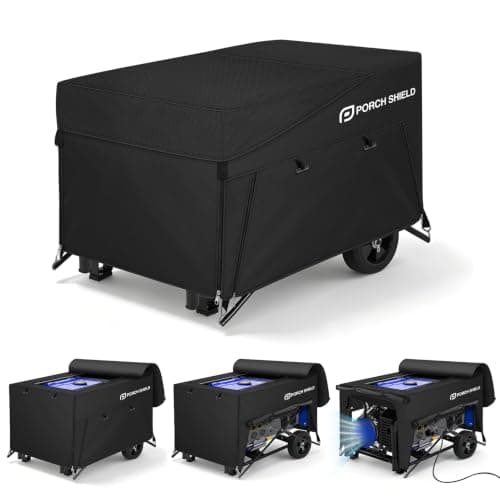
Cheapest cover with stated dimensions
Porch Shield Running Generator Cover, 36 x 28 x 20 in
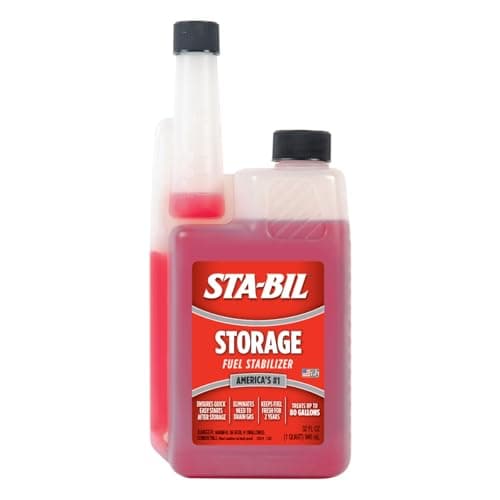
Keeping stored gasoline usable
STA-BIL Storage Fuel Stabilizer, 32 oz
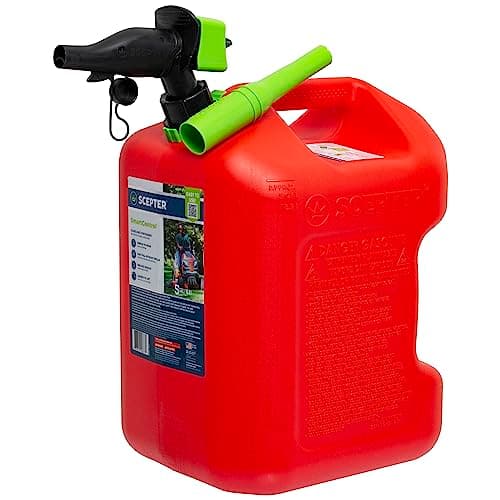
Pouring without spilling
Scepter 5 Gallon Gas Can, SmartControl Spout
A cover for the machine while it is off, stabilizer for the fuel that is going to sit, and a vented can so the stored gasoline you rotate annually is pourable without a spill.
Between storms versus long-term storage
These are different situations and the advice diverges. Between storms, during a season when outages are likely, you want the machine ready: fuel in it, treated, battery charged, cord and cover where you can find them in the dark. Running it dry every time would be the wrong trade — you would be sacrificing readiness for a problem that takes months to develop.
Long-term storage — out of season, or a machine you expect not to touch for six months or more — is when running the carburetor dry becomes the better choice, and when the battery should come off the machine or go on a tender. The dividing line is roughly a season.
Either way, the single highest-value habit is unchanged: run it under load for about half an hour every few months. That circulates fresh fuel through the carburetor, charges the battery, warms the engine enough to drive moisture out of the crankcase, and tells you the machine works while that is still merely inconvenient to discover. The generator maintenance schedule puts it into an annual routine.
Storage is the whole problem for a machine at a property you visit rarely: the best generator for a cabin ranks on exactly that. How long do portable generators last explains why storage rather than hours decides a backup machine's lifespan, and how to break in a new generator covers the first hours of a new one.
Questions people actually ask
How should I store a generator when not in use?
Deal with the fuel first — either run the carburetor dry with the fuel shutoff, or fill the tank and treat it with stabilizer. Then change the oil if due, charge or disconnect the starting battery, and store it dry, level, off the ground and covered in an unheated space. Run it under load for 30 minutes every few months.
Should I store a generator with gas in it?
Either full and stabilized, or empty with the carburetor run dry. The failure case is half a tank of untreated fuel: air space plus ethanol plus time is what produces the varnish that stops the engine starting. Add stabilizer while the fuel is fresh, then run the engine briefly so treated fuel reaches the carburetor.
How long can a generator sit without being started?
Mechanically, years. Practically, the fuel is the clock — about twelve months of untreated gasoline is enough to gum a carburetor, and a stored lead-acid battery self-discharges well before that. Running it under load every few months resets both clocks and verifies it still works.
Can I store a generator outside?
Covered and off the ground, yes — an unheated shed or garage is better. What you cannot do is leave it in weather uncovered, sitting on wet ground, or store it inside the living space of the house with fuel in it.
Can I leave a cover on a generator in storage?
Yes, and a snug storage cover is the right product for a machine that is switched off — it keeps dust, rodents and UV off. The rule is that it comes off completely before you start the engine. Running covers are a different design entirely: elevated canopies with open sides.
Do I need to remove the battery from a generator in storage?
Remove it or keep it charged. A lead-acid starting battery self-discharges in storage and loses capacity in cold, so a battery that seemed fine in autumn fails in a freeze. Either disconnect and charge it periodically or leave a tender on it — some machines, like DuroMax's iH series, include one.
Sources
- US Consumer Product Safety Commission — Portable Generator Information CenterThe placement, never-indoors and CO-alarm guidance this site repeats on every generator page.
- Ready.gov — Power OutagesFederal preparedness guidance on outage planning referenced in the checklist sections.
Read next
Guide
Generator Fuel Storage and Stabilizer
Fuel degradation, stabilizer shelf-life claims, safe storage quantities and containers, and the propane alternative.
Guide
Generator Maintenance Schedule
A maintenance schedule built around the real failure mode of a standby-duty generator: fuel, battery and the quarterly test run.

Guide
What Oil Does a Generator Take?
Generator oil by viscosity and temperature from published small-engine guidance, plus why a standby machine's interval runs on the calendar.

Guide
Generator Won't Start: What to Check
A generator that will not start, diagnosed in order: the switches, the fuel, the oil shutdown, the battery and the carburetor.
Best Running Cover
Best Generator Covers for Running in Rain
Running covers for generators ranked on published fit range, water shedding and setup — plus why a storage cover is not one.
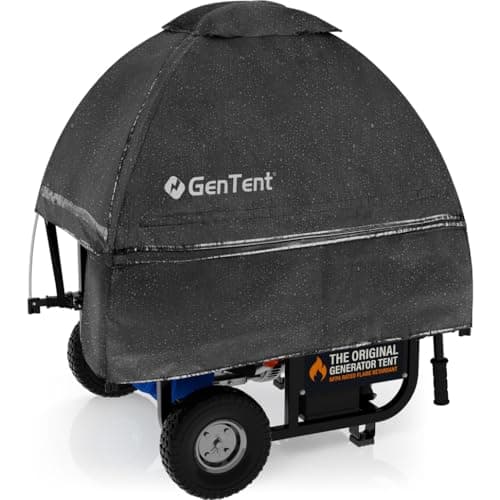
Top pick · GenTent Universal Open Frame Generator Tent
$159.99See the Universal Open Frame Generator Tent on Amazon