Model Reviews
Anker SOLIX for Home Backup
Anker publishes the longest cell life and the lowest idle draw in this registry — and a battery that does 240 volts.
Disclosure: we earn a commission on purchases made through links on this page, at no cost to you. It does not affect what we recommend or what we say about it — how we are funded.
The short answer
Anker's SOLIX S2000 is the one to buy for most home backup: 2,010 Wh, 1,500 W AC output, 314Ah LFP cells Anker rates at 10,000 cycles with a stated 15-year lifespan, and a published 6 W idle draw that the manufacturer says delivers up to 35 hours of fridge backup. The C1000 Gen 2 is the fast-recharge 1 kWh option at a published 49 minutes to full. The F3800 Plus publishes 3,840 Wh, 6,000 W of AC output and both 120 V and 240 V, which is what lets a battery feed panel circuits the way a generator does.
Anker arrived in this category later than Jackery, EcoFlow and Bluetti, and the line reads like a company that looked at the incumbents' spec sheets and picked different numbers to win on. It does not chase the highest capacity or the most outlets. It publishes the longest cell life, the lowest standby consumption and the fastest recharge in this registry — three specifications that matter far more for backup duty than for camping, which is a sensible bet.
The range, published side by side
| Model | Capacity | AC output | Cycles | Headline figure |
|---|---|---|---|---|
| SOLIX C1000 Gen 2 | 1,024 Wh | 2,000 W / 3,000 W peak | 4,000 to 80% | 49 min full recharge |
| SOLIX S2000 | 2,010 Wh | 1,500 W / 3,000 W peak | 10,000 | 6 W idle draw |
| SOLIX F3800 Plus | 3,840 Wh | 6,000 W, 120/240 V | 3,000+ to 80% | 3,200 W solar input |
Three units, three genuinely different jobs. That is unusual in this category, where ranges tend to be the same product at four capacities.
The 6 watt idle draw, which is the most underrated spec here
Every power station consumes power just being switched on — inverter standby, controls, the battery management system. On a camping trip that is irrelevant. On a battery sitting behind a refrigerator for three days it is the difference between the capacity you bought and the capacity you get.
Anker publishes a 6 W idle draw for the S2000 and attributes its stated up-to-35-hours of fridge backup to that plus 10% higher efficiency. Six watts over 24 hours is 144 Wh — about 7% of the S2000's 2,010 Wh capacity burned doing nothing. A unit drawing 20 W idle would burn 480 Wh in the same period, nearly a quarter of a 2 kWh battery, before the fridge has taken anything.
What idle draw costs over a three-day outage
- At 6 W (Anker's published figure)
- ~432 Wh over 72 h
- At 20 W
- ~1,440 Wh over 72 h
- S2000 usable capacity
- 2,010 Wh
Our arithmetic from Anker's published idle figure, shown so you can check it: watts times hours. The 20 W comparison row is an illustrative figure, not a measurement of any specific rival — most manufacturers do not publish an idle draw at all, which is the point.
That is why the S2000 is the top pick despite having the lowest AC output of any 2 kWh unit in this registry at 1,500 W. For the backup job most people actually have — a refrigerator, lights, a modem, phones, a CPAP — 1,500 W is enough and runtime is everything. How long will a power station run a fridge works that arithmetic out in full.
10,000 cycles, and whether it matters to you
Anker rates the S2000's 314Ah LFP cells at 10,000 cycles with a stated 15-year lifespan. For context in this registry: Jackery publishes 6,000+ cycles and a 16-year design life for the HomePower, and EcoFlow and Bluetti publish 3,000 cycles for their 2 kWh units. The C1000 Gen 2 publishes a different shape of claim — Anker's InfiniPower rating of at least 80% capacity after 4,000 cycles with a 10-year design life.
Here is the honest assessment: if you cycle this battery a handful of times a year during outages, 10,000 cycles is irrelevant — you will not reach 3,000 either, and every LFP unit in this registry will outlast your ownership. The figure earns its keep only if you intend to cycle daily, which means pairing it with solar for self-consumption rather than using it purely as an emergency reserve. If that is your plan, it is the strongest cycle rating available here. If it is not, do not pay extra for it.
Anker also states the S2000 is 30% smaller and 25% lighter than the industry-average 2 kWh unit. LiFePO4 vs lithium-ion covers why every unit in this line uses LFP chemistry and what that trades away.
The C1000 Gen 2: recharge speed as the feature
The C1000 Gen 2 publishes 1,024 Wh, 2,000 W output with a 3,000 W peak across 10 ports, a full recharge in 49 minutes at 1,600 W with HyperFlash, 14% smaller than the previous generation, and 24.9 lb.
Note the output: 2,000 W continuous from a 1 kWh unit is a higher sustained ceiling than the 2 kWh S2000's 1,500 W, and both publish the same 3,000 W peak. That inverts the usual relationship between capacity and output, and it means the C1000 Gen 2 will hold things the bigger battery will not — a microwave, a larger power tool, a space heater on low.
The 49-minute recharge is the real argument for it though, and it is specific to a particular kind of outage: one that flickers. If your grid comes back for an hour and goes away again, a unit that refills completely in under an hour is effectively a much larger battery than its watt-hours suggest. How to recharge a power station in an outage covers the alternatives when the grid stays down.
The F3800 and the 240 volt question
The F3800 Plus publishes 3,840 Wh, 6,000 W of AC output, 3,200 W of solar input across two MPPT inputs, expansion to a stated 26.9 kWh, dual-voltage 120 V and 240 V output — Anker cites powering a dryer — and compatibility with the Smart Generator 5500 for automatic start-stop runtime extension. The station is no longer listed on its own: the listing we link pairs it with Anker's Home Power Panel, so the panel's cost is in the price whether your installation needs it or not.
The 240 volt output is the thing almost no battery offers — nothing else in this registry publishes it — and it is what separates a power station from a backup *system*: it can feed panel circuits, including 240 V ones, the way a generator does. The auto start-stop generator pairing is the closest a battery gets to indefinite runtime.
The honest counterweights are substantial. It is very expensive — at this price you should genuinely compare it against a whole-house standby generator installation. At a published 135.6 lb it is a fixed installation rather than a portable device. And using the 240 V capability properly means an electrician and a compatible transfer arrangement, which is permanent wiring on the supply side of your panel and licensed work in most US jurisdictions. What a home battery backup system costs breaks out the four components that make up the real total.
What Anker does not publish
One gap worth knowing, because this site's practice is to name it rather than fill it in.
- No UPS switchover time on the F3800 Plus. The S2000 and the C1000 Gen 2 both publish under 10 milliseconds, as EcoFlow does for the DELTA 3 Max; Bluetti publishes a 10 ms DualGuard switch for the FridgePower. The F3800 Plus listing is the one that does not answer it, which matters most on the unit you would be most likely to leave permanently connected.
- Worth noting as a correction: the continuous watt figure and cycle rating the F3800 listing used to omit are both published on the current F3800 Plus listing — 6,000 W, and 3,000+ cycles to 80% capacity.
And the structural limit that applies to the whole line except the F3800 Plus: no 240 volt output, and output ceilings of 1,500 to 2,000 W. That rules out a well pump, central air or electric water heating regardless of capacity. The best home backup batteries ranks the field on exactly that axis.
Which Anker to buy
- SOLIX S2000 — the default. Longest runtime per watt-hour in this registry on published figures, from a 6 W idle draw and 10,000-cycle cells. Accept 1,500 W as the ceiling.
- SOLIX C1000 Gen 2 — cheaper, half the capacity, higher output ceiling at 2,000 W with a 3,000 W peak, and a published 49-minute recharge. The pick for flickering outages and for starting bigger things.
- SOLIX F3800 Plus — only if you need 240 V. Price it as the installed system it is, against a standby generator, not against the other batteries on this page.
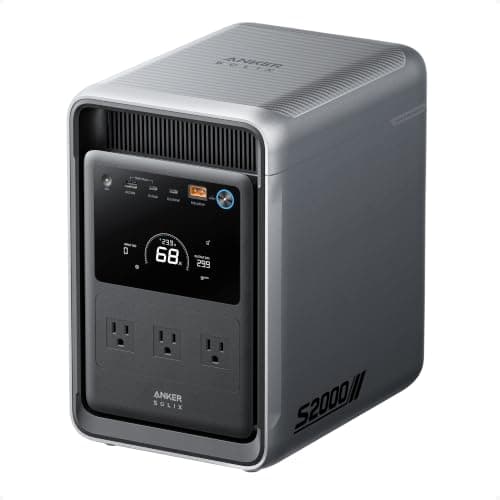
- Capacity
- 2,010 Wh
- AC output
- 1,500 W / 3,000 W peak
- Cycles
- 10,000 LFP (mfr)
#1 · Longest fridge runtime per watt-hour
Anker SOLIX S2000
The endurance choice: the lowest idle draw and the longest cycle life here, with an output ceiling deliberately traded away to get them.
#ad Price as of November 19, 2026; it may have changed since. How we are funded.
Why we picked it
- 10,000 cycles is more than three times what most LiFePO4 power stations claim — this is a buy-once battery
- A 6 W idle draw makes it one of the few units that is sensible to leave plugged in permanently
- The manufacturer's 35-hour fridge figure is the longest claim of any 2 kWh unit here
Good to know
- 1,500 W continuous is the lowest of the 2 kWh units — the 3,000 W peak starts a fridge, but sustained high loads are not what it is built for
Published specification & our scoring
- 2,010 Wh capacity, 1,500 W AC output with a 3,000 W peak (manufacturer)
- Manufacturer states up to 35 hours of fridge backup, from a 6 W idle draw and 10% higher efficiency
- 314Ah LFP cells rated 10,000 cycles with a stated 15-year lifespan (manufacturer)
- Manufacturer states it is 30% smaller and 25% lighter than the industry average 2 kWh unit
- Under 10 ms UPS switchover (manufacturer)
- Published weight 35.7 lb, 8.2 x 11.1 x 12.7 in
- Usable capacity
- 9
- Cycle life
- 10
- Standby efficiency
- 10
- Output ceiling
- 5
- Recharge speed
- 7
- Value
- 10
Specification figures are the manufacturer’s published values. Scores are our editorial judgment from those figures and are never published as structured review data — how we pick.
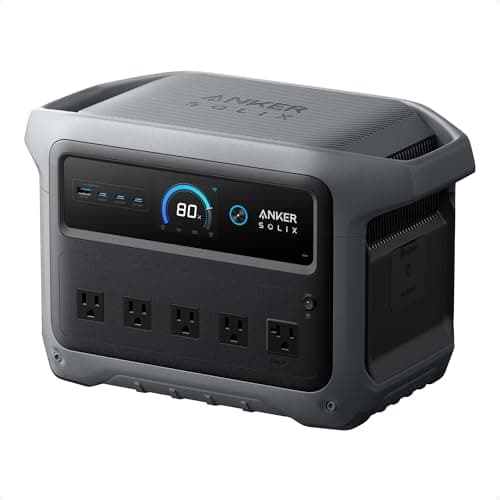
- Capacity
- 1,024 Wh
- AC output
- 2,000 W / 3,000 W peak
- Recharge
- 49 min (mfr)
#2 · Fastest 1 kWh recharge
Anker SOLIX C1000 Gen 2
The right 1 kWh battery if your problem is short high-draw bursts rather than long low-draw endurance — and the fastest refill here by a wide margin.
#ad Price as of November 19, 2026; it may have changed since. How we are funded.
Why we picked it
- 2,000 W continuous at 1 kWh is the highest output-to-capacity ratio here — it runs appliances other 1 kWh units refuse
- 49 minutes to full is the fastest recharge on the site
- 4,000 cycles with at least 80% remaining
Good to know
- 1,024 Wh at 2,000 W draw is about 30 minutes — high output and small capacity is a short-runtime combination
Published specification & our scoring
- 1,024 Wh capacity, 2,000 W output with 3,000 W peak across 10 ports (manufacturer)
- Full recharge in 49 minutes at 1,600 W with HyperFlash (manufacturer)
- InfiniPower: at least 80% capacity after 4,000 cycles, 10-year design life (manufacturer)
- Manufacturer states it is 14% smaller than the previous generation
- Under 10 ms UPS switchover (manufacturer)
- Published weight 24.9 lb
- Output ceiling
- 9
- Recharge speed
- 10
- Cycle life
- 10
- Usable capacity
- 6
- Portability
- 10
- Value
- 9
Specification figures are the manufacturer’s published values. Scores are our editorial judgment from those figures and are never published as structured review data — how we pick.
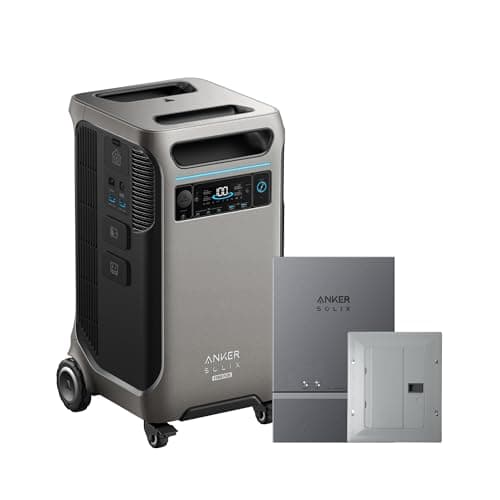
- Capacity
- 3,840 Wh
- AC output
- 6,000 W
- Voltage
- 120V and 240V
#3 · 240V loads plus generator pairing
Anker SOLIX F3800 Plus
The battery that can genuinely stand in for a generator on 240V circuits, with the registry's highest solar input ceiling, priced like the installed system it really is.
#ad Price as of November 19, 2026; it may have changed since. How we are funded.
Why we picked it
- 240V output at 6,000 W is what lets a battery feed panel circuits the way a generator does — almost nothing else in this class publishes it
- 3,840 Wh is nearly two days of fridge-plus-electronics duty
- 3,200 W of solar input is the highest here, so panels added later genuinely refill it inside a day
- The auto start-stop generator pairing is the closest a battery system comes to indefinite runtime
Good to know
- 135.6 lb, and effectively a fixed installation once it is placed
Published specification & our scoring
- 3,840 Wh LiFePO4 capacity, 6,000 W AC output (manufacturer)
- Dual-voltage 120V and 240V output — manufacturer cites powering a dryer
- 3,200 W solar input across two MPPT inputs — the highest ceiling in this registry (manufacturer)
- Expandable with BP3800 packs; manufacturer publishes a 26.9 kWh ceiling for one station
- Cells rated 3,000+ cycles to 80% capacity, 10-year lifespan, five-year warranty (manufacturer)
- Published weight 135.6 lb
- Compatible with the Smart Generator 5500 for automatic start-stop runtime extension (manufacturer)
- Current listing is the F3800 Plus paired with Anker's Home Power Panel, and publishes a 12,000 W maximum AC output for two stations run together (manufacturer)
- Usable capacity
- 10
- Output ceiling
- 10
- Expandability
- 10
- Portability
- 3
- Cycle life
- 9
- Value
- 5
Specification figures are the manufacturer’s published values. Scores are our editorial judgment from those figures and are never published as structured review data — how we pick.
A battery has no exhaust, so none of the carbon monoxide guidance on this site applies to it — which is, for a lot of households, the entire argument for buying one instead of a generator. The trade is duration: a battery empties and an engine does not. Home battery backup vs generator argues it properly.
Brands: want your product tested? For Brands.
Questions people actually ask
Which Anker SOLIX is best for home backup?
The SOLIX S2000 for most households: 2,010 Wh, 10,000-cycle cells with a stated 15-year lifespan, and a published 6 W idle draw that Anker credits for up to 35 hours of fridge backup. Choose the C1000 Gen 2 if you want a higher output ceiling and a 49-minute recharge, or the F3800 if you need 240 volts.
Is Anker SOLIX good for home backup?
Yes, and specifically for the specifications that matter in backup rather than camping — published cycle life, standby consumption and recharge speed are all best-in-registry here. The weakness is output: every unit except the F3800 caps at 1,500 to 2,000 W with no 240 volt outlet.
How long will an Anker SOLIX S2000 run a refrigerator?
Anker states up to 35 hours, attributing it to the 6 W idle draw and 10% higher efficiency. Our own arithmetic — 2,010 Wh against a cycling average of roughly 150 W, derated about 12% for inverter loss — lands in a similar region, around 10 to 12 hours per 1,000 Wh of capacity depending on the fridge.
Can an Anker SOLIX run a well pump or air conditioning?
Only the F3800, and only through a proper 240 volt connection. The S2000's 1,500 W and the C1000 Gen 2's 2,000 W ceilings are below what a well pump or a central air compressor needs to start, and capacity does not help with a surge limit.
Does Anker SOLIX have UPS switchover?
Two of the three do. Anker publishes under 10 milliseconds of UPS switchover for the SOLIX S2000 and for the C1000 Gen 2. The F3800 Plus listing publishes no switchover figure, so if you want that unit permanently behind a refrigerator or a home office, compare EcoFlow's and Bluetti's published numbers before you decide.
Is the Anker SOLIX F3800 worth it?
Only for its 240 volt output and the Smart Generator pairing. Nothing else in this registry publishes a 240 V output at all. At this price the F3800 Plus belongs in a comparison with a whole-house standby installation, and using the capability properly requires an electrician.
Do 10,000 cycles matter for a backup battery?
Not if you use it a handful of times a year — you will not reach 3,000 cycles either, and every LFP unit here will outlast your ownership. The rating earns its premium only if you intend to cycle daily, which means pairing it with solar for self-consumption rather than holding it as an emergency reserve.
Sources
- Eugene Water & Electric Board — Generator Sizing ConsiderationsPublished appliance running and additional-starting watt figures used to judge what this machine's output actually covers.
- FoodSafety.gov — food safety during a power outageThe 4-hour refrigerator guidance that sets how much runtime a fridge plan actually needs.
Read next
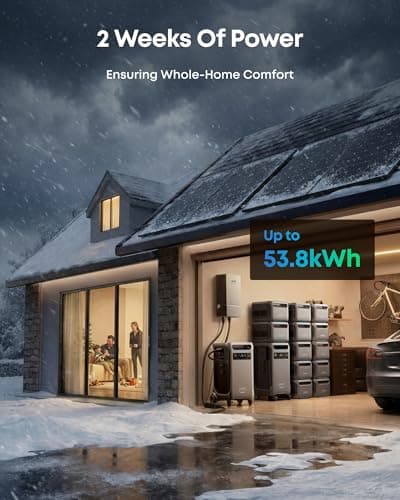
Best Battery System
Battery Backup for a Home, Sized to Carry Circuits
Home backup batteries ranked on expandable capacity, 240V capability and what each unit will carry — not on portability.
Top pick · Anker SOLIX F3800 Plus
$4,099.99See the SOLIX F3800 Plus on Amazon
Best Overall Power Station
The Best Home Backup Power Stations
Battery power stations ranked for home backup on surge, capacity, recharge speed and cycle life.
Top pick · Jackery Explorer 2000 v2
$999.00See the Explorer 2000 v2 on Amazon
Review
Jackery for Home Backup
Jackery's Explorer and HomePower lines for home backup, with published capacity, cycle life and expansion figures.
Review
EcoFlow DELTA for Home Backup
EcoFlow's DELTA 2 Max, DELTA 3 Max and DELTA 3 Classic compared, including what X-Boost can and cannot do.
Guide
What a Home Battery Backup System Costs
The four cost components of a home battery backup system, what each one is for, and the honest comparison against a generator.