Generators
Is a Home Backup Generator Worth It?
The answer turns on four things about your house, and none of them is how much the generator costs.
Written byMike M.
Published
Disclosure: we earn a commission on purchases made through links on this page, at no cost to you. It does not affect what we recommend or what we say about it — how we are funded.
The short answer
A home backup generator is worth it if your outages regularly last longer than about four hours and your house has at least one of these: a well pump, a furnace or boiler, a full freezer, a sump pump, or someone who depends on powered medical equipment. Those are the cases where losing power costs you water, heat, food or safety rather than just convenience. If your outages are short and your house has city water, gas heat and no basement, a battery power station does the useful part for a fraction of the money and none of the maintenance.
This page is deliberately not a cost breakdown — home backup generator cost already does that, including the connection and the fuel. It is the decision that comes first: whether to spend anything at all, and on which of the two very different things people mean by "backup power".
The four facts that decide it
Nothing about the generator decides this. Four facts about your house do, and you can establish all four in about ten minutes.
- 1How long your outages actually last. Not how often the lights flicker — how many hours they have genuinely been off in the last three years. Your utility publishes outage history, and your neighbors remember. Under about four hours, a refrigerator stays safe on its own and a generator is an expensive answer to a brief inconvenience.
- 2Whether you have a well. This is the single strongest argument for a generator. No power means no water: no taps, no toilets, no shower. City water keeps flowing in an outage; a well does not. How to hook up a well pump to a generator covers the connection.
- 3Whether your heat needs electricity. A gas furnace still needs its blower and control board, which is why a January outage in a cold climate is a frozen-pipe risk rather than a dark evening. Can a generator power a whole house sets out what a furnace actually needs.
- 4What is in the freezer, and what is in the basement. A full chest freezer is a real sum of money sitting in a box that will not survive two days. A sump pump that stops during the storm that caused the outage is the most expensive five minutes in the house.
One yes among those four usually settles it. Two or more and the question stops being whether, and becomes which size — which is what size generator do I need.
What you are actually buying, beyond the machine
The most common regret is not the generator. It is discovering afterwards that a generator alone does not power a house — it powers extension cords. Getting output into your panel means a transfer switch or an interlock kit, installed by an electrician, plus an inlet box and a cord. Plan all of it in one budget.
The whole project, in the order you will buy it
- 1. The generator
- Sized from your load list
- 2. The connection
- Transfer switch or interlock kit, installed
- 3. Inlet box and cord
- Matched to the connection's amp rating
- 4. Fuel, stored and rotated
- Propane cylinders, or treated gasoline
- 5. Maintenance
- Oil, filters, a monthly exercise run
This is the sequence, not a price list — figures are on the cost pages, where they are sourced. The items people forget are 3 and 5, and the one they underestimate is 2: the electrical work is frequently a significant fraction of the machine's price.
Transfer switch installation cost covers the electrical half, and do I need a transfer switch answers the question of whether you can skip it. The short version: you can run cords to a few appliances without one, and you cannot power anything hard-wired — no furnace, no well pump, no lights on a circuit.
The case for buying nothing
It is a real case and most roundups will not make it. A generator is an engine you own: it needs fuel that spoils, oil changes, a monthly run, somewhere outdoors it can legally and safely operate, and a plan for storing enough fuel to matter. If any of those is a problem, the honest answer is that you should not buy one.
- Apartments and condos. A generator must run outdoors, far from windows and vents. Most leases and many local rules prohibit running one on a balcony, and there is usually nowhere else. The best portable generator for an apartment is honest about this.
- Short, infrequent outages. If the power has been out twice in five years for an hour, you are maintaining an engine for an event that does not happen.
- Nobody to run it. A portable generator needs someone at home, outdoors, in the weather, to start it and connect it. If the house is often empty or nobody can manage a 200 lb machine, a battery or a standby system is the realistic option.
- No safe place to put it. Attached garage, carport, under a deck, near a basement window — none of these are acceptable, and carbon monoxide is not a risk you manage with a fan.
The battery alternative, honestly compared
For a great many houses, a battery power station does the genuinely useful part: it keeps the refrigerator, the internet, the phones and a few lamps alive, indoors, silently, with no fuel, no fumes, no maintenance and no electrician. It is the right answer more often than generator roundups admit.
What it will not do is start a well pump or run central air, and once it is empty it is empty unless you can recharge it. That is the whole trade, and home battery backup versus a generator works through it properly. How home battery backup works covers what a battery system involves if that is the direction you are leaning.
The three honest answers to this question
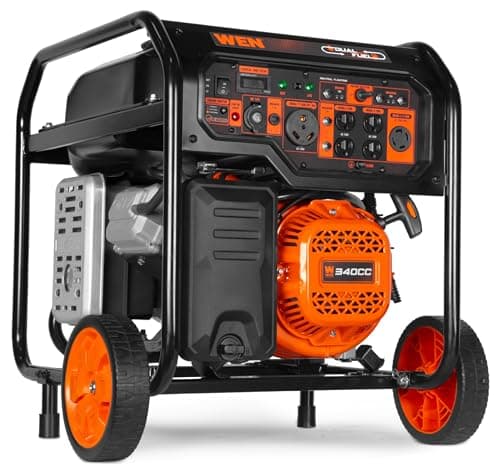
Essential circuits, dual fuel, lowest cost
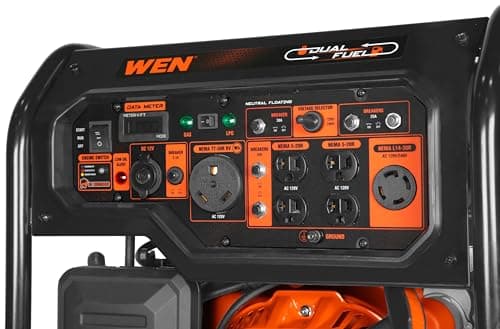
WEN DF8000X 8,000W Dual Fuel
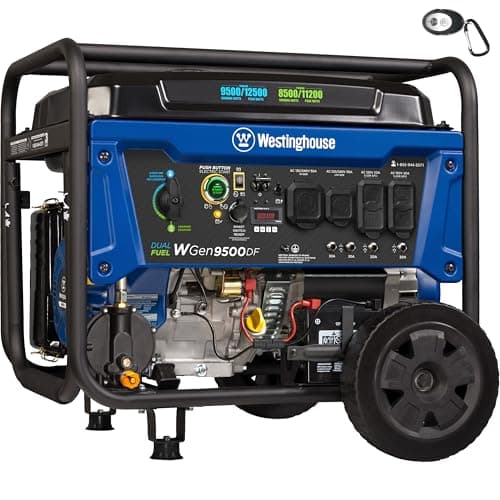
The default whole-house pick
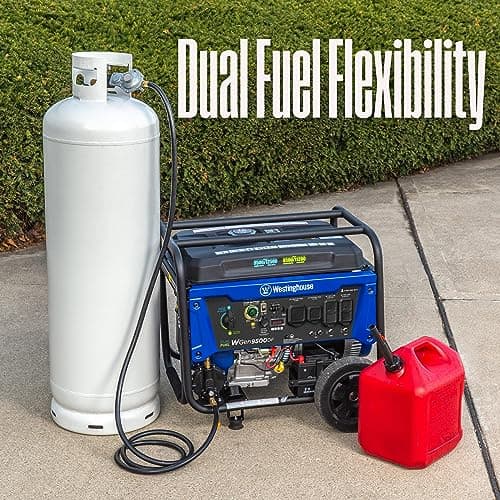
Westinghouse WGen9500DF 12,500W Dual Fuel
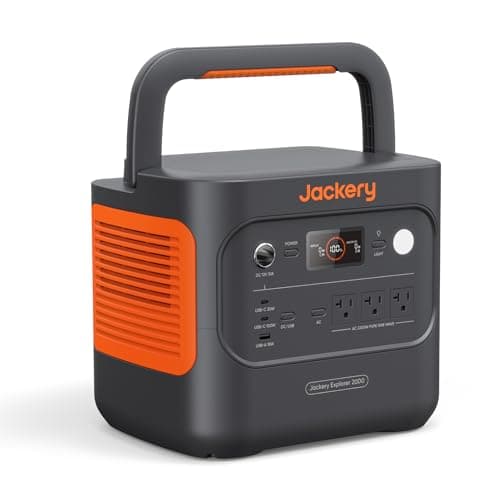
The default 2 kWh home backup battery
Jackery Explorer 2000 v2
A correctly-sized dual fuel generator at 6,500 running watts for a house whose load is essential circuits; a 9,500-running-watt machine with both transfer-switch outlets for a house with a well pump; and a 2,042 Wh battery for the house whose outages are short and whose heat does not need electricity.
What a generator is worth in the outage itself
Worth is not only money. The things people report mattering, in roughly the order they say so: running water in a house with a well, heat that does not stop in January, a freezer that does not have to be emptied, a sump pump that keeps running during the storm, and being the house where the medical equipment still works. None of that appears on a spec sheet.
Set against it: an engine to maintain, fuel to store and rotate, noise your neighbors will hear, and a genuine hazard to manage every time you use it. The machines are not the risk — placement is. Generator carbon monoxide safety is the page to read before you buy, not after.
Questions people actually ask
Is a home backup generator worth the money?
It is if your outages last longer than a few hours and your house has a well pump, electric-dependent heat, a full freezer or a sump pump. Those are the cases where an outage costs you water, heat, food or flood damage. For short outages in a house with city water and gas heat, a battery power station covers the useful part for far less.
How often does the power have to go out to justify a generator?
There is no universal threshold, but the useful test is duration rather than frequency: a single multi-day outage in a house with a well or a freezer usually justifies the purchase, while a dozen brief flickers a year does not. Check your utility's published outage history for your address rather than guessing.
What does a home backup generator cost in total?
The machine is one of five line items — generator, transfer switch or interlock installed by an electrician, inlet box and cord, stored fuel, and ongoing maintenance. The electrical work in particular is often a large fraction of the machine's price. Our cost pages carry the sourced figures; we do not publish an estimate here.
Is a generator or a battery better for home backup?
A battery is better for short outages, indoor use, quiet and zero maintenance; it runs a fridge, internet and lights. A generator is better for multi-day outages, well pumps, furnaces and anything with a motor, and it keeps running as long as you feed it. The deciding question is whether your must-run list includes a motor load.
Is a standby generator worth it instead of a portable?
If nobody will reliably be home to start and connect a portable, or if you want the house to carry on without intervention, then yes — automation is what you are buying, and it costs several times a portable setup. Otherwise a correctly-sized portable with a transfer switch does the same job for much less.
Will a generator save me money on spoiled food?
It can, and a full chest freezer is the clearest case. But food is only one of the things an outage costs: in a house with a well it is water, in winter it is heat and the pipes, and in a wet basement it is the sump pump. Count those together rather than judging the purchase on groceries alone.
Sources
- Eugene Water & Electric Board — Generator Sizing ConsiderationsPublished appliance running and additional-starting watt figures used in the sizing arithmetic on this page.
- US Consumer Product Safety Commission — Portable Generator Information CenterThe placement and carbon monoxide guidance every generator page on this site links to.
Read next
Guide
What a Home Backup Generator Costs
The variables that drive generator price, the connection cost people forget, and where the money is best spent.
Guide
What Size Generator Do I Need?
The core sizing method: total running watts, add the single biggest surge, derate for continuous running, then match a wattage class.
Comparison
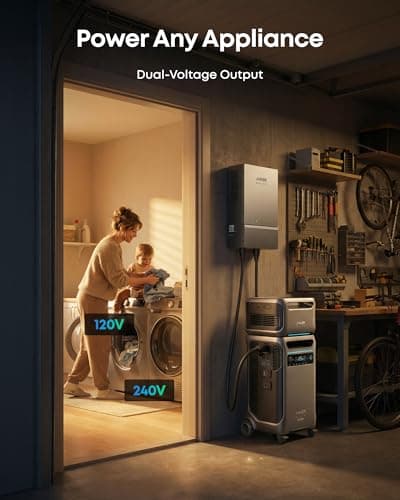
Home Battery Backup vs Generator
Installed home battery systems against generators, and the expandable portable units that sit between them.
Best Overall Home Backup
The Best Home Backup Generators
Nine conventional-frame generators ranked for whole-house backup, with per-fuel running watts and transfer-switch fit.
Top pick · Westinghouse WGen9500DF 12,500W Dual Fuel
$999.00See the WGen9500DF 12,500W Dual Fuel on Amazon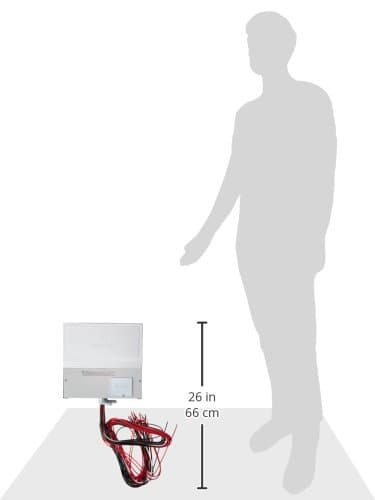
Guide
Do I Need a Transfer Switch for a Generator?
The straight answer on whether your generator needs a transfer switch, the three legal ways to connect one, and the one method that is never acceptable.